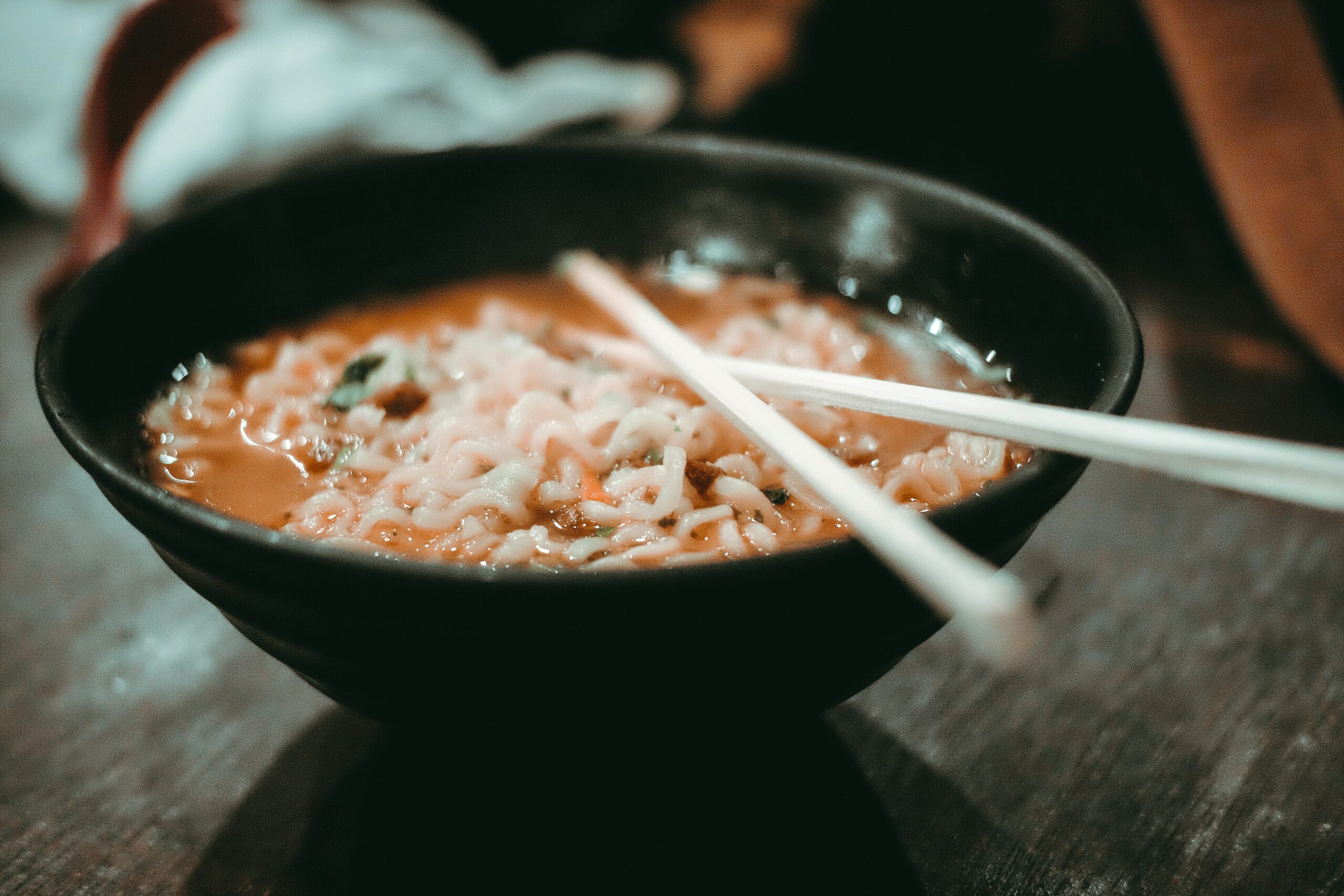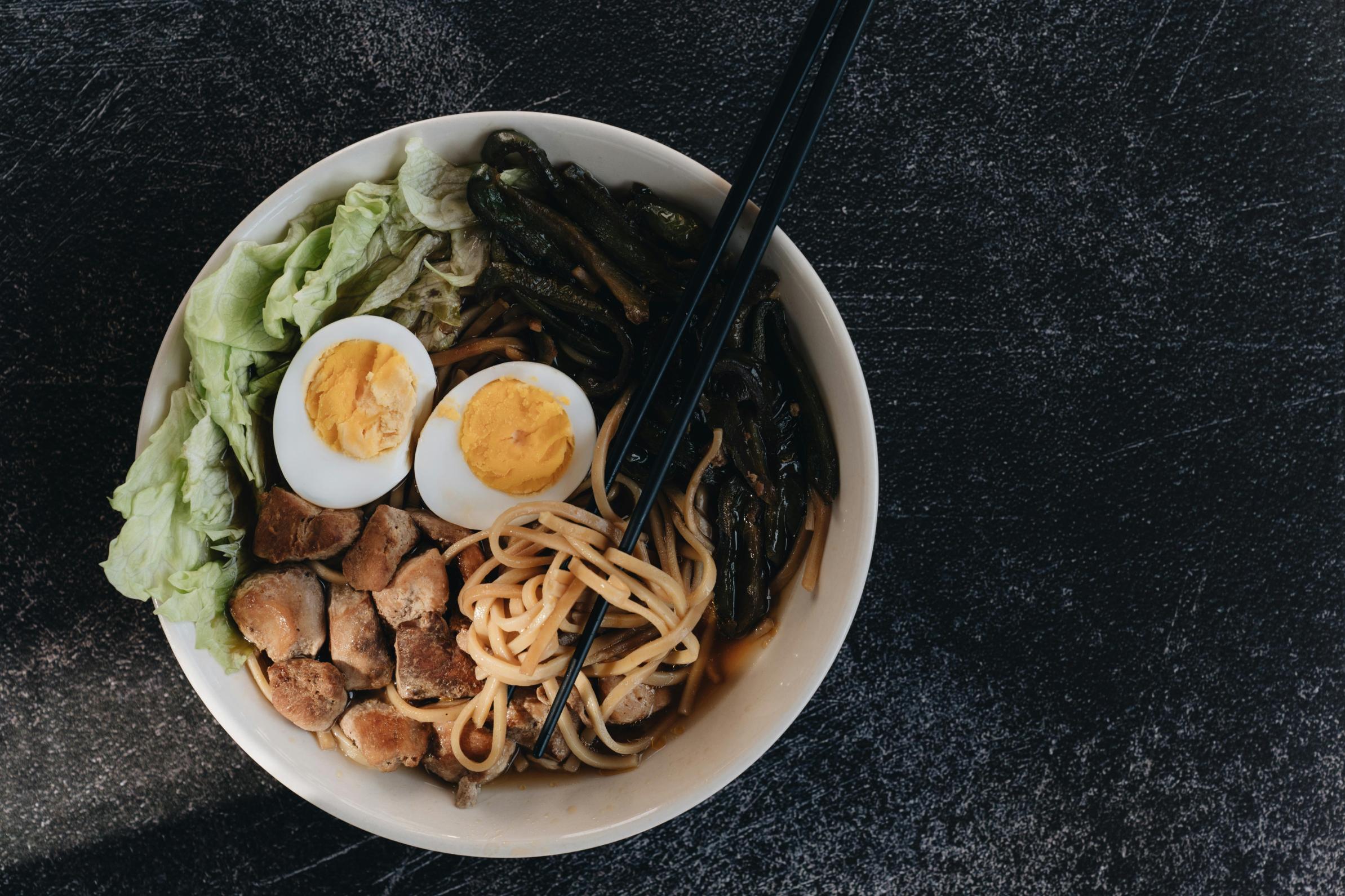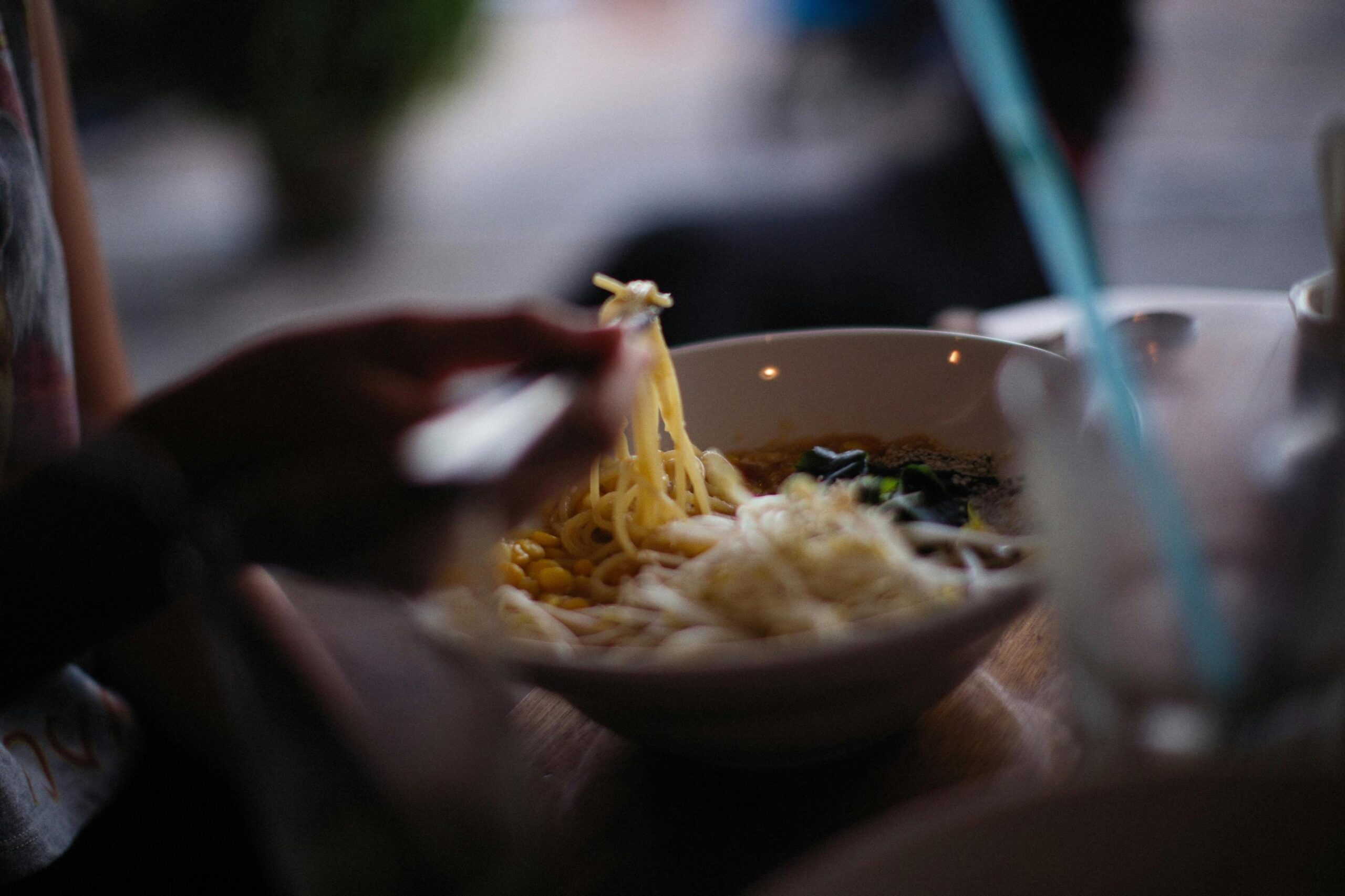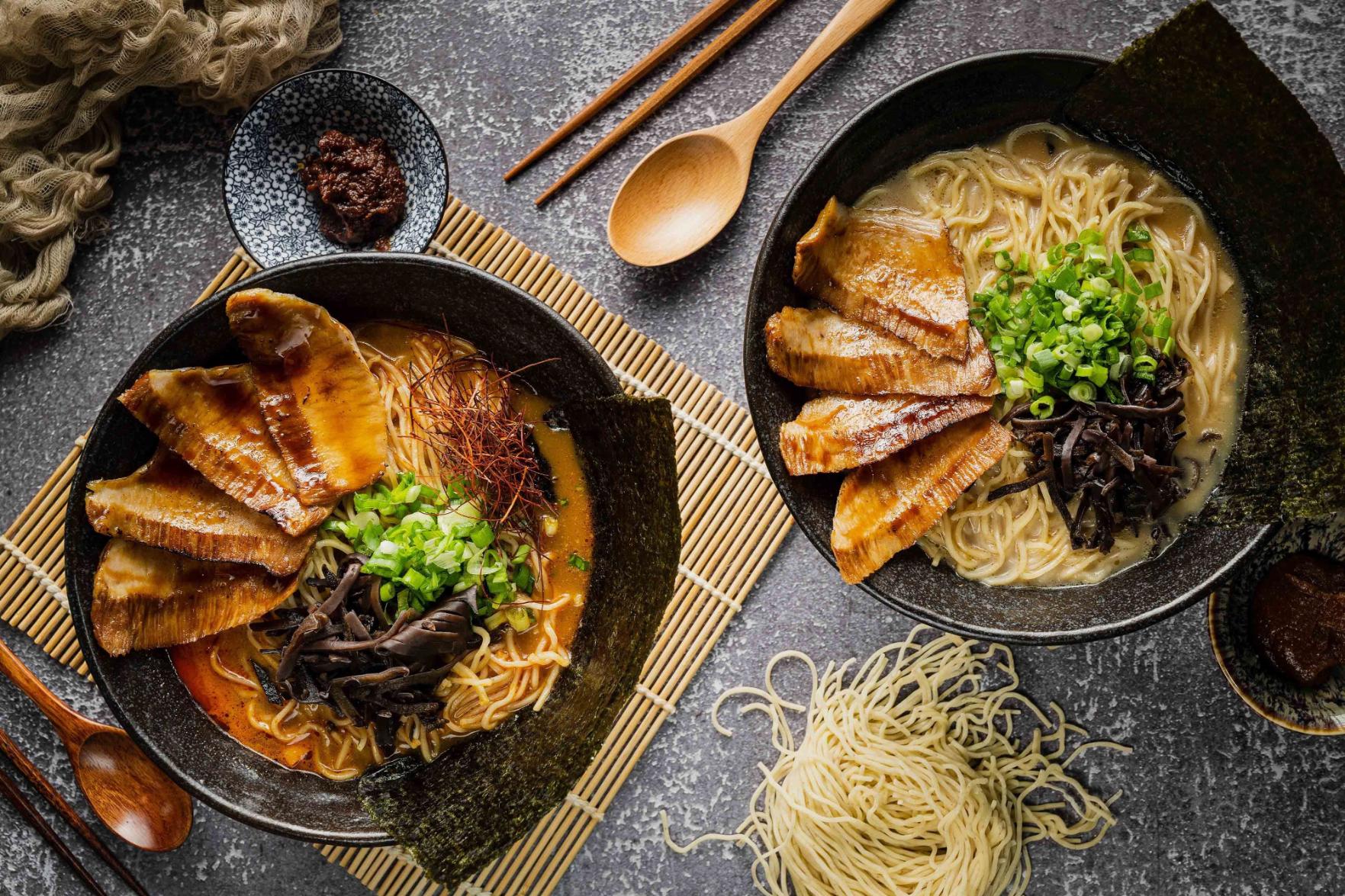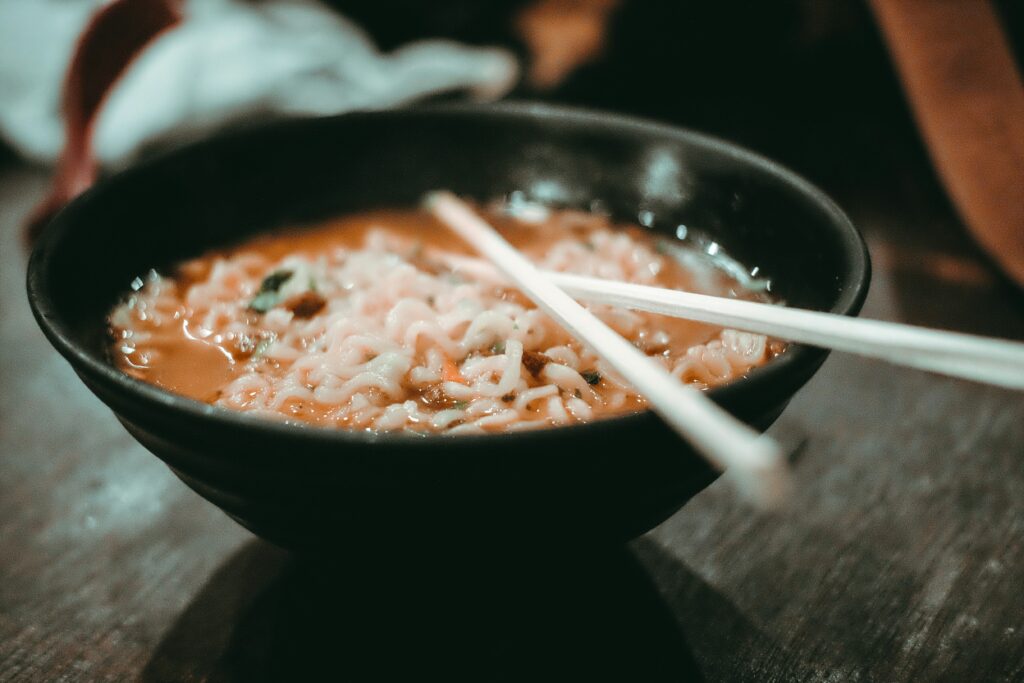
Steam rises before anything else.
Before the first sip. Before I adjust my seat. Before I decide whether this bowl is worth remembering. A ladle dips into a pot that has been rolling for hours, bones colliding under controlled heat. The surface trembles — not violently, not lazily — just enough agitation to emulsify fat into liquid.
That detail alone holds me.
Most people think my obsession with ramen started with flavor. It didn’t. It started with a process.
The first time I stood facing a proper ramen-ya kitchen, I noticed the choreography. Wire baskets lower into boiling water and lift at exact seconds. Timers are checked, never guessed. Tare — the seasoning base of soy, salt, or miso — is measured into each bowl before broth is added. Nothing is improvised.
From the dining side, ramen looks casual. On the kitchen side, it is disciplined.
That tension is what keeps pulling me back.
Broth Is Built, Not Born
Ramen is often described emotionally — rich, comforting, indulgent. Those words are convenient. They skip the mechanics.
Take tonkotsu. Pork bones boiled aggressively to extract collagen and marrow. The turbulence breaks fat into microscopic droplets that suspend in liquid. That creamy opacity isn’t dairy. It’s emulsification — the result of sustained, controlled boiling.
Shoyu ramen operates differently. A clearer broth, often chicken-based, layered with kombu or niboshi (dried sardines). The tare carries salinity and aroma; the broth provides body. Push one too far and balance collapses.
When I sip ramen, I’m tasting decisions.
How long was the broth boiled?
Was the scum skimmed carefully?
How assertive is the tare ratio?
Is the aromatic oil enhancing fragrance — or compensating for weakness?
Every bowl is an outcome of deliberate choices. Obsession grows when you start noticing them.
Noodles Answer the Broth
If broth is structure, noodles are response.
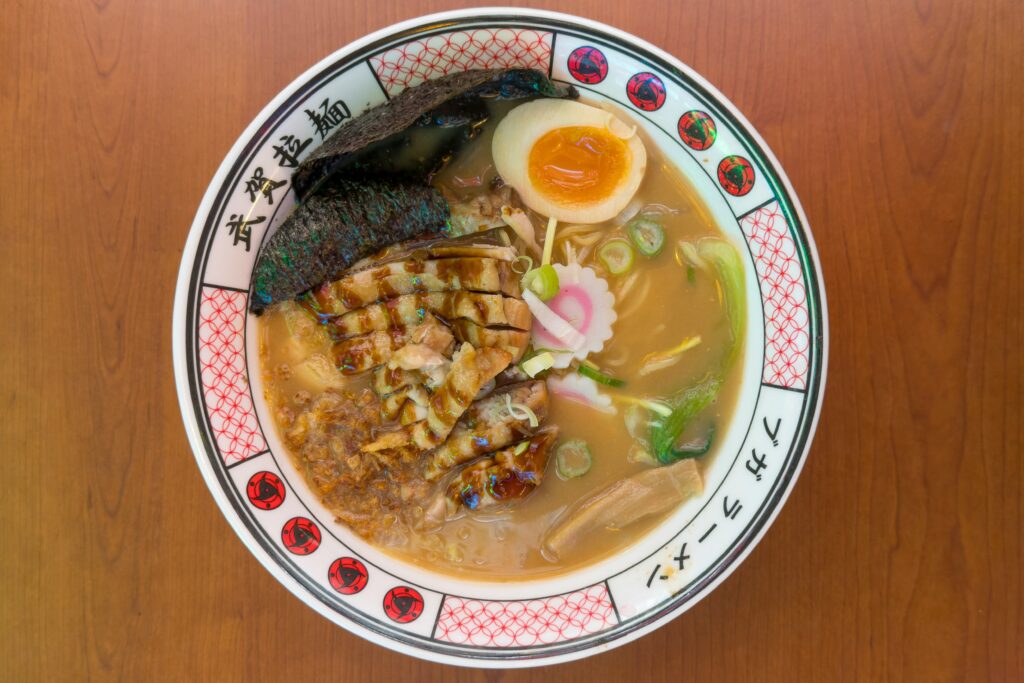
Hydration levels determine elasticity. Kansui, the alkaline solution, alters both texture and color. Low-hydration noodles snap with resistance. Higher hydration noodles bend and hold moisture differently. Straight noodles deliver broth in a direct line. Wavy noodles trap and release it in intervals.
I lift the noodles and watch how they fall back into the bowl.
Do they cling?
Do they resist slightly?
Do they soften too quickly?
A good noodle pairing doesn’t compete with the broth. It completes it. Ramen is not sauce poured over starch. It is integration from the first slurp.
That alignment is what I look for every time.
The Kitchen Reveals the Intent
Spend enough time in ramen shops and patterns emerge.
Some kitchens move with sharp efficiency — bowls assembled in under a minute, movements economical and repeatable. Others operate more deliberately, slower but equally precise. Neither approach is superior. But each tells you how the shop thinks.
I watch how chashu is handled. Is it sliced to order? Is it torched for added aroma? Are ajitama (seasoned eggs) marinated long enough for flavor to penetrate the whites? Is garlic fried fresh or prepared in bulk?
These aren’t romantic observations. They’re operational ones.
A ramen shop is a system under pressure. The bowl reflects how well that system holds.
Beyond the Familiar
Tokyo styles dominate headlines, but ramen deepens outside the mainstream.
Hakata’s thin noodles are designed for kaedama — extra noodle refills — because they cook quickly and soften fast. Sapporo’s miso ramen often involves stir-frying before broth is added, building aroma for colder climates. Kitakata favors flatter noodles that trap lighter broths differently.
Each region solves a practical problem shaped by environment and habit.
Ramen isn’t a fixed recipe. It’s a framework shaped by local logic. The more I learn, the less definitive my opinions become.
That’s not frustrating.
It’s fuel.
Why This Pursuit Continues
I’ve eaten bowls that were technically flawless but forgettable. I’ve eaten bowls that were imperfect yet alive.
What separates them is coherence.
When broth, tare, oil, noodles, and toppings align, the bowl feels composed. Not dramatic. Not excessive. Just intentional. That level of alignment is rare. When I find it, I remember it long after the bowl is empty.
My obsession isn’t about hype or trend cycles. It’s about understanding the thinking behind the craft. Ramen rewards attention. The closer you look, the more it reveals — about discipline, repetition, and quiet refinement.
Somewhere right now, a pot is being adjusted by a few degrees. Someone is tasting, recalibrating, refining again.
That pursuit is endless.
And that’s exactly what Ramen Tale is built on — not chasing the loudest bowl, but documenting the bowls that hold up under scrutiny. The ones where process and intent are visible in every sip.
Because it was never just soup.
It was always about the craft.