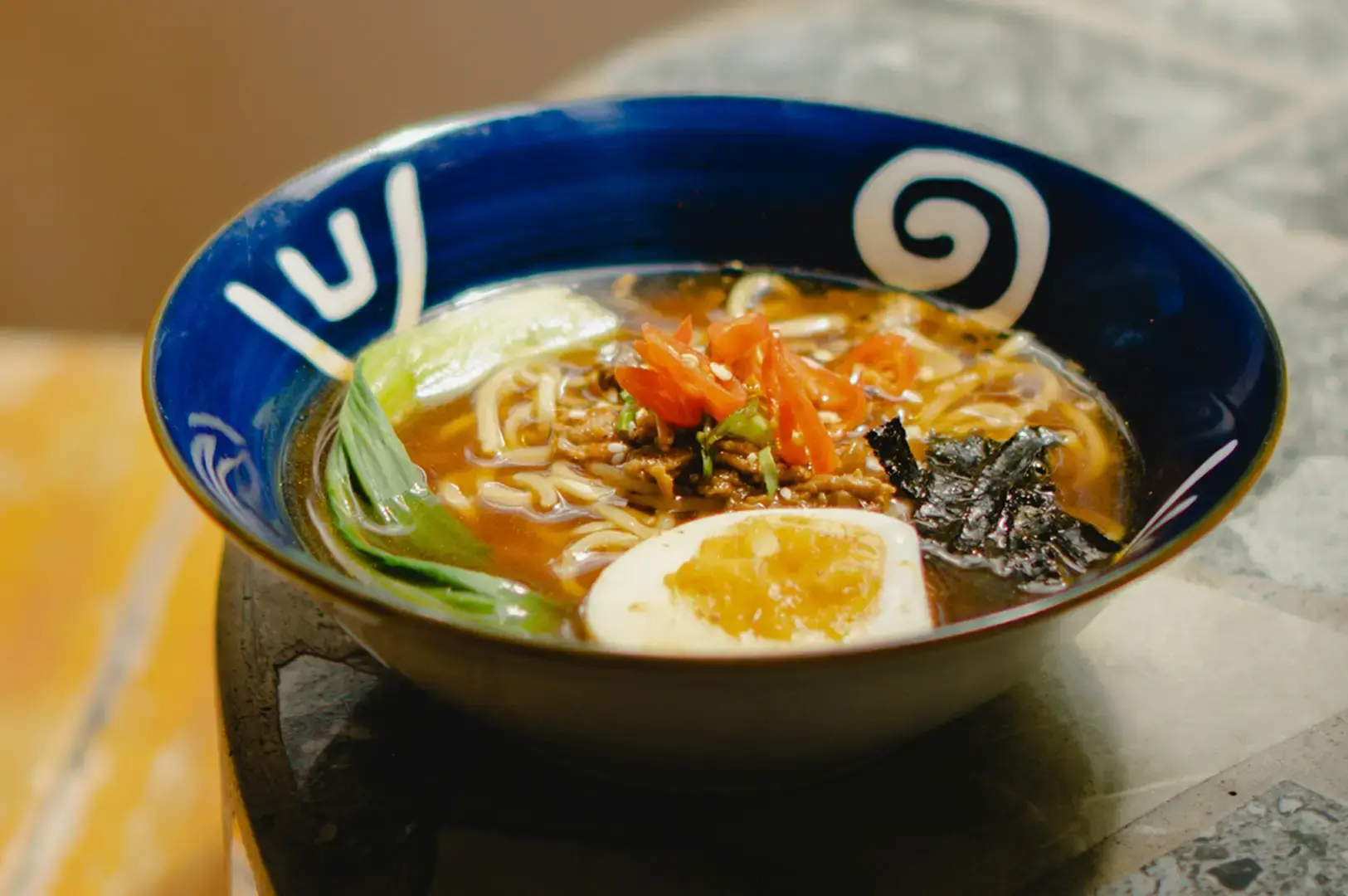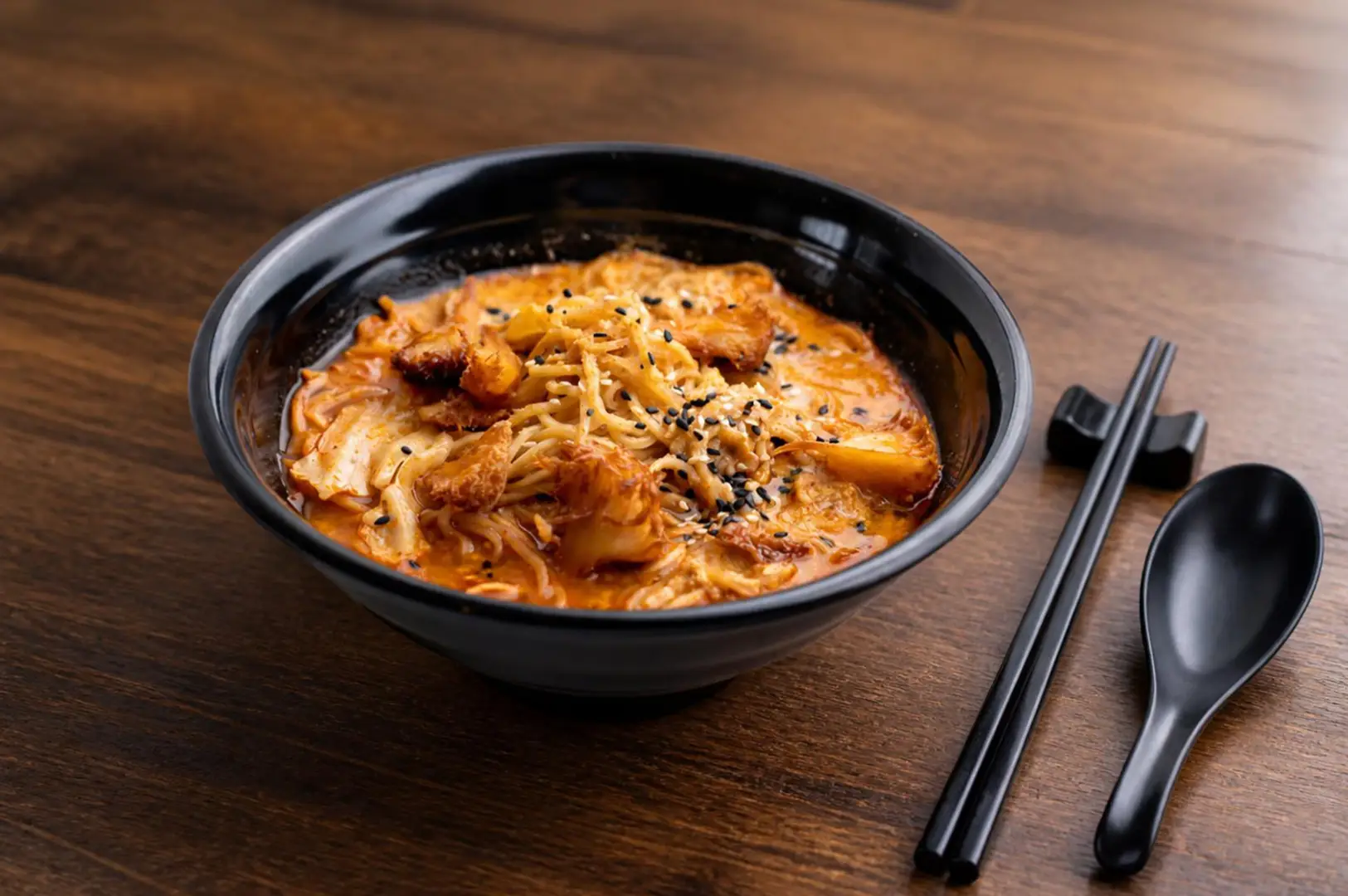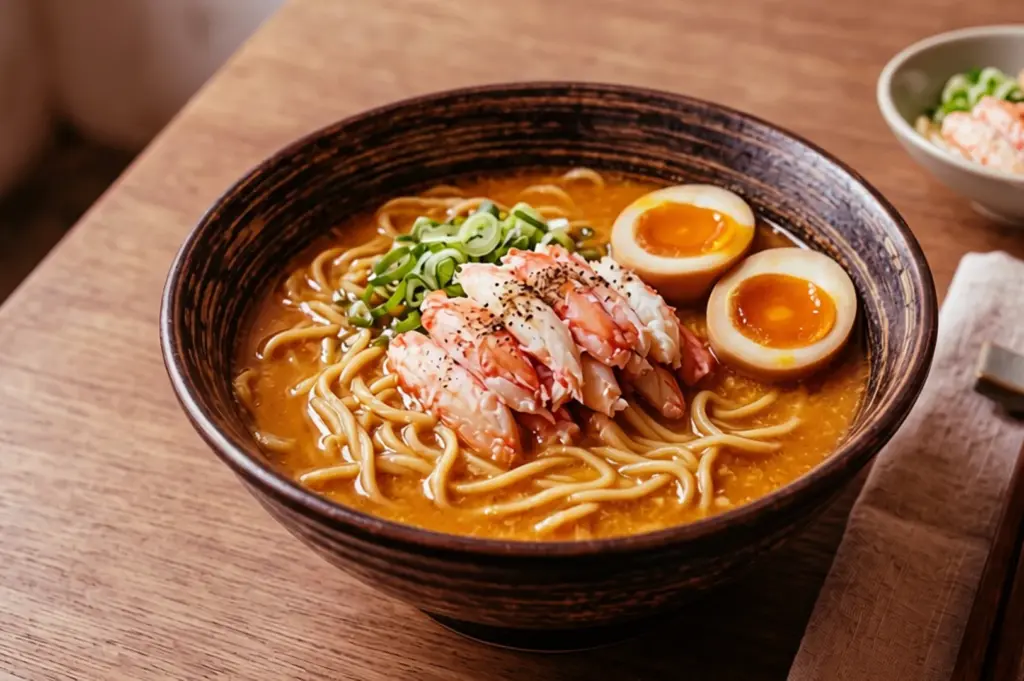
Chili crab ramen sounds like an easy win.
That is usually the first problem.
We see the words on a menu and immediately understand the appeal. Sweet crab. Tomato-rich sauce. Chili heat. Springy noodles. A bowl that promises Singapore or Malaysia in one direction and Japan in the other. It feels built for attention before the spoon even reaches the broth.
But the first time we tasted a version that failed, the reason became clear quickly.
It was exciting for three bites.
Then the sweetness took over. The broth lost shape. The noodles became a soft carrier for sauce rather than a ramen component. What began as a clever idea turned heavy, sticky, and strangely tiring.
Chili crab ramen is not difficult because the flavors are unfamiliar.
It is difficult because the flavors are already powerful.
Sweetness Needs Control
Chili crab sauce carries natural sweetness.
Some of that comes from crab. Some from tomato. Some from the way the sauce is usually built to feel glossy, rich, and generous. In the original dish, that sweetness works because it has crab shell, egg, chili, and fried mantou to balance it.
Ramen does not behave the same way.
In a ramen bowl, sweetness moves through the broth and touches everything: noodles, oil, tare, toppings. If it is too strong, every sip starts to taste rounded in the same direction. The bowl becomes less about depth and more about sugar.
A good chili crab ramen needs sweetness, but it needs tension too.
Salt, acidity, chili, and seafood depth have to keep the broth alert.
Seafood Depth Cannot Be Decoration
Crab flavor is easy to suggest and hard to sustain.
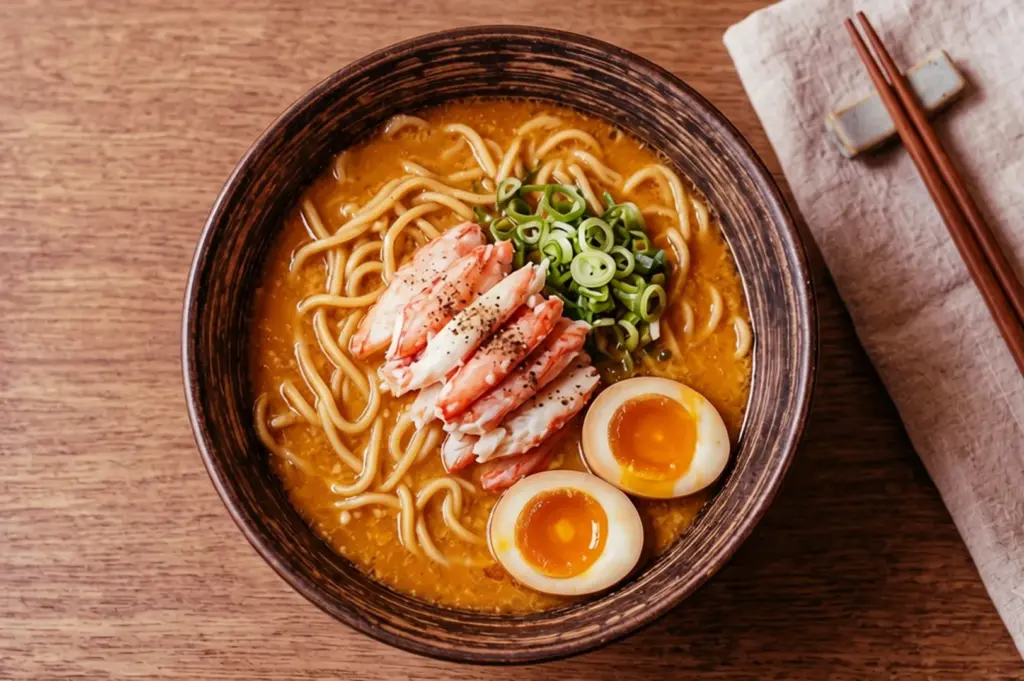
A few pieces of crab meat on top may look convincing, but they do not automatically make the broth taste like crab. For the bowl to work, seafood has to be built into the base. Shells, prawn stock, dried seafood, or a careful seafood tare can give the broth a deeper backbone.
Without that, the dish becomes chili-tomato ramen with crab garnish.
We have tasted bowls where the seafood disappeared behind the sauce. The aroma was there for a moment, then gone. The ramen needed marine depth, not just seafood presence.
That difference matters.
Ramen is built from the inside out.
Acidity Keeps the Bowl Moving
Chili crab ramen also needs lift.
Tomato can bring acidity, but it can also become thick and flat when cooked down too heavily. Chili gives heat, but heat alone does not create freshness. Without enough brightness, the broth sits heavily on the palate.
The better versions understand pacing.
A little acidity keeps the next sip possible. It cuts through sweetness, loosens the richness, and prevents the bowl from feeling like sauce poured over noodles.
This is where restraint becomes important.
The goal is not to make chili crab louder. The goal is to make it drinkable as ramen.
The Noodles Have to Push Back
The noodle match is where many bowls reveal themselves.
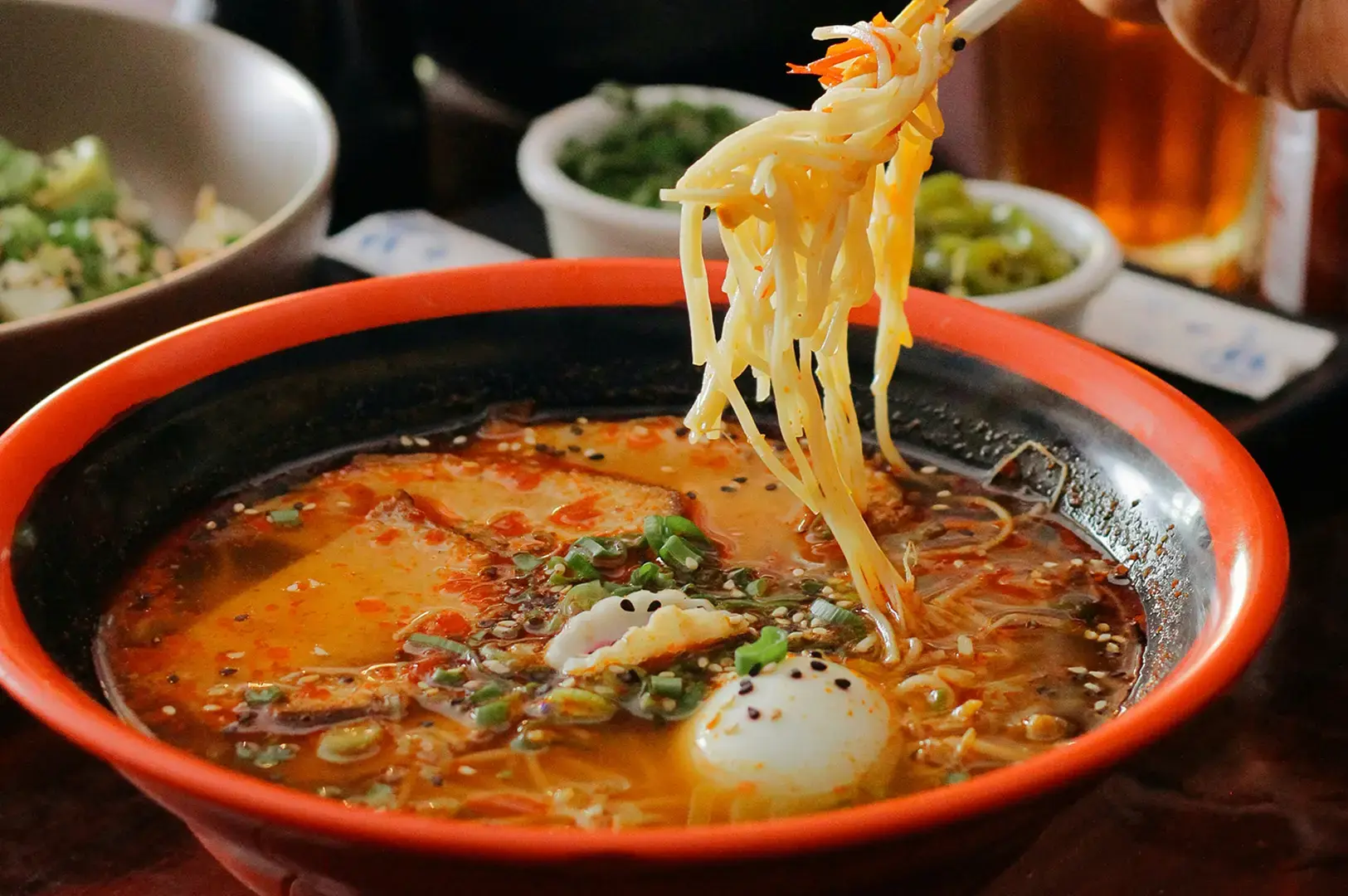
Chili crab-style broth clings. It is glossy, sweet, spicy, and often thicker than a typical ramen broth. Thin noodles can become overloaded quickly. Soft noodles lose the argument almost immediately.
We prefer noodles with spring.
They need enough bite to resist the sauce and enough surface to carry it without drowning. The slurp should feel active, not heavy. If the noodle disappears, the bowl stops being ramen and becomes a dressed noodle dish.
Texture is not secondary here.
It is the thing that keeps the bowl moving.
When the Idea Finally Works
Chili crab ramen works when the kitchen stops treating it like a headline.
The sweetness is measured. The crab has depth. The acidity keeps the broth alive. The noodles hold their shape. The chili gives warmth without flattening the finish.
When those parts align, the bowl becomes more than fusion.
It becomes structured.
That is the hidden difficulty. Chili crab ramen does not fail because the idea is too strange. It fails because the idea is too easy to overtrust.
A good version gets attention.
A great one earns the next sip.