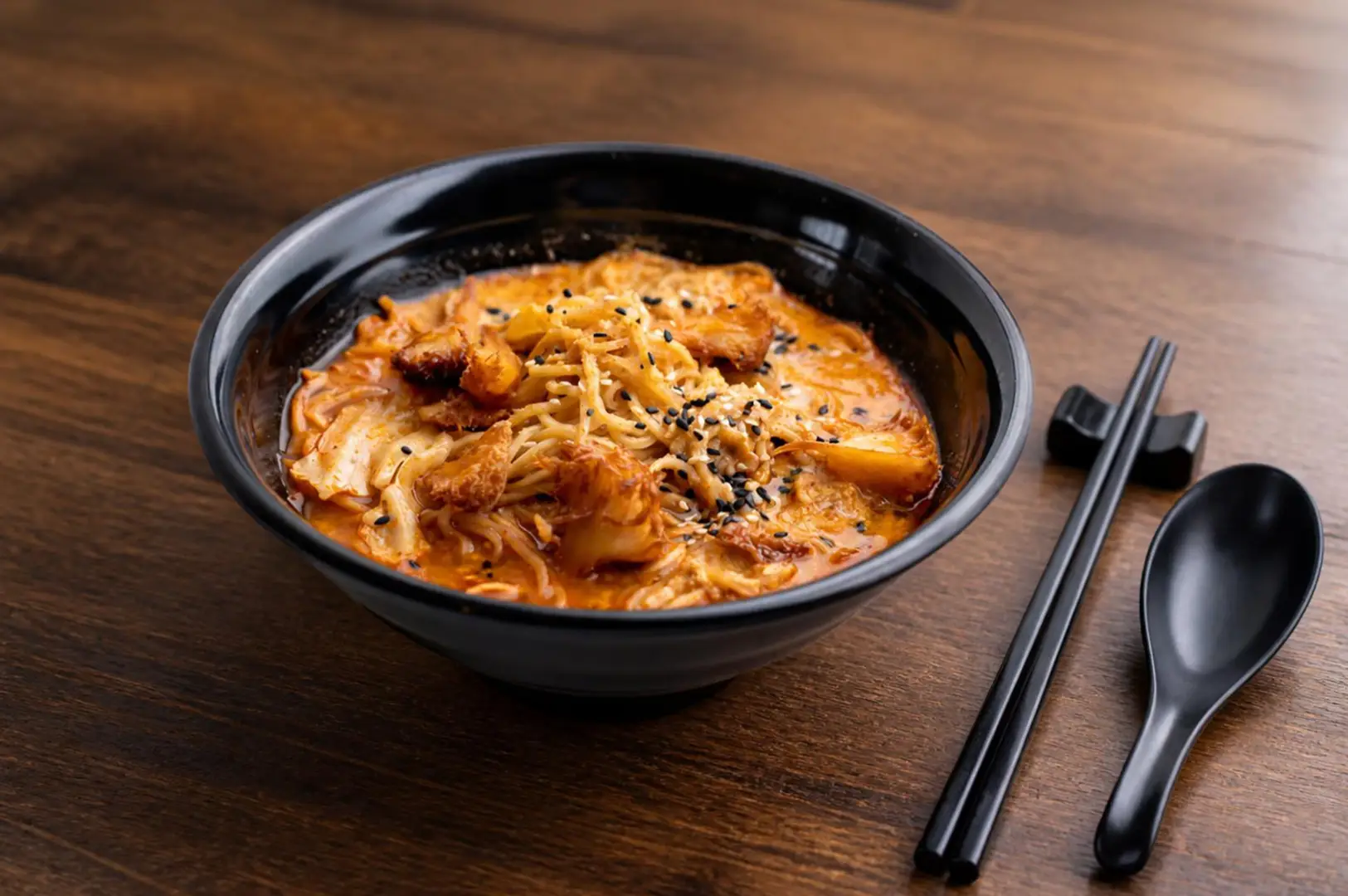
Curry ramen sounds easy until the bowl starts getting tired.
We have learned this more than once.
The first sip can be convincing. The spice is warm, the broth has weight, and the surface carries that familiar curry aroma before the spoon even reaches the mouth. It feels generous. It feels complete.
Then, somewhere around the fifth or sixth slurp, the bowl slows down.
The noodles feel coated instead of carried. The broth begins to sit heavily on the tongue. The spice that felt exciting at first starts repeating itself. What began as comfort becomes density.
That is the problem with curry ramen.
It changes the shape of the bowl.
Curry Adds Weight Quickly
A standard ramen broth can move in many directions.
A shoyu broth may stay clear and sharp. A tonkotsu can be rich but still drinkable when the fat is properly emulsified. A chicken paitan can coat the mouth without becoming dull if the tare and oil are measured well.
Curry works differently.
The spice paste brings body before the stock has a chance to speak. Turmeric, chili, coriander, cumin, onion, garlic, and sometimes coconut or milk solids all add weight. That weight is not bad. In fact, it is the reason curry ramen can feel so satisfying.
But it needs discipline.
If the curry paste dominates the broth, the bowl becomes one long note. Warm, thick, and heavy. Pleasant at first, but difficult to finish.
Good curry ramen still needs a broth underneath it.
The Broth Cannot Disappear
The best curry ramen bowls we have tasted do not taste like curry poured over noodles.
They still behave like ramen.
There is stock behind the spice. Chicken, pork, seafood, or vegetable broth gives the bowl structure. The curry adds direction, but the stock gives it depth. Without that base, the bowl becomes sauce.
That distinction matters.
Ramen broth should invite drinking. Even when it is rich, it should keep moving. Curry has to be loosened by stock, sharpened by tare, and lifted by aroma oil. Otherwise, it closes in on itself.
A good bowl lets the curry lead without letting it take over.
Noodles Need Resistance
Curry changes the noodle equation too.
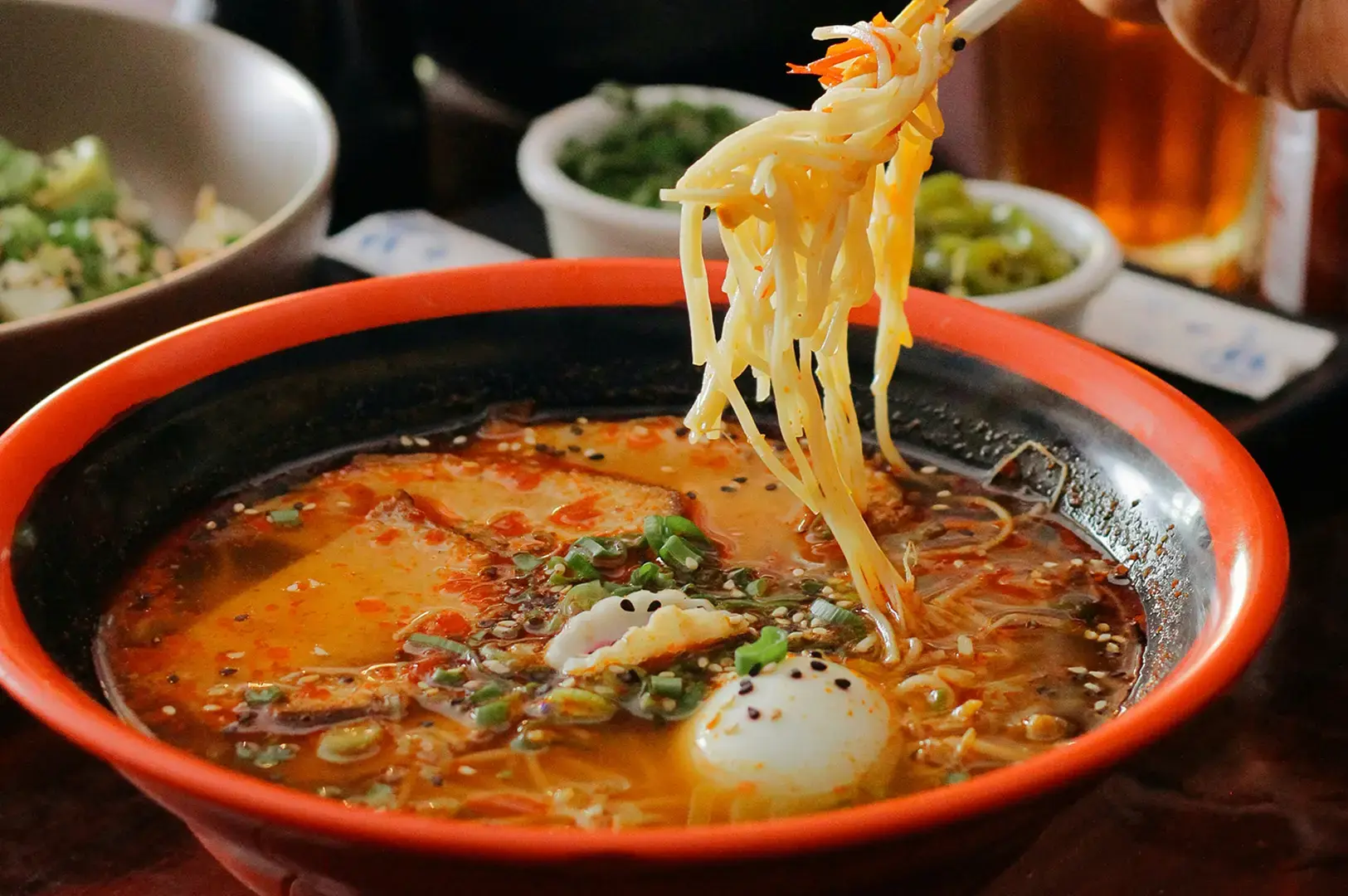
Thin, delicate noodles can disappear under the weight of the broth. The spice clings too easily. The strands soften, the texture fades, and the bowl loses rhythm.
We prefer noodles with spring in curry ramen.
They need enough bite to push back against the broth. Not necessarily very thick, but firm enough to stay distinct after several minutes. The noodle should carry curry without becoming buried in it.
When the match works, the slurp has tension.
When it fails, everything turns soft.
The Finish Matters Most
Curry ramen is not judged only by its first sip.
It is judged by whether we still want the last one.
That is where balance shows. A little acidity can keep the bowl open. Aromatic oil can prevent the spice from feeling flat. A careful tare can control salt. Toppings should add contrast, not more heaviness.
The best versions know when to stop.
They do not try to make curry louder. They make it structured.
That is when curry ramen works: when the bowl has warmth, depth, and movement.
Not just comfort. Control.