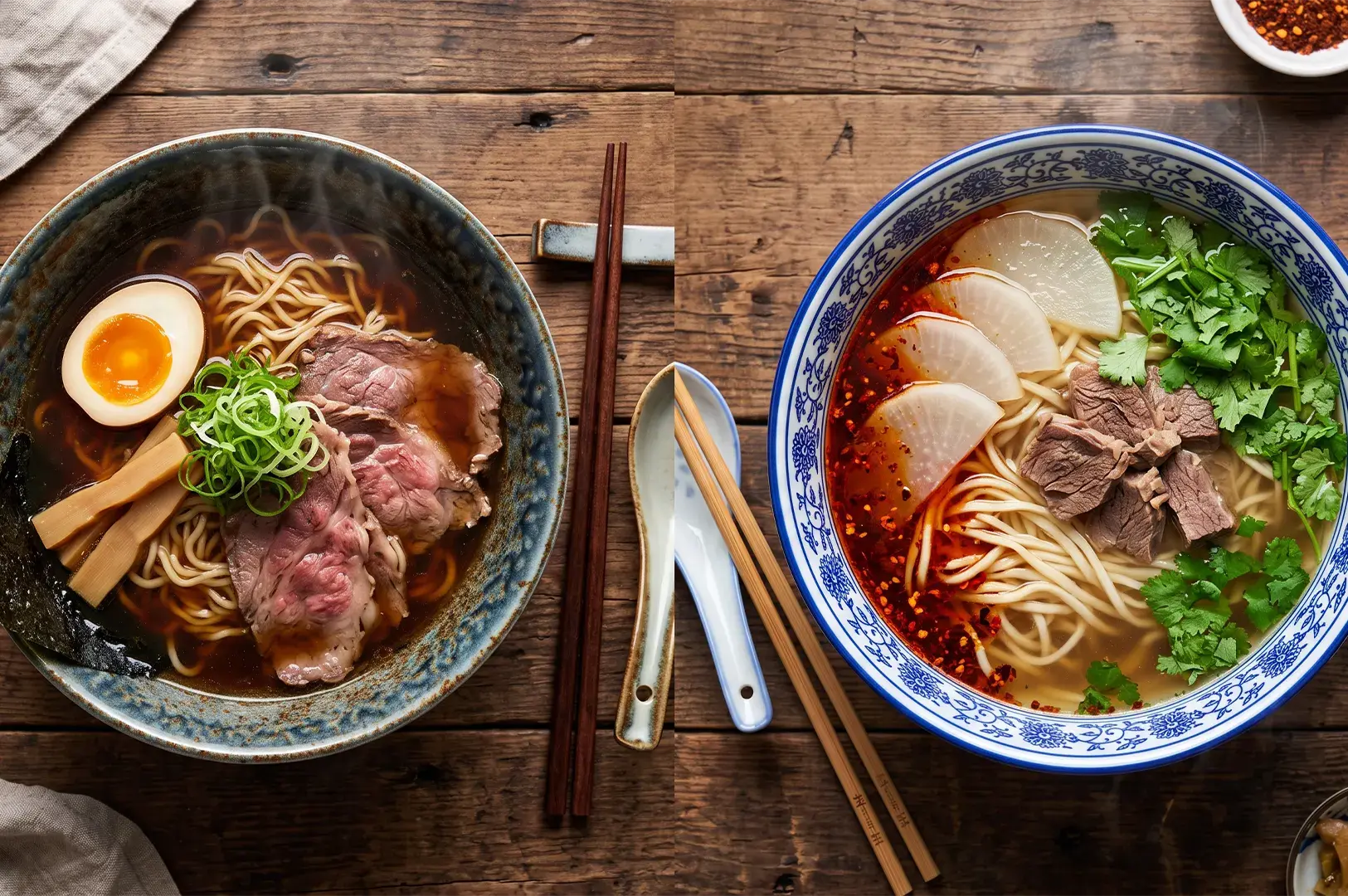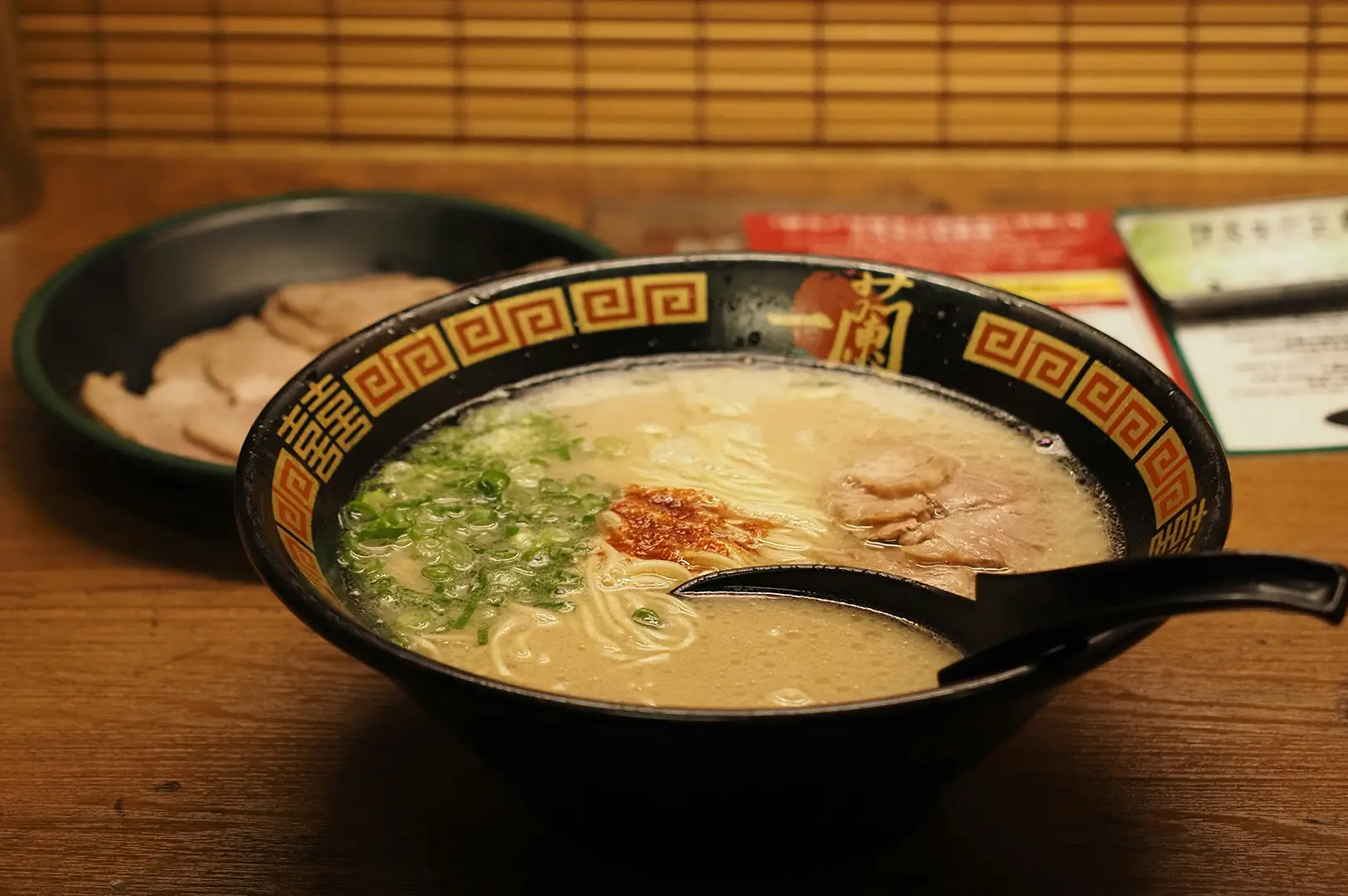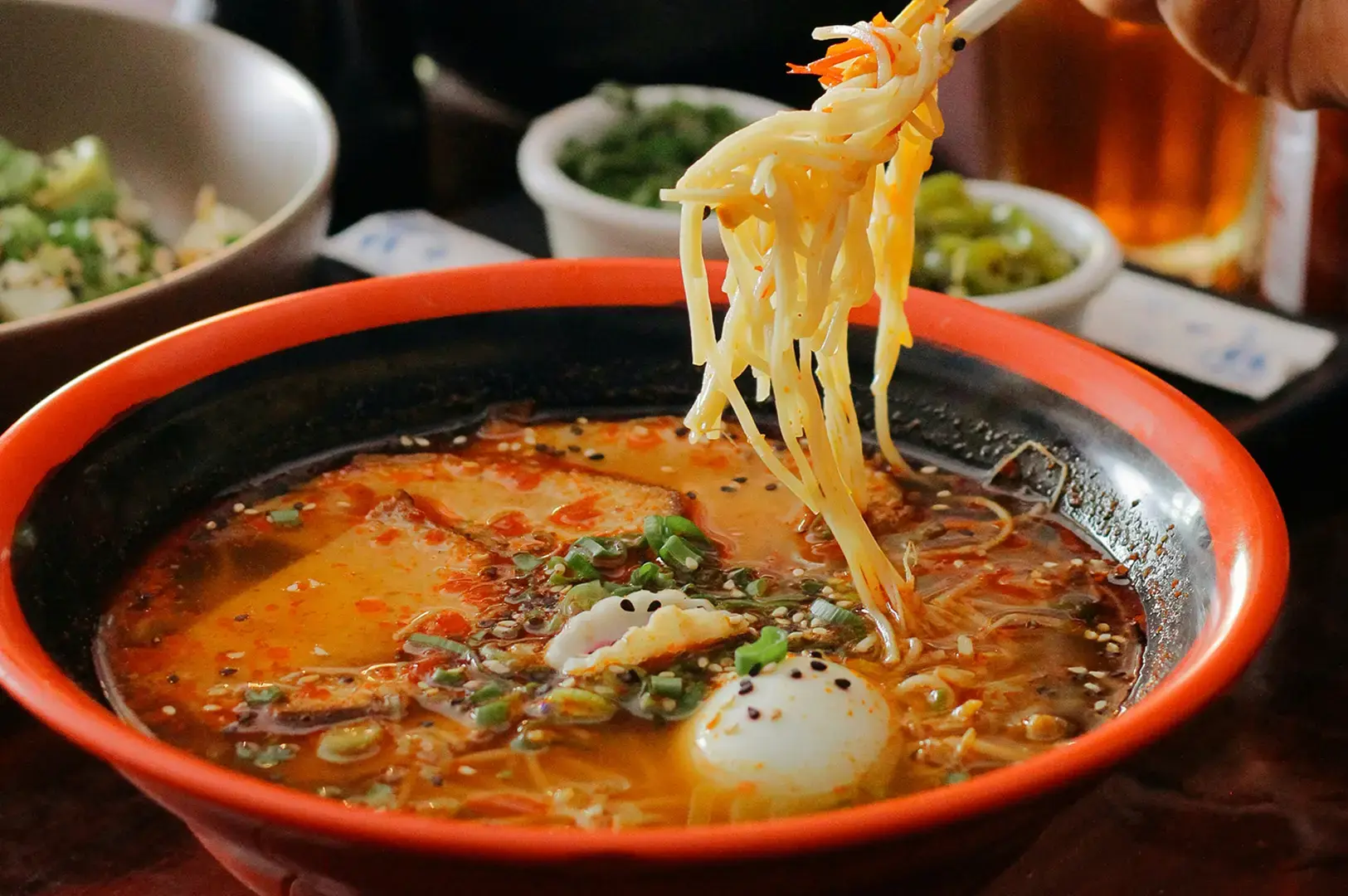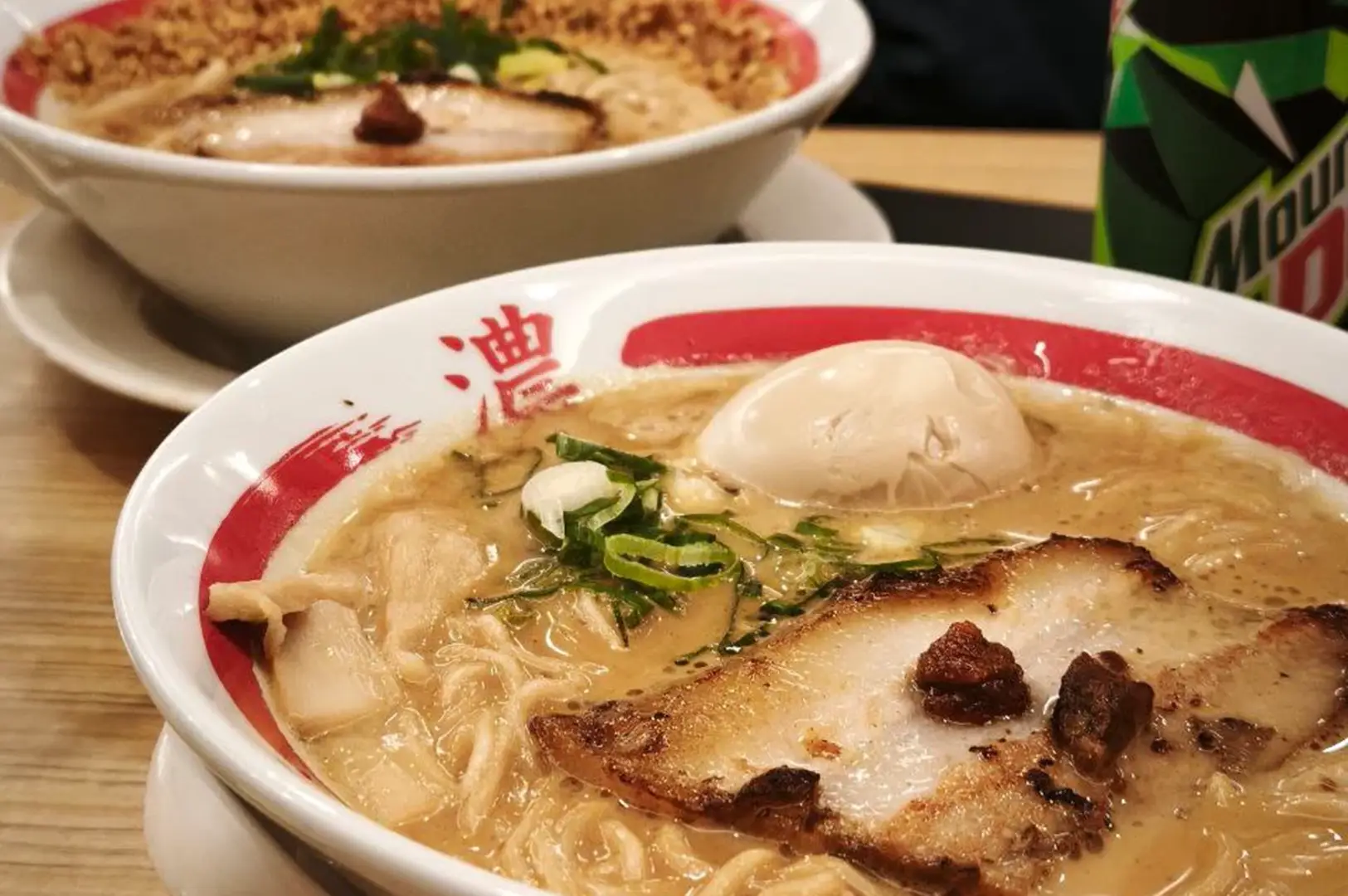
The first thing we notice at Kanbe Ramen is not the broth.
It is the waiting.
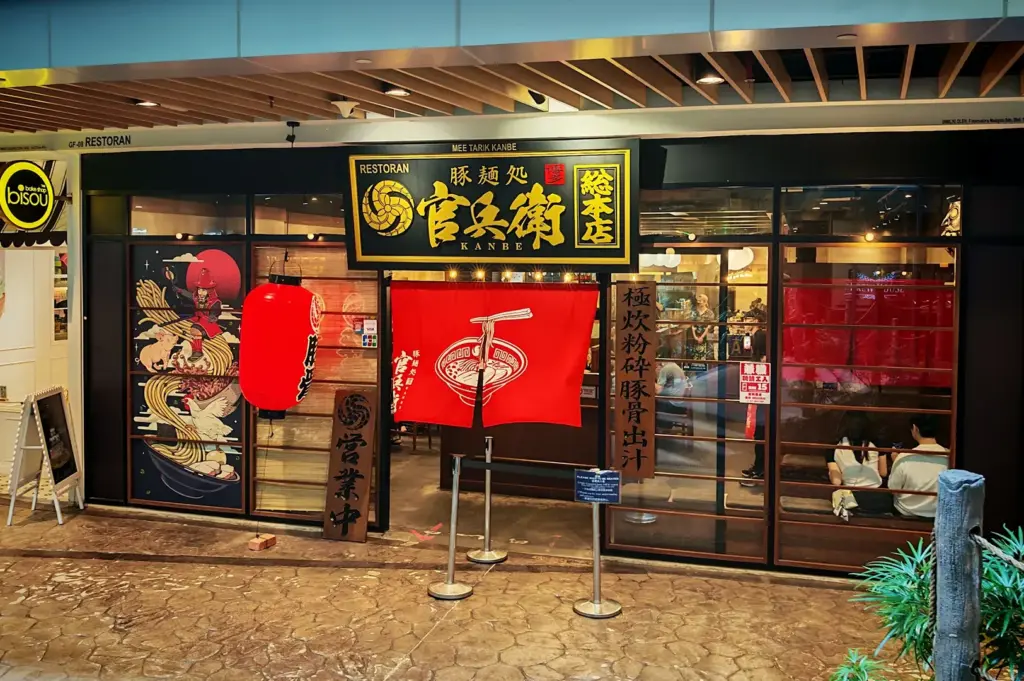
At its Mont Kiara outlet in 163 Retail Park, Kanbe has the kind of reputation that reaches the table before the bowl does. People come for Hakata-style tonkotsu, for tsukemen, for the promise of a ramen shop run with Japanese precision in the middle of Kuala Lumpur’s restless dining scene. The original outlet is listed at GF-08, 163 Retail Park, 8 Jalan Kiara, Mont Kiara, with another branch at The Exchange TRX. Public listings place its usual operating hours around 11am to 10pm, though diners should always check before visiting.
There is a quiet confidence in a shop that makes people wait.
Not because waiting automatically means quality. Kuala Lumpur knows hype too well for that. But at Kanbe, the wait feels connected to process: the steady movement of staff, the narrow rhythm of the counter, the bowls leaving the kitchen with a kind of practiced restraint.
We do not feel rushed into excitement.
We are asked to pay attention.
A Bowl Built Around Control
Kanbe’s appeal sits in its control.
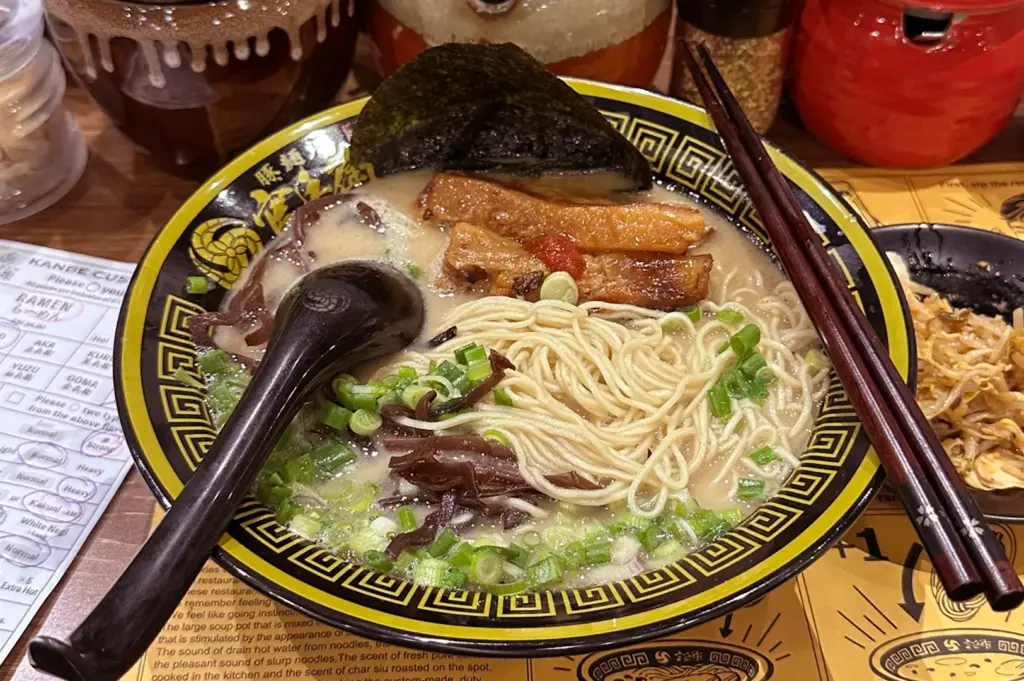
The shop is known for tonkotsu ramen and tsukemen, with customization that lets diners adjust noodle firmness, broth intensity, oil, and aromatics, the kind of detail that makes the meal feel less like a fixed order and more like a conversation with the bowl. One recent ramen-focused review described Kanbe as leaning into Hakata-style tonkotsu and tsukemen, with a menu built around that level of adjustment.
That matters because tonkotsu can easily become blunt.
When pork-bone broth is too heavy, it overwhelms. When it is too light, it loses its purpose. The best versions carry weight without turning dull. They coat the mouth, but still leave enough room for noodles, oil, and seasoning to register clearly.
At Kanbe, that balance is the point.
The bowl is not trying to surprise us with spectacle. It works through repetition: broth, tare, noodles, aroma, texture. Each part has to arrive in the right order.
For anyone learning to read a bowl before judging it, our guide to the first-sip test for Malaysian ramen offers a useful way to think about broth, balance, and depth.
The Beauty of a Narrow Room
There is something revealing about ramen shops that keep the experience tight.
The seats may be close. The room may move quickly. The food may arrive with very little ceremony. But this is part of ramen’s grammar. A ramen shop does not need to behave like fine dining to feel serious.
Kanbe seems to understand this.
Public diner summaries repeatedly point to rich broth, noodles with good bite, customization, compact seating, and prompt service as part of the experience. None of these details sound dramatic on their own. Together, they form the shape of a ramen shop that knows what it wants to be.
Small room. Focused menu. Clear rhythm.
The pleasure is not in excess.
It is in alignment.
Where Patience Pays Off
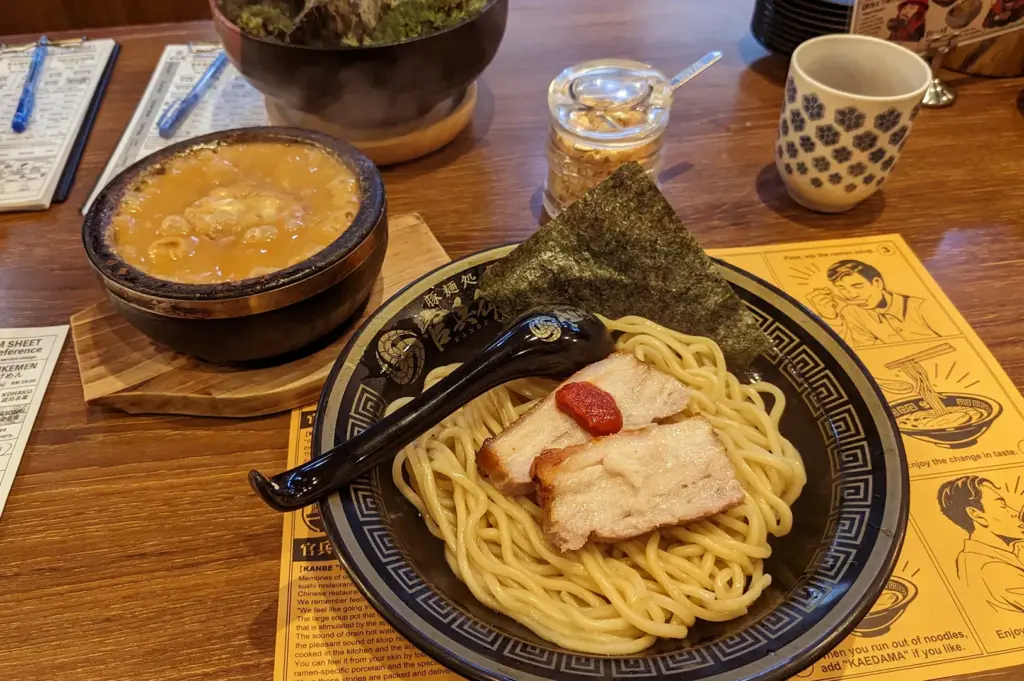
What makes Kanbe interesting in Kuala Lumpur is not simply that it serves ramen well. It is that it gives KL diners a version of ramen built on patience: broth that needs time, noodles that need timing, and a dining experience that rewards those willing to wait their turn.
That may be why the shop stays in conversation.
In a city where new restaurants appear quickly and attention moves even faster, Kanbe’s appeal feels almost old-fashioned. It asks diners to trust the process behind the bowl.
And when the broth lands with depth, when the noodles hold their bite, when the room quiets for that first sip, the wait begins to make sense.
Kanbe is not just a ramen stop in Kuala Lumpur. It is a reminder that some bowls cannot be rushed.