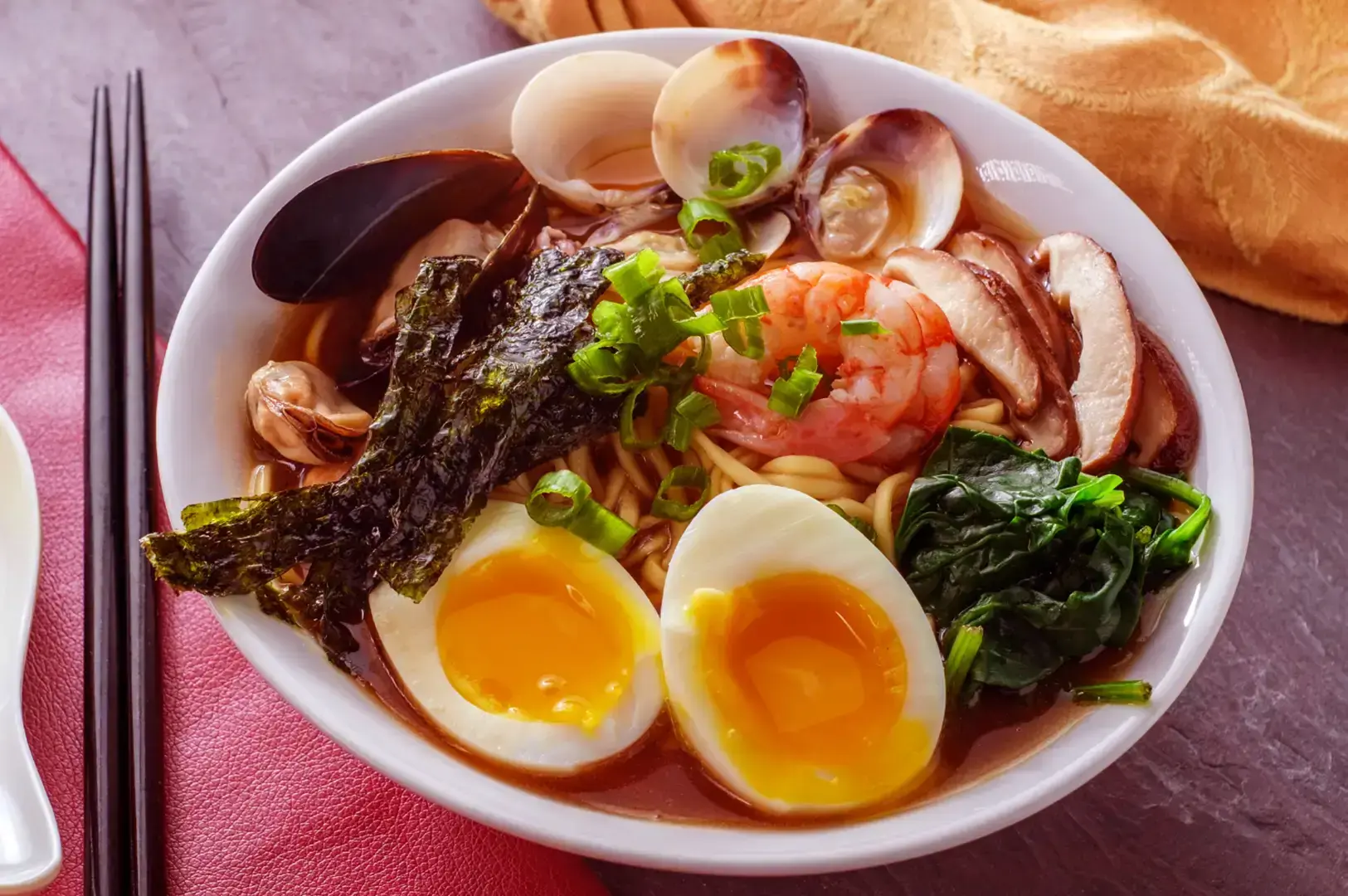
For years, I threw the prawn shells away. I’d peel a bag of prawns at the sink, drop the heads and shells into the bin, and keep only the pink flesh. That was the part that mattered, or so I thought.
Then one evening I simmered those shells instead, with a few slices of ginger and some garlic in a little oil. The kitchen filled with a smell I knew from childhood, the smell of a prawn mee stall before the lunch crowd arrives.
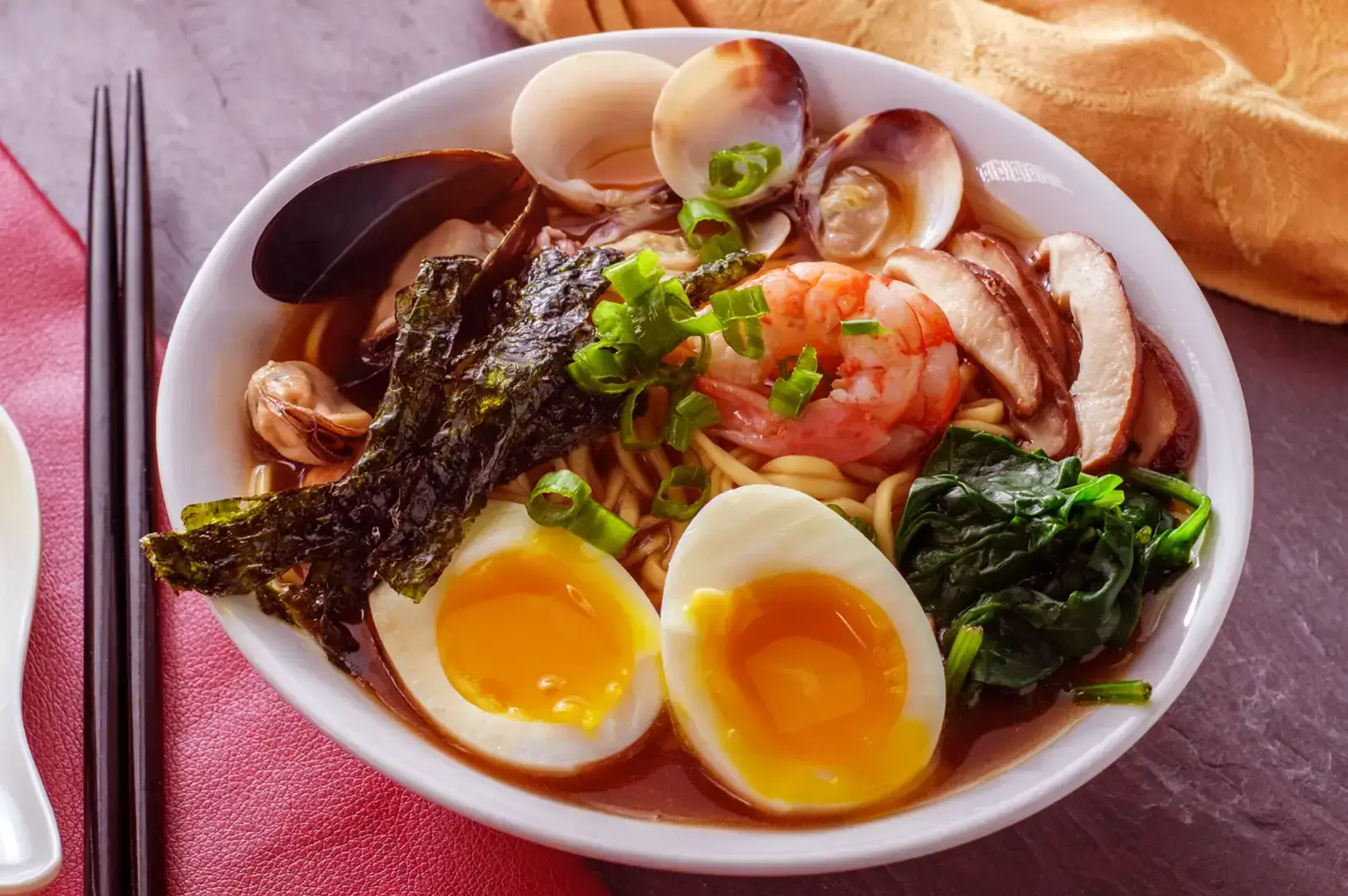
That pot taught me what seafood ramen really is. It isn’t ramen with prawns placed on top. The sea has to be inside the broth. This simple recipe changed the way I cook seafood at home.
What Is Seafood Ramen?
Seafood ramen is a broad family of bowls. Fish, shellfish, or dried seafood flavor the broth, the toppings, or both.
Prawns, scallops, mussels, clams, squid, crab, and lobster all appear. Some bowls carry their seafood quietly. Japanese dashi made from kombu and bonito flakes gives a soup marine depth even when no piece of fish sits in it. In Japan, that balance of broth and seasoning is part of a much wider ramen world.
The important idea is this: the seafood in the stock and the seafood on top are two separate things.
Types of Ramen Broth You’ll Meet
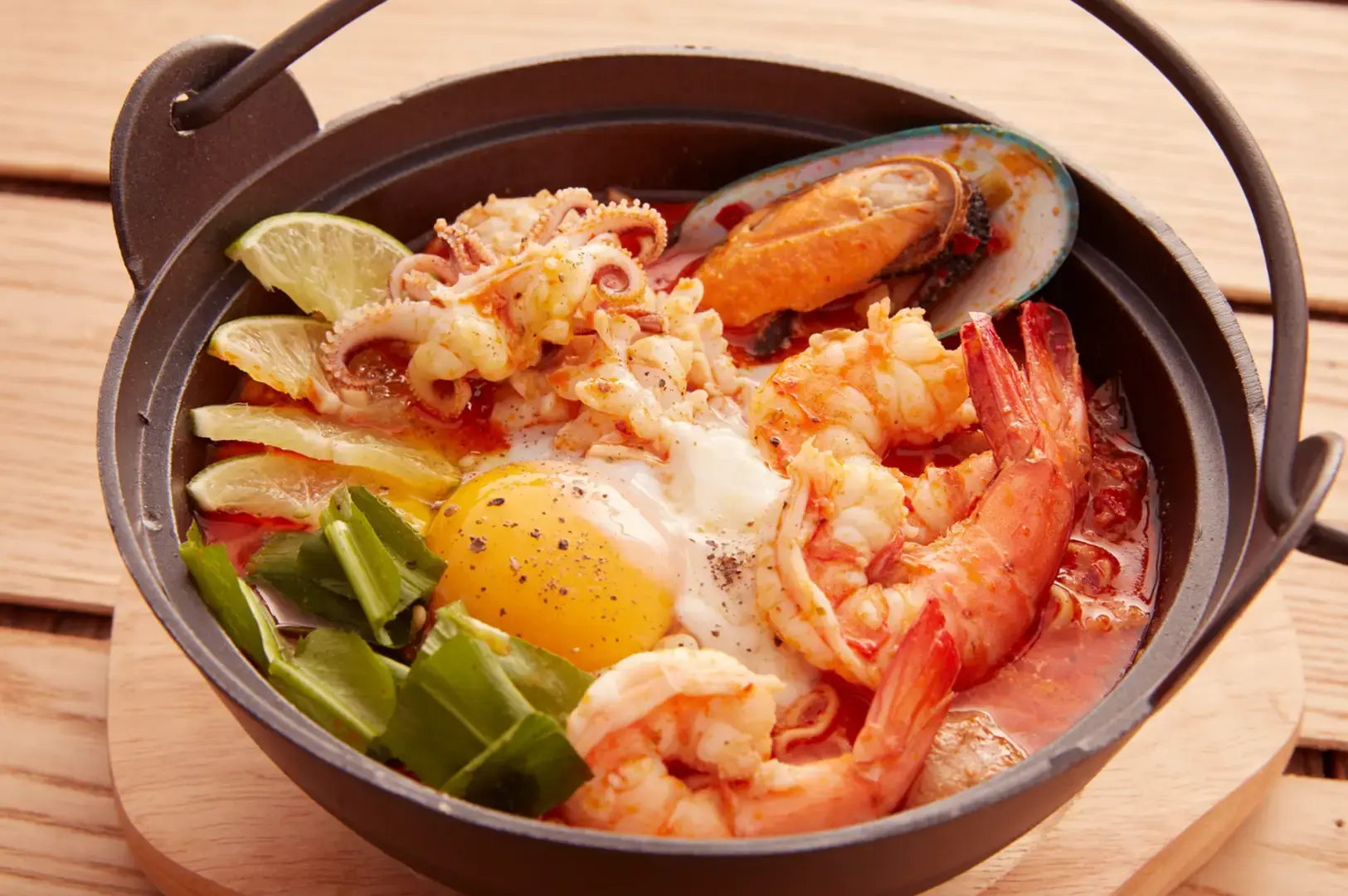
Prawn broth. This one has a roasted shell aroma, a natural sweetness, and a savory finish. It can be clear, creamy, or deeply concentrated.
Fish broth. It can be light and clean. In styles built on niboshi, which are dried small fish such as sardines, it can be bold and intense. Some people love that intensity. Others don’t.
Lobster or shellfish broth. The sweetness here is concentrated. Some versions lean toward a creamy, bisque-like richness.
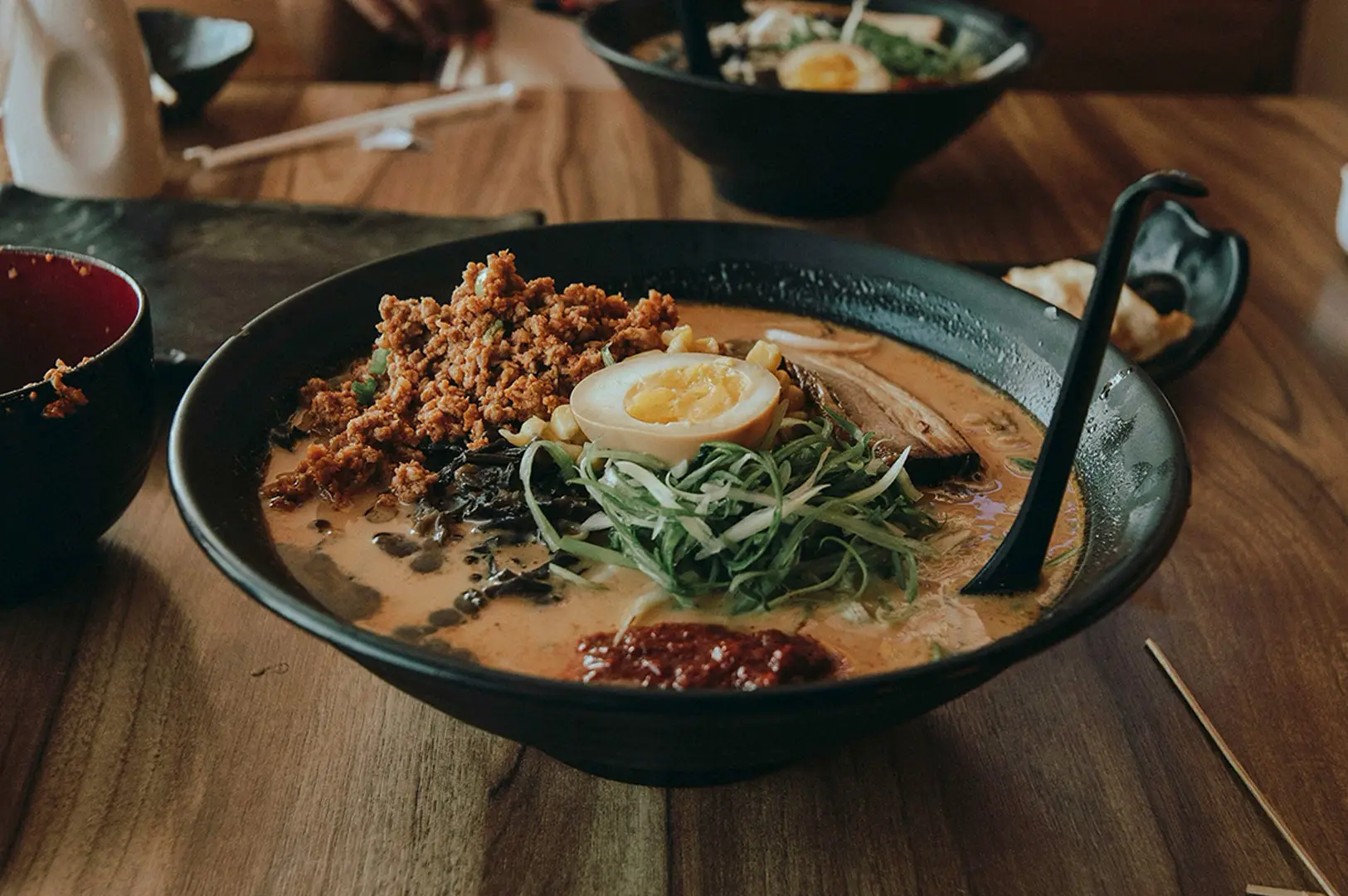
Seafood miso. Fermented miso gives prawn or fish stock more body. It’s a good choice when you want a bowl that feels like a full meal.
The Ramen Knowledge: A cloudy broth isn’t always made with cream. Emulsified fat and stock ingredients can turn a soup cloudy on their own. And a “collagen rich broth” label on a seafood bowl deserves a second look, because shell flavor doesn’t automatically mean high collagen.
How It Differs From Singapore Prawn Mee
If you grew up here, seafood ramen will feel familiar and slightly foreign at the same time.
Prawn mee usually comes with yellow noodles, bee hoon, or both, in a prawn-and-pork stock finished with fried shallots. Seafood ramen uses wheat ramen noodles, made with flour, and its seasoning comes from Japanese tare, salt, miso, or soy sauce. The toppings shift too, toward ajitama, seaweed, and scallops.
They’re cousins, not twins. I find it helps to taste each one on its own terms.
Choosing Ramen Noodles for Seafood Soup
There’s no strict rule, but I’ve found a pattern.
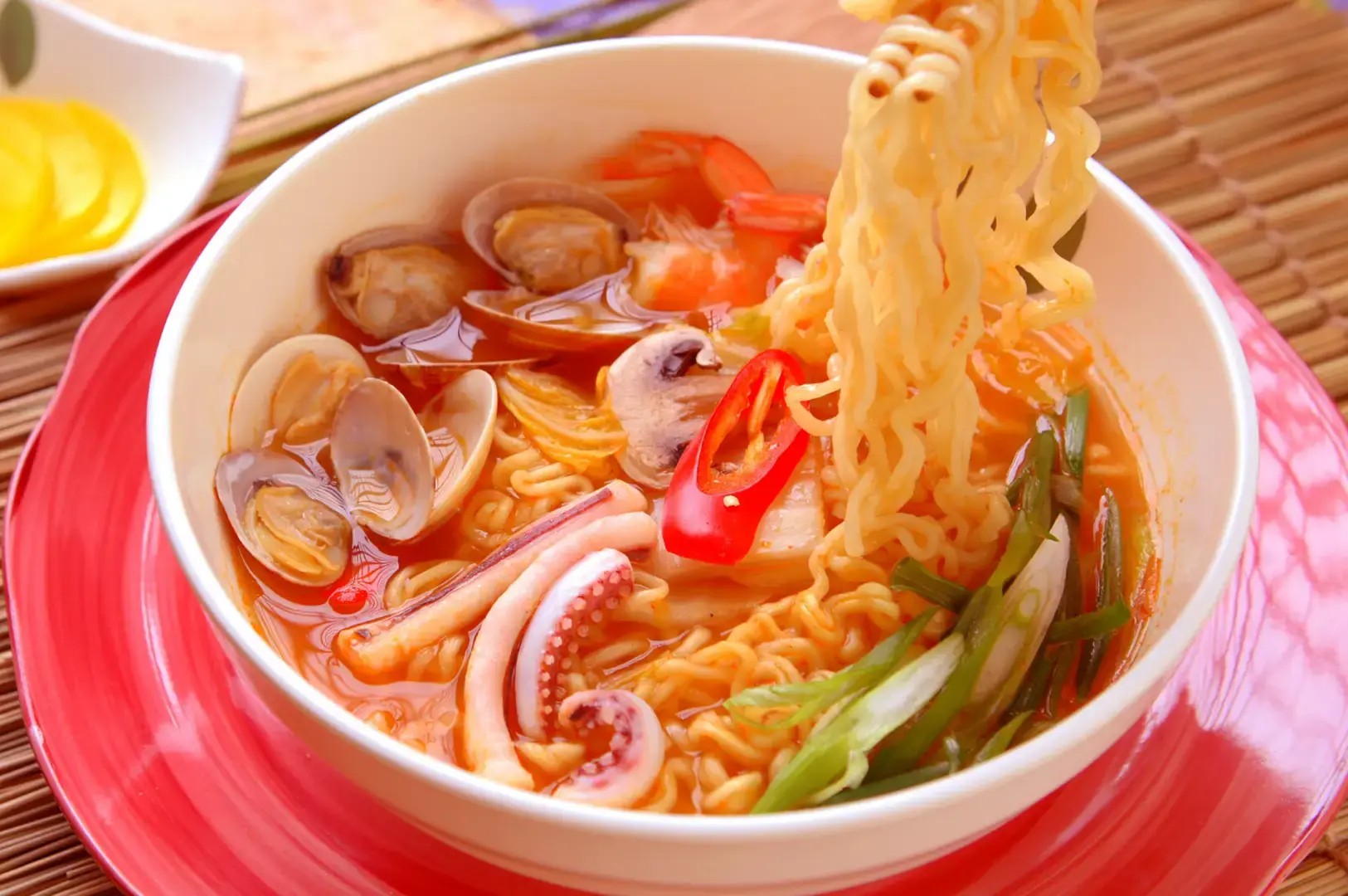
A light fish broth suits thin or medium ramen noodles, which let the soup stay at the front. A rich prawn or seafood miso broth can handle springier, thicker noodles, and the combination feels satisfying.
Whatever you choose, the noodle should hold its bite until the end of the bowl. Medium-thick, wavy noodles are especially good at catching broth, while a little crunch from fresh toppings can add contrast.
Choosing Fresh and Cooked Seafood for Ramen
This is where I made most of my early mistakes.
Seafood behaves differently from pork bones or chicken. A pork stock can simmer for hours. Prawns and scallops can’t. Leave them in the pot too long and they turn tough instead of tender. So I now work in two stages: The shells build the flavor first. The meat goes in later, cooked properly and close to serving.
For safety, the Singapore Food Agency‘s advice is clear. According to SFA, cook fish and seafood thoroughly, and keep raw seafood away from ready-to-eat food. For clams, mussels, and other bivalves, boil them until the shells open, then keep boiling for at least another 3–5 minutes. You can also steam them for at least 4–9 minutes. Throw away any shellfish that don’t open fully.
Raw or lightly cooked shellfish isn’t a casual garnish, especially when you’re cooking for kids, older adults, pregnant people, or anyone with a weakened immune system.
The Ramen Tale’s Tip: Buy chilled and frozen seafood at the end of your shopping trip, and carry it home in a cooler bag with ice packs. Frozen seafood is fine when it’s stored and thawed properly. Safe handling matters more than whether it was chilled or frozen. Let frozen prawns thaw safely before peeling, so you don’t chill your fingers for no reason.
Easy Prawn Miso Ramen at Home
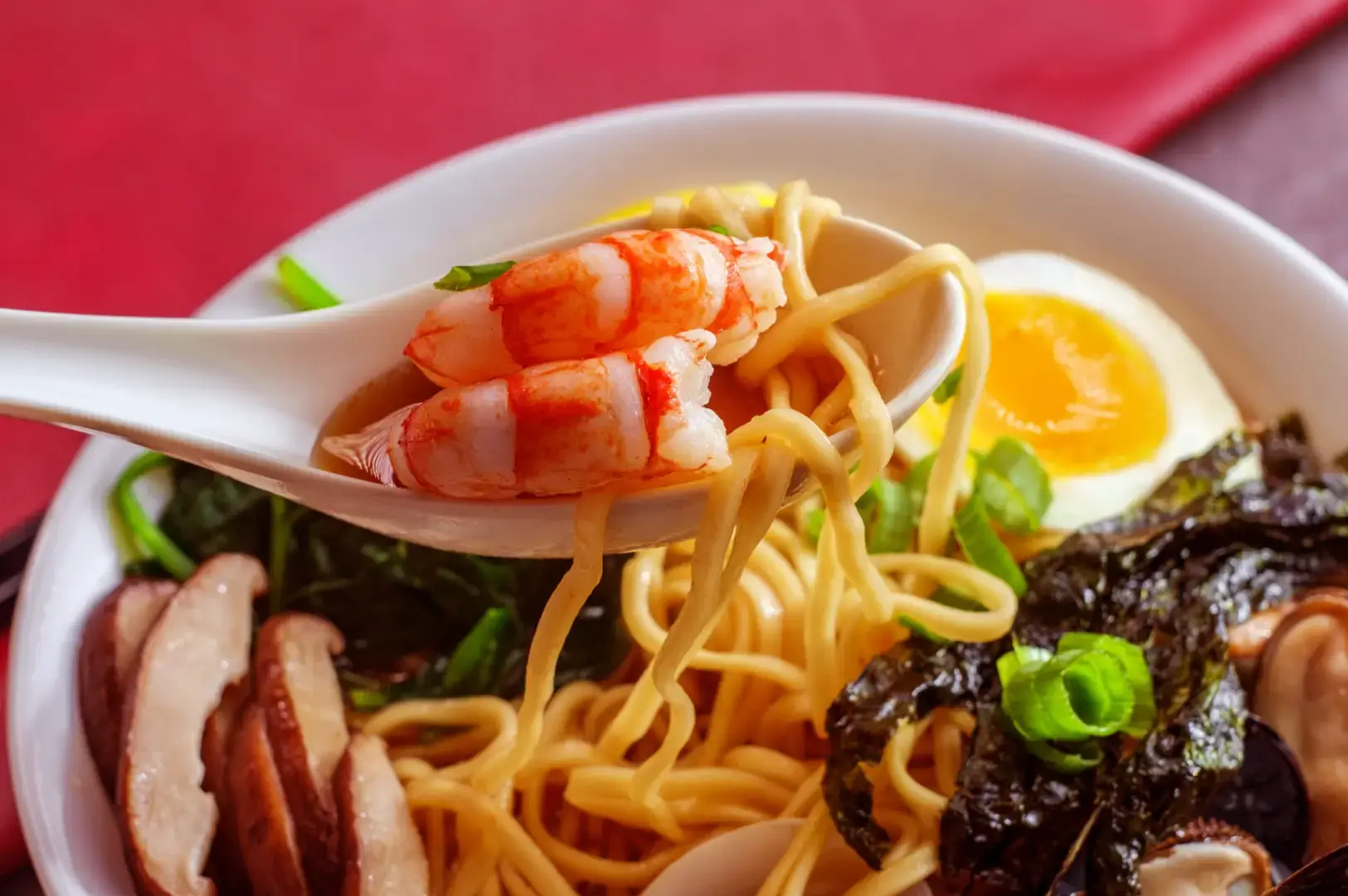
Cooking time: about 40–50 minutes. Serves: 2.
You’ll need: 2 portions of ramen noodles, 250–300 g fresh shell-on prawns, 800 ml water or unsalted chicken or vegetable stock, 1–1½ tbsp miso, 1–2 tsp soy sauce, 2 cloves minced garlic, 3–4 slices of ginger, 1 tbsp vegetable oil, 80–100 g mushrooms, 2 small heads of bok choy, 2 stalks of spring onion, and optional sesame seeds and 1 tsp mirin.
Peel and devein the prawns. Keep the shells, and refrigerate the meat while you work.
Build the aroma. Heat the oil in a large pot over medium heat. Add the shells, garlic, and ginger, and stir until fragrant.
Simmer. Pour in the water or stock and bring it to a boil. Lower the heat and simmer gently for about 20 minutes.
Strain. Pour the broth through a fine strainer and discard the shells.
Season slowly. Dissolve the miso in a little hot broth, then stir it back into the pot. Add soy sauce a bit at a time, tasting as you go.
Cook the toppings. Add the prawns and cook until opaque and firm. Add the mushrooms and bok choy and cook until ready.
Boil the noodles separately. Follow the package instructions and drain them well.
Assemble and eat. Divide the noodles between two bowls, pour over the hot broth, and top with the prawns, vegetables, spring onion, and sesame seeds. Finally, serve while hot for a delicious, comforting meal.
For a deeper sea flavor, add a little kombu or bonito dashi. For a meat-free broth, use water or vegetable stock. It’s still a shellfish dish, though, so it isn’t suitable for anyone with a shellfish allergy. Cheese or mayonnaise sometimes turns up in fusion bowls. I see them as optional detours, not part of the tradition.
At home, budget roughly S$12–S$20 for a simple prawn version for two. FairPrice has listed scallops at S$12.95 for 380 g and clam meat at S$6.06 for 400 g, so pick one main seafood instead of buying everything.
Cooking Mistakes I’ve Made in Seafood Ramen
Throwing away the shells. They’re where the flavor lives.
Leaving scallops simmering. I left some in the pot while I prepared everything else, and they went rubbery. Add them near the end, cooked safely.
Stacking salt on salt. Stock, miso, and soy sauce added without tasting made one batch hard to finish. Start with unsalted stock.
Letting noodles sit in the soup. They soften quickly. Cook them separately and assemble just before serving.
Assuming “shrimp” means pork-free. It often doesn’t, and that’s the next section.
Singapore Seafood Ramen at Ramen Shops
These aren’t rankings. They’re simply three places that show how different seafood ramen can be.
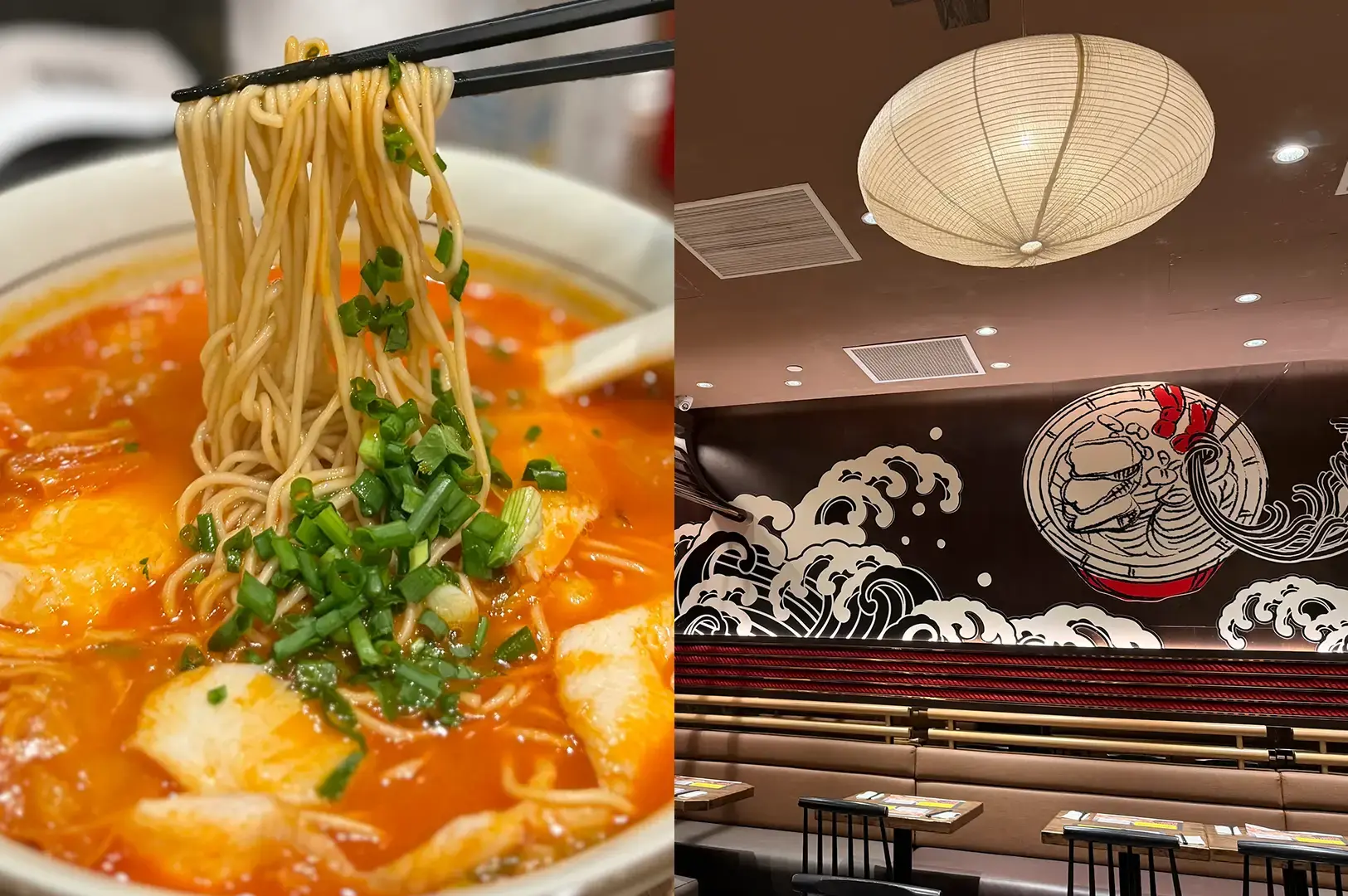
Le Shrimp Ramen, Paragon. The broth is made from tiger prawns, pork bones, and Chinese spices, with a smoky wok-hei edge. It sits between Japanese ramen and Chinese la mian. It’s also the clearest reminder that a seafood-named bowl can still contain pork.
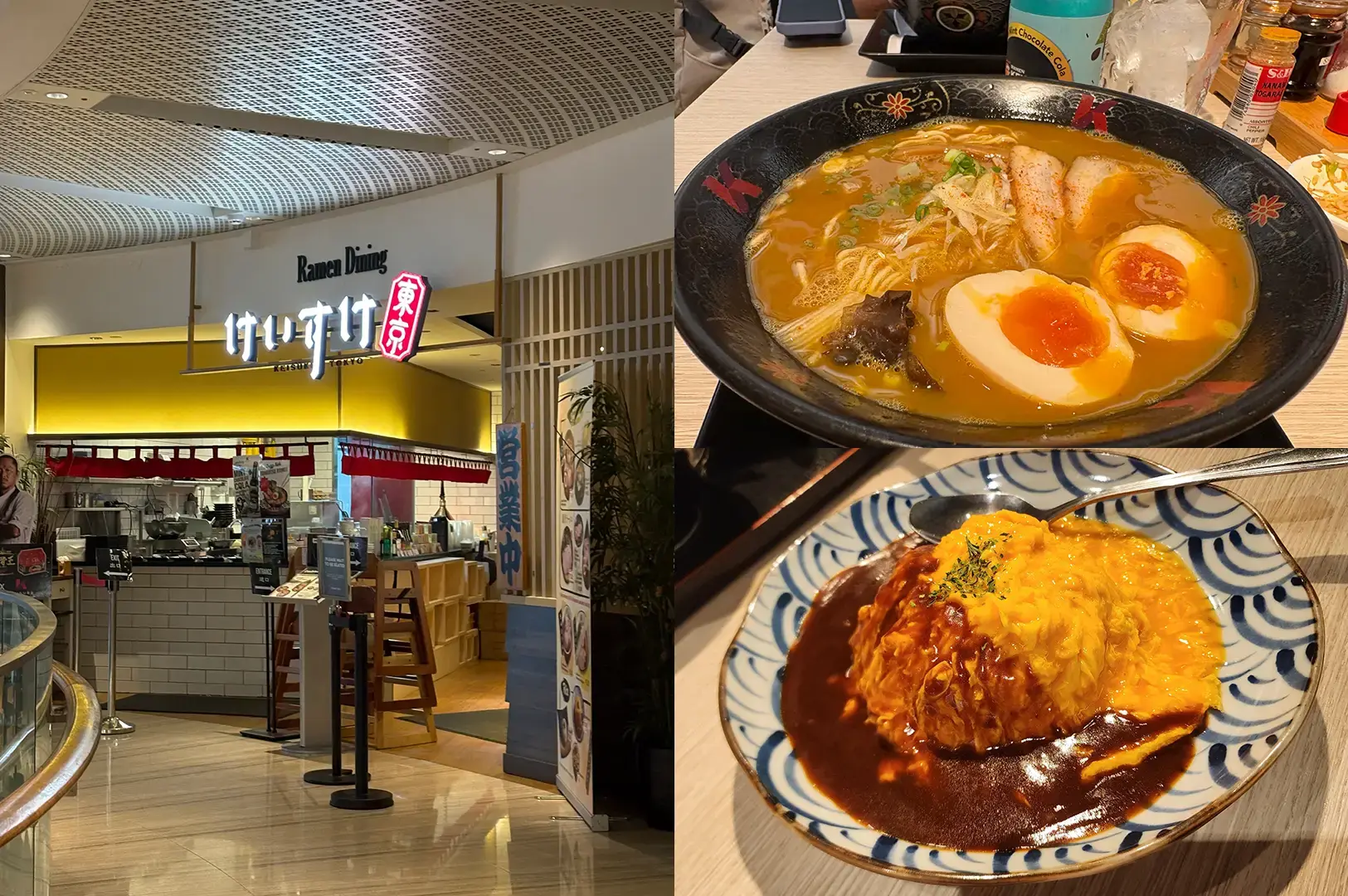
Ramen Dining Keisuke Tokyo, Capitol Singapore. The Lobster Broth Ramen is S$13.90, S$16.40 with a flavored egg, and S$21.90 for the Special. Lobster broth means lobster in the stock. Don’t expect a whole lobster resting on top.
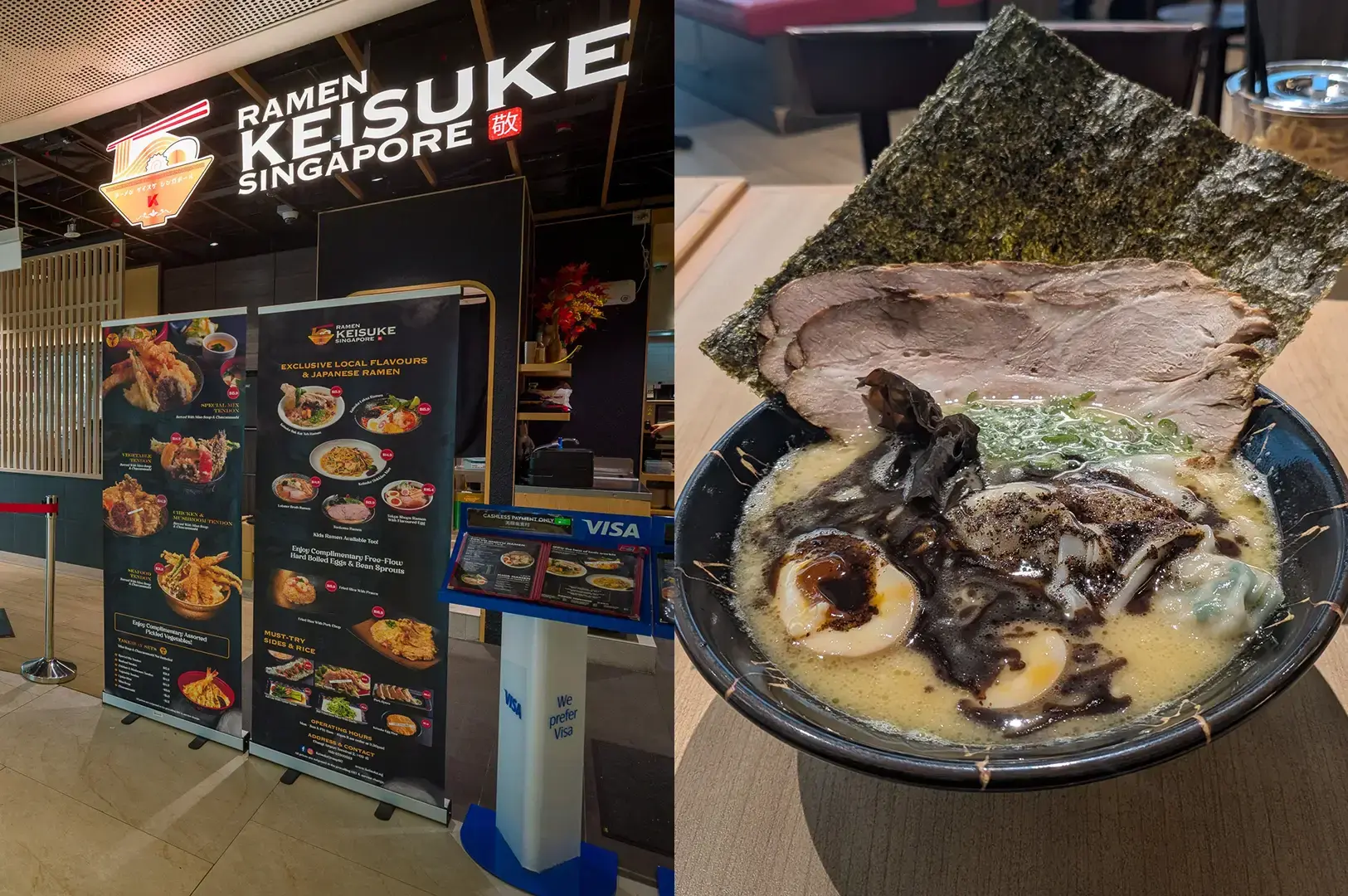
Ramen Keisuke, Changi Airport Terminal 2. The Lobster Broth Ramen is S$14.90, and the Red or Black Spicy versions are S$15.90. It’s a useful place to taste how chilli changes a shellfish base.
The old Ramen Keisuke Lobster King at Clarke Quay has closed for good, so don’t follow older guides there.
Dining out, expect to spend about S$15–S$30 per person once drinks, extra toppings, GST, and service charge are added. If you’d like to wander further, here’s a wider look at Japanese ramen across Singapore.
Before You Slurp Your Next Ramen
I don’t throw the shells away anymore. That’s the quiet lesson of seafood ramen. The flavor is often in the part you were about to discard. Let the shells build the broth, give the meat a gentle hand at the end, and taste before you season.
Then sit with the bowl while it’s still hot. The sea will do the rest. It’s become a favourite in my kitchen; leave a comment if you try it.