The first thing that failed was not the broth.
That surprised me.
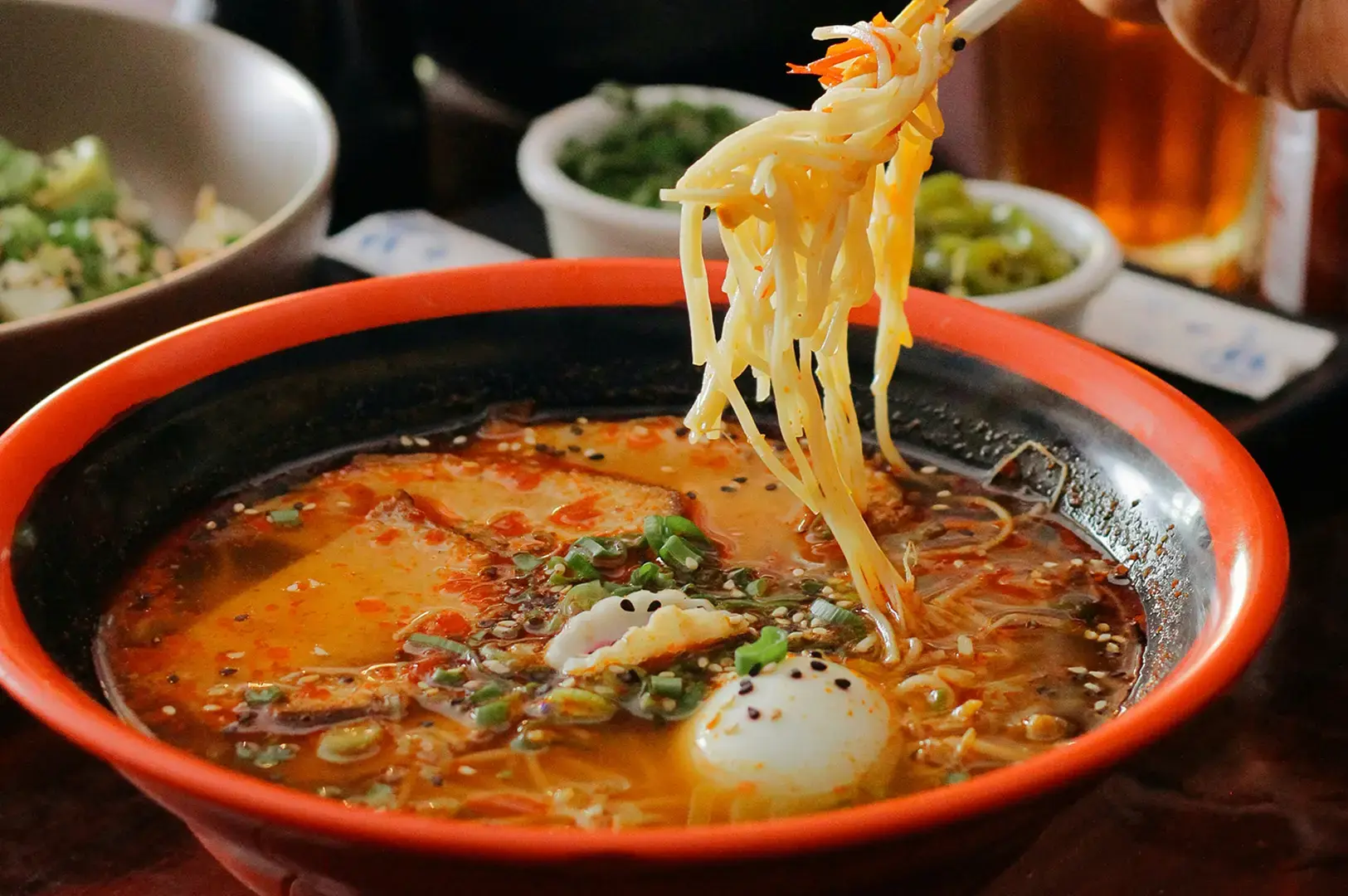
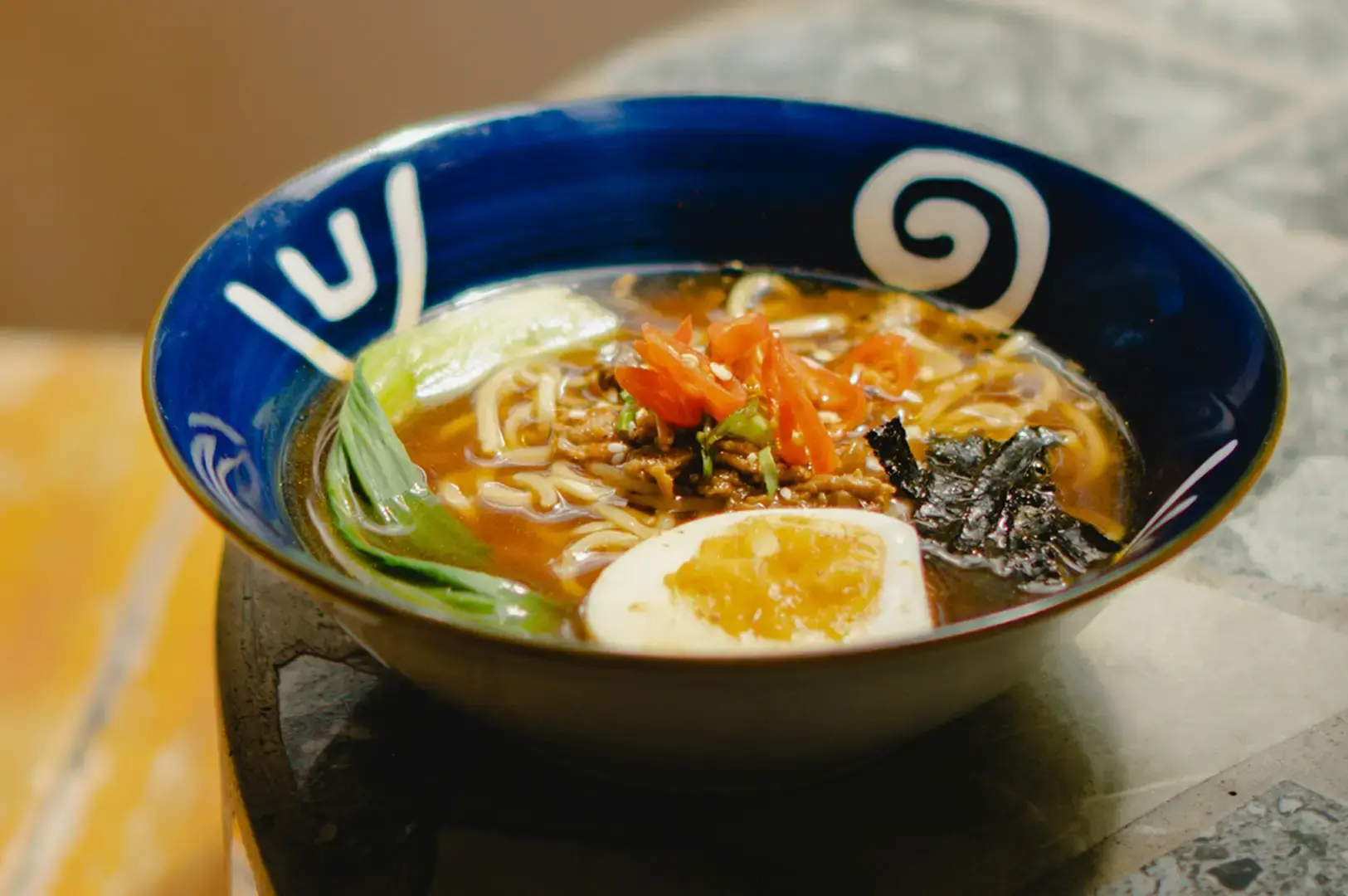
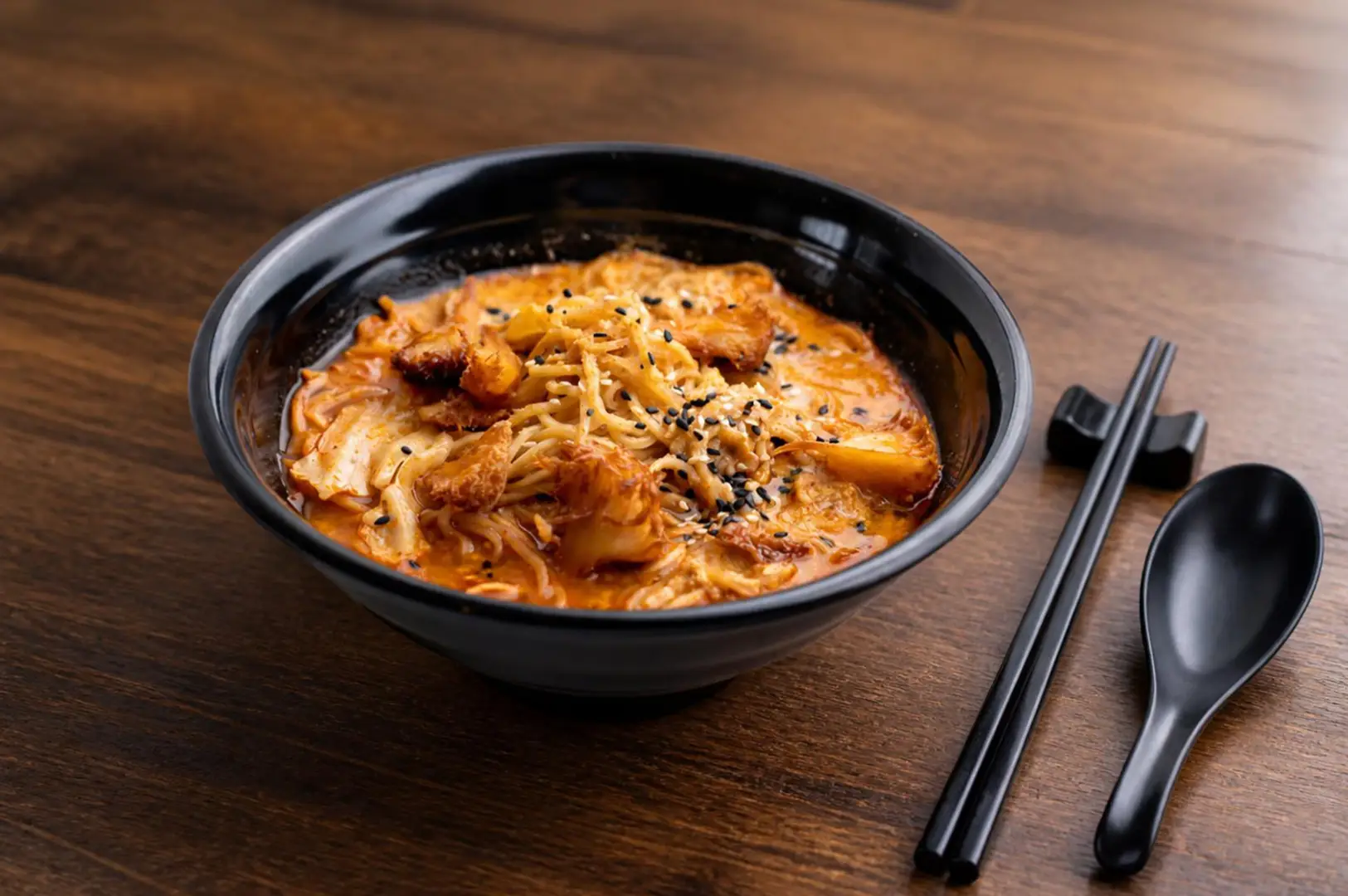
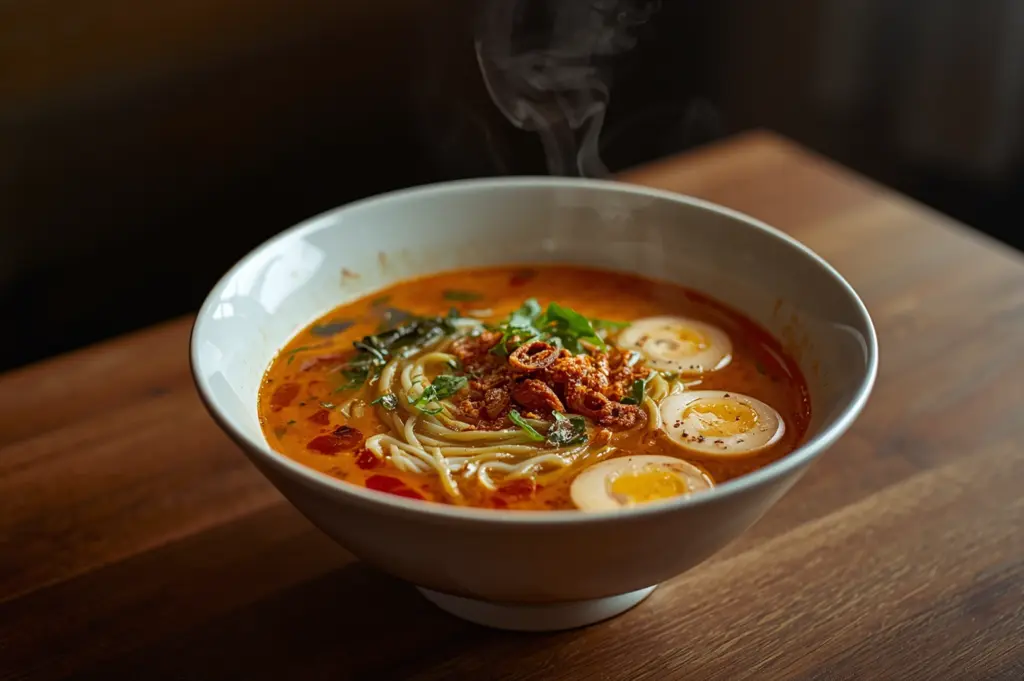
The bowl had all the right signals of Malaysian ramen: coconut richness, chili oil glowing at the surface, a faint dried shrimp aroma, and enough sambal heat to wake up the table before the first sip. The broth had weight. The flavor made sense.
Then I lifted the noodles.
They were too thin. Too delicate. After a few minutes, they softened into the broth and lost their shape. What should have been a firm, rhythmic slurp became something heavy and slow, a reminder that the art of ramen noodles matters just as much as the broth itself.
That bowl taught me one of the most important problems in Malaysian ramen.
The broth can be brilliant. But if the noodles cannot carry it, the whole bowl collapses.
Malaysian Broths Ask More From Noodles
A light shoyu broth and a laksa-inspired broth do not treat noodles the same way.
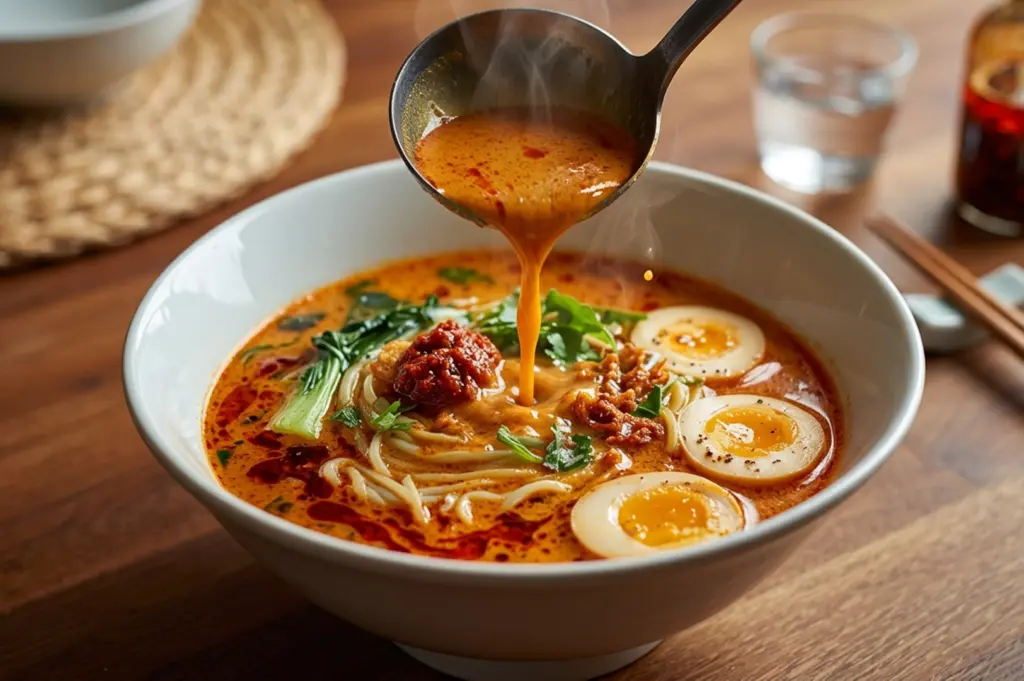
Malaysian-style ramen often pulls from ingredients with strong body: coconut milk, curry paste, sambal, dried shrimp, chicken stock, seafood oils. These elements give the broth intensity, but they also add weight.
That weight changes the job of the noodle.
In a lighter Japanese broth, thin noodles can work beautifully. They move quickly, absorb just enough soup, and keep the bowl clean. But in a coconut or curry-heavy broth, delicate noodles often struggle. The fat coats them too heavily. The spice clings too aggressively. The texture fades before the bowl reaches its midpoint.
A heavier broth needs resistance.
Not toughness. Resistance.
Spring Matters More Than Thickness Alone
I used to think the answer was simply thicker noodles.
It is not that simple.
Thickness helps, but spring matters more. A good noodle for Malaysian ramen needs elasticity. It should bend, pull, and snap back slightly between the teeth. It needs enough structure to stand up to broth without turning dense.
The best pairings I’ve had usually involve slightly thicker, springier noodles with enough hydration to stay alive in the bowl. They do not disappear under curry. They do not surrender to coconut milk. They create contrast.
That contrast is what makes the broth feel better.
Without it, every bite becomes soft on soft. Rich broth, soft noodle, heavy finish. The bowl may taste good at first, but it becomes tiring fast.
Sambal Changes the Equation
Sambal adds another layer of difficulty.
It brings heat, garlic, sweetness, salt, and sometimes fermented depth. When used well, it can behave almost like tare — shaping the bowl from the base upward. But it also clings.
A noodle that is too fine can become overloaded. Every strand carries too much intensity. The slurp becomes sharp instead of balanced.
A springier noodle gives sambal space. It lets the heat land, then pull back. It turns the bowl into something paced rather than aggressive.
That pacing matters.
Good ramen should make you want the next bite, not challenge you to survive it.
The Bowl Has to Move
The best Malaysian ramen bowls I’ve tasted had motion.
The broth was rich, but the noodles kept it from feeling static. Each lift from the bowl carried coconut, spice, and aroma, but also texture. The noodle gave the broth a shape to follow.
That is the match many shops underestimate.
Malaysian ramen is not just about making the broth louder. It is about choosing noodles that can handle that volume.
When the match works, the bowl feels intentional. The broth has depth. The noodles have grip. The spice has direction.
When it fails, even a good broth starts to feel confused.
When it fails, even a good broth starts to feel confused. It’s the kind of small but telling ramen detail we keep paying attention to at Ramen Tale.
And in ramen, confusion usually begins where balance ends.