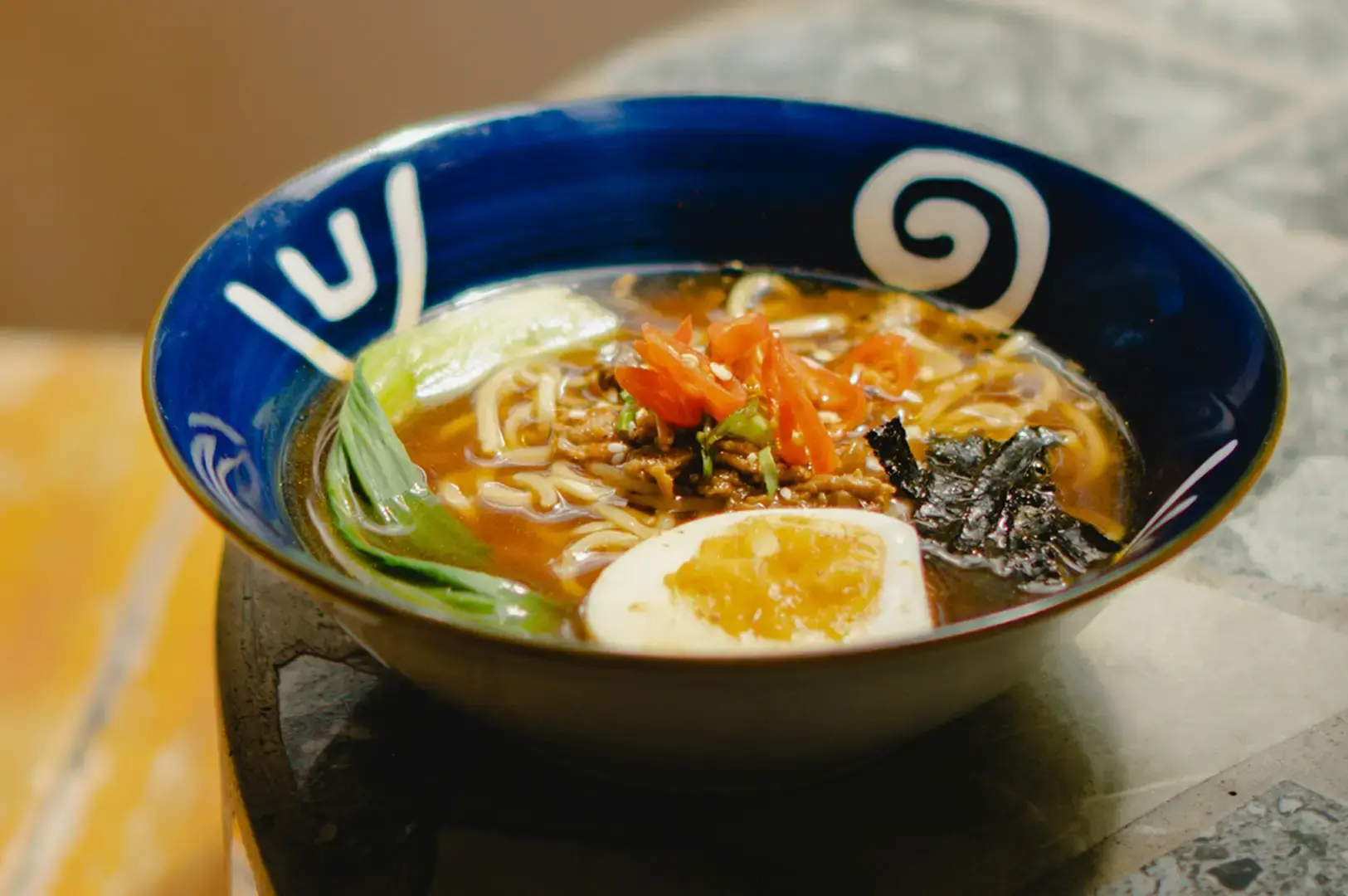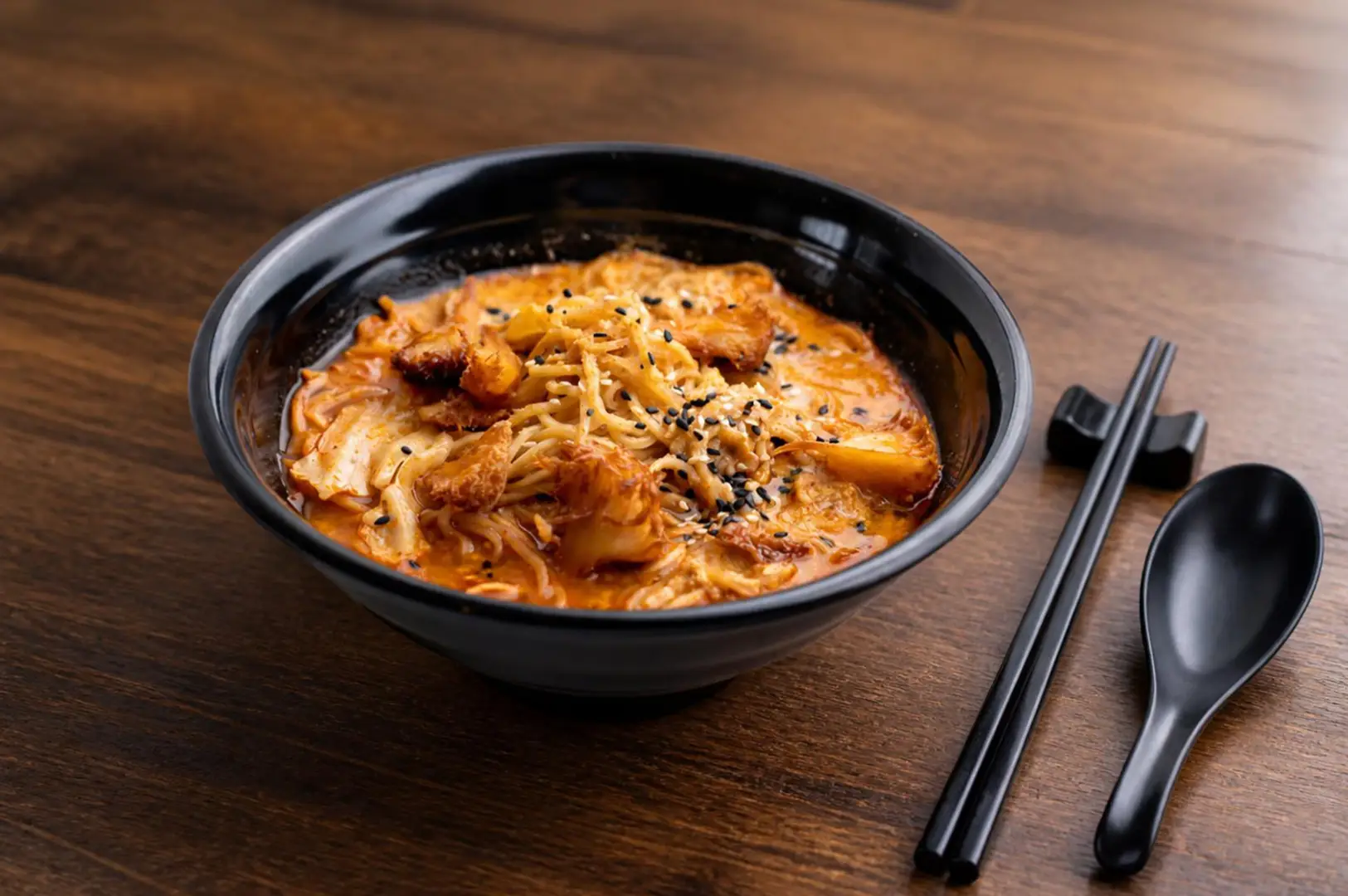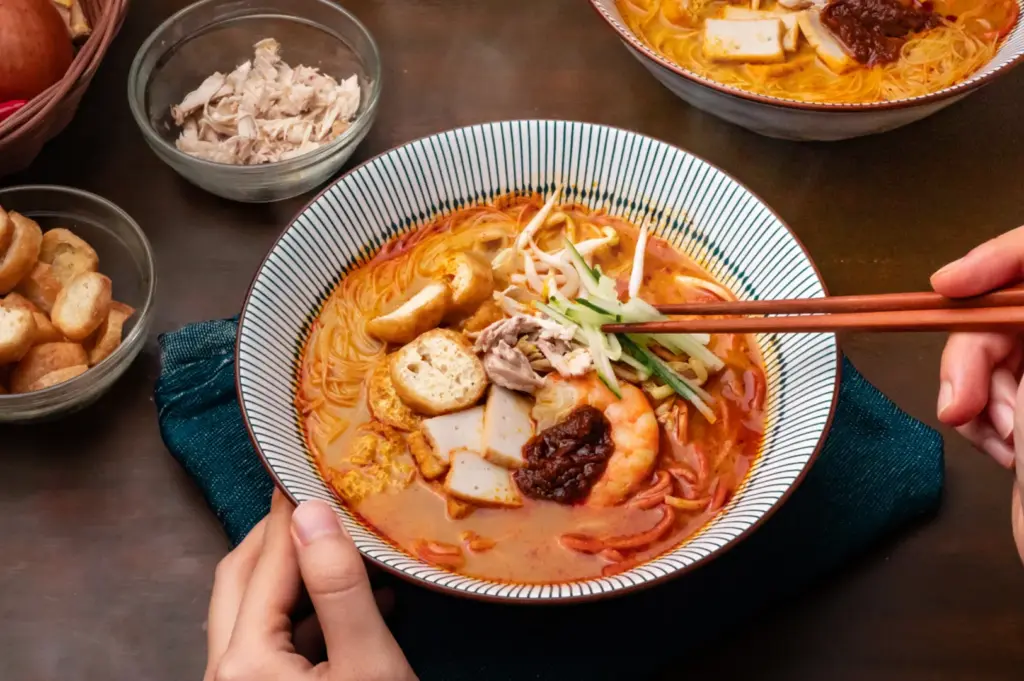
Not every bowl with sambal deserves to be called Malaysian ramen.
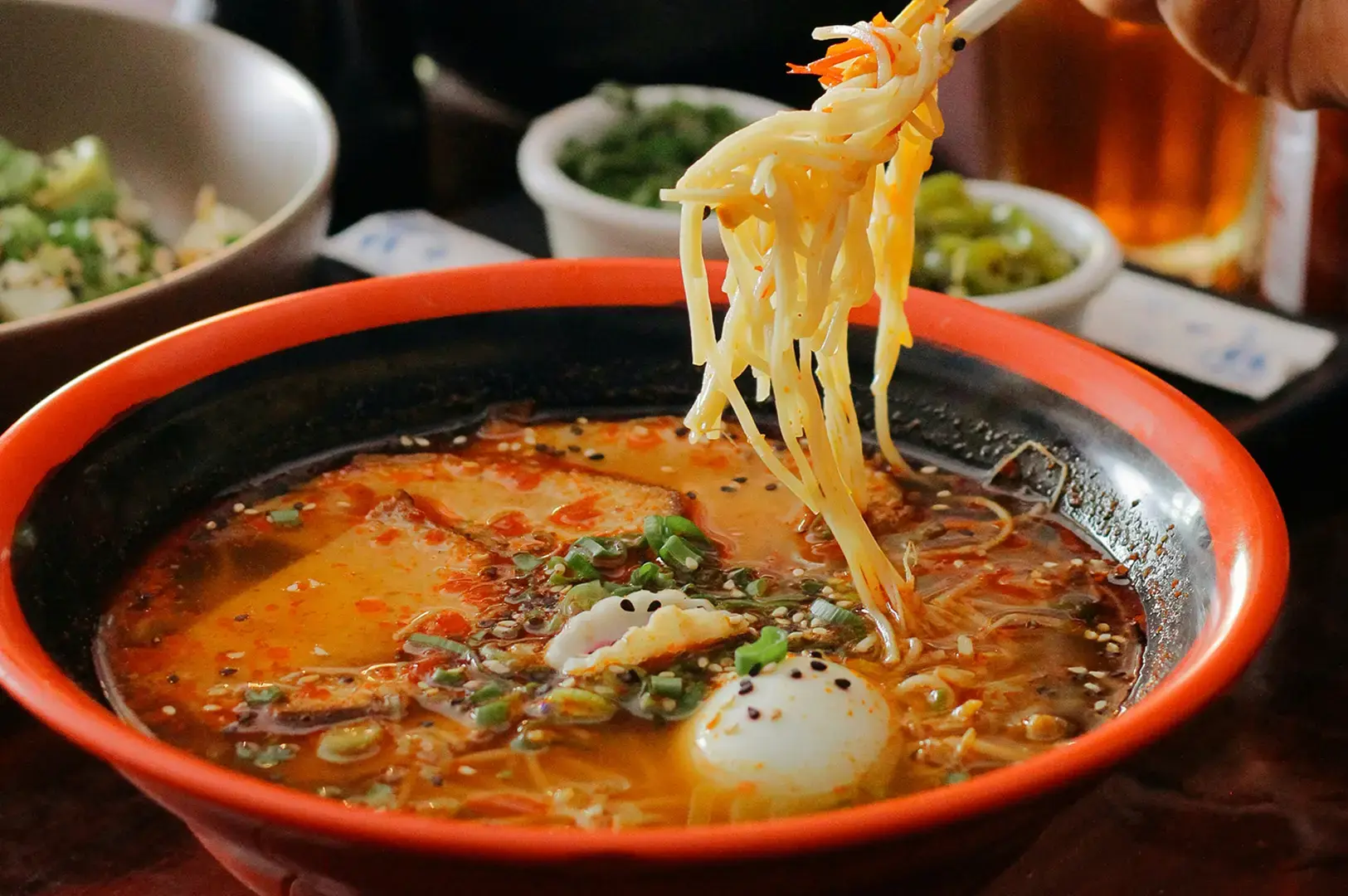
That sounds harsh, but we learn it quickly at the counter. A bowl arrives with chili oil glowing on top, coconut milk thickening the broth, maybe a few local toppings placed for effect. It looks convincing. It photographs well.
Then we take the first sip and the structure falls apart.
The broth is loud but flat. The noodles are too soft. The sambal sits on top instead of working through the bowl. What should feel like a thoughtful meeting of ramen and Malaysian flavor becomes a shortcut.
Good Malaysian ramen needs more than local ingredients.
It needs control.
1. The Broth Has Direction
The first test is always the broth.
Malaysian flavors bring natural force: coconut milk, curry paste, dried shrimp, sambal, lemongrass, chili oil. These ingredients can give a bowl depth quickly, but they can also make it heavy just as fast.
A serious bowl knows where it is going.
If the broth is laksa-inspired, the coconut should round the base without burying it. If curry is involved, the spice should build warmth, not coat the tongue until every sip tastes the same. If dried shrimp appears, it should add savoriness and aroma, not saltiness alone.
A good broth invites the next sip.
A confused one tires you out halfway through.
2. The Noodles Can Handle the Weight
Malaysian ramen often asks more from noodles than a lighter shoyu bowl would.
Coconut, curry, and sambal-heavy broths cling. They coat the strands. They carry more fat, more spice, more body. Thin, delicate noodles can collapse under that pressure.
The better bowls usually use noodles with spring, because great Malaysian ramen still depends on the same fundamentals behind how ramen noodles are built for the perfect slurp.
Not necessarily thick for the sake of thickness, but firm enough to hold texture after several minutes in the broth. The noodle should push back slightly between the teeth. It should carry the soup without disappearing into it.
When the noodle is wrong, the whole bowl slows down.
3. Sambal Behaves Like Part of the Bowl
Sambal should not feel like a spoonful of heat added at the end.
When it works, it behaves almost like tare — the seasoning base that gives ramen its identity. It brings chili, garlic, sweetness, salt, and sometimes fermented depth into the structure of the broth.
The best sambal ramen bowls do not just taste spicy.
They taste arranged.
The heat has a beginning, middle, and finish. It opens with aroma, settles into the broth, then leaves enough space for the noodles and toppings to matter.
If all we remember is the burn, the bowl has failed the test.
4. The Aroma Arrives Before the Spoon
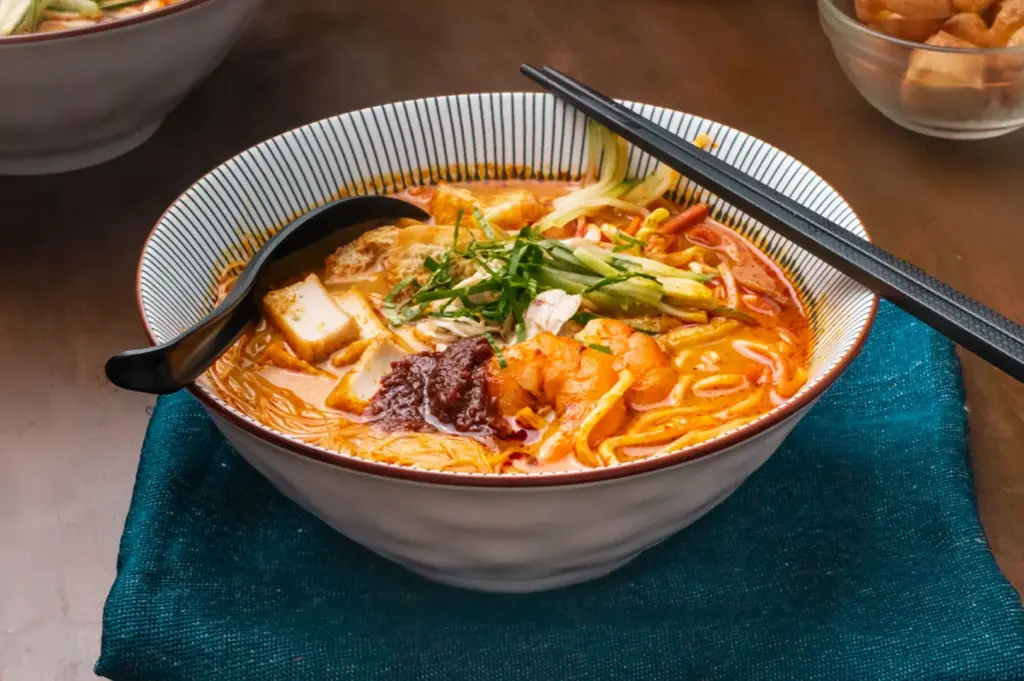
A good Malaysian ramen bowl should announce itself before we taste it.
Not aggressively. Clearly.
There should be something in the steam: toasted spice, seafood depth, garlic oil, curry leaf, chili, or coconut warmth. Aroma matters because ramen is experienced before the spoon reaches the mouth.
This is where many fusion bowls separate themselves.
Some rely on visual drama. The better ones build aroma into the oil and broth so the bowl feels complete the moment it lands.
That first breath tells us whether the kitchen thought beyond toppings.
5. The Bowl Still Feels Like Ramen
This is the final test.
Malaysian ramen should not taste like a local dish with ramen noodles dropped into it. It also should not taste like Japanese ramen wearing Malaysian garnish.
It needs to hold both ideas at once.
The broth must have structure. The noodles must be matched. The oil should carry aroma. The toppings should support the bowl rather than crowd it.
When those parts align, the fusion stops feeling forced.
It becomes its own form.
That is when Malaysian ramen works best — not when it shouts the loudest, but when every local flavor has a reason to be there.
A good bowl borrows.
A great one understands.