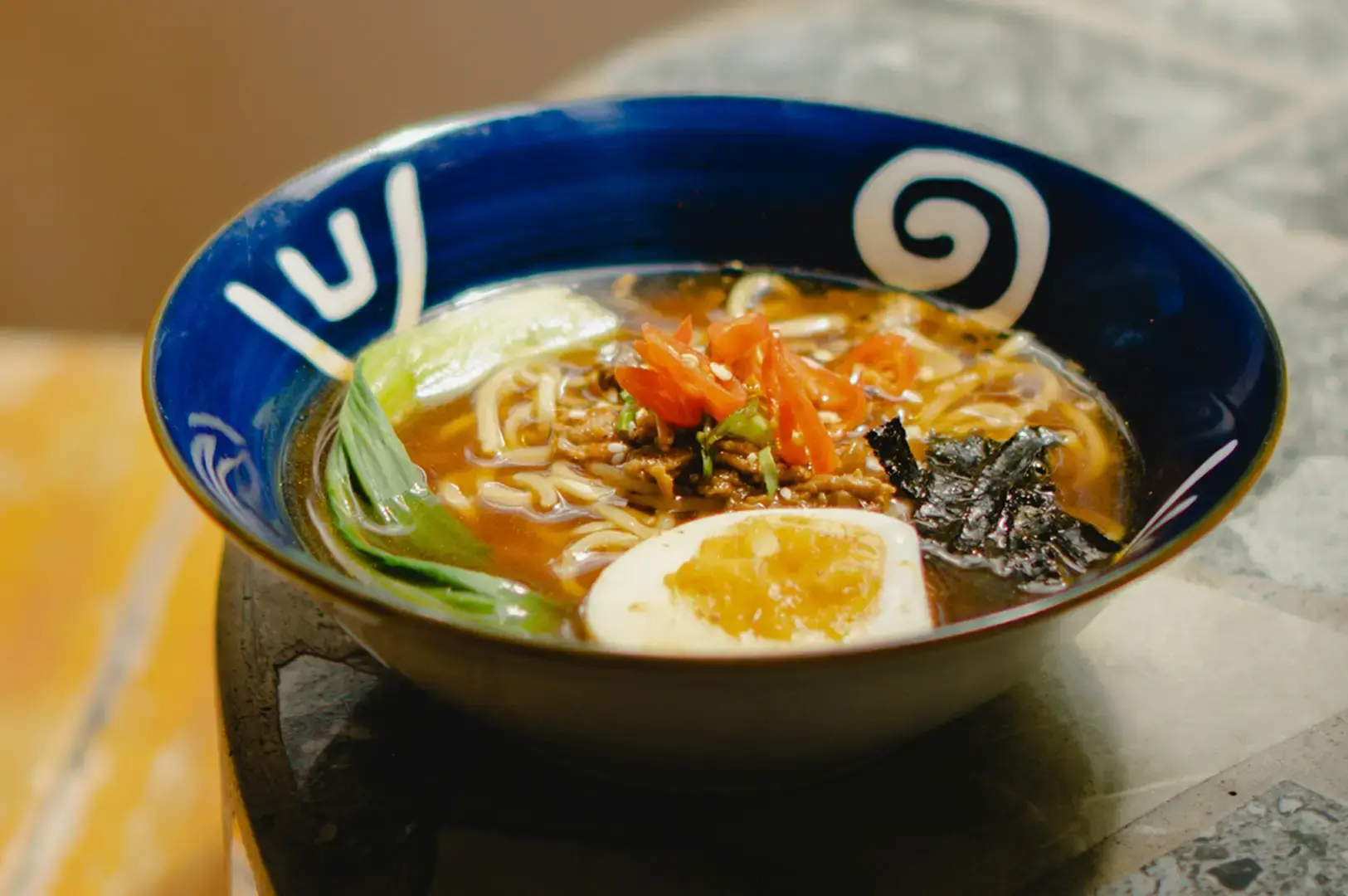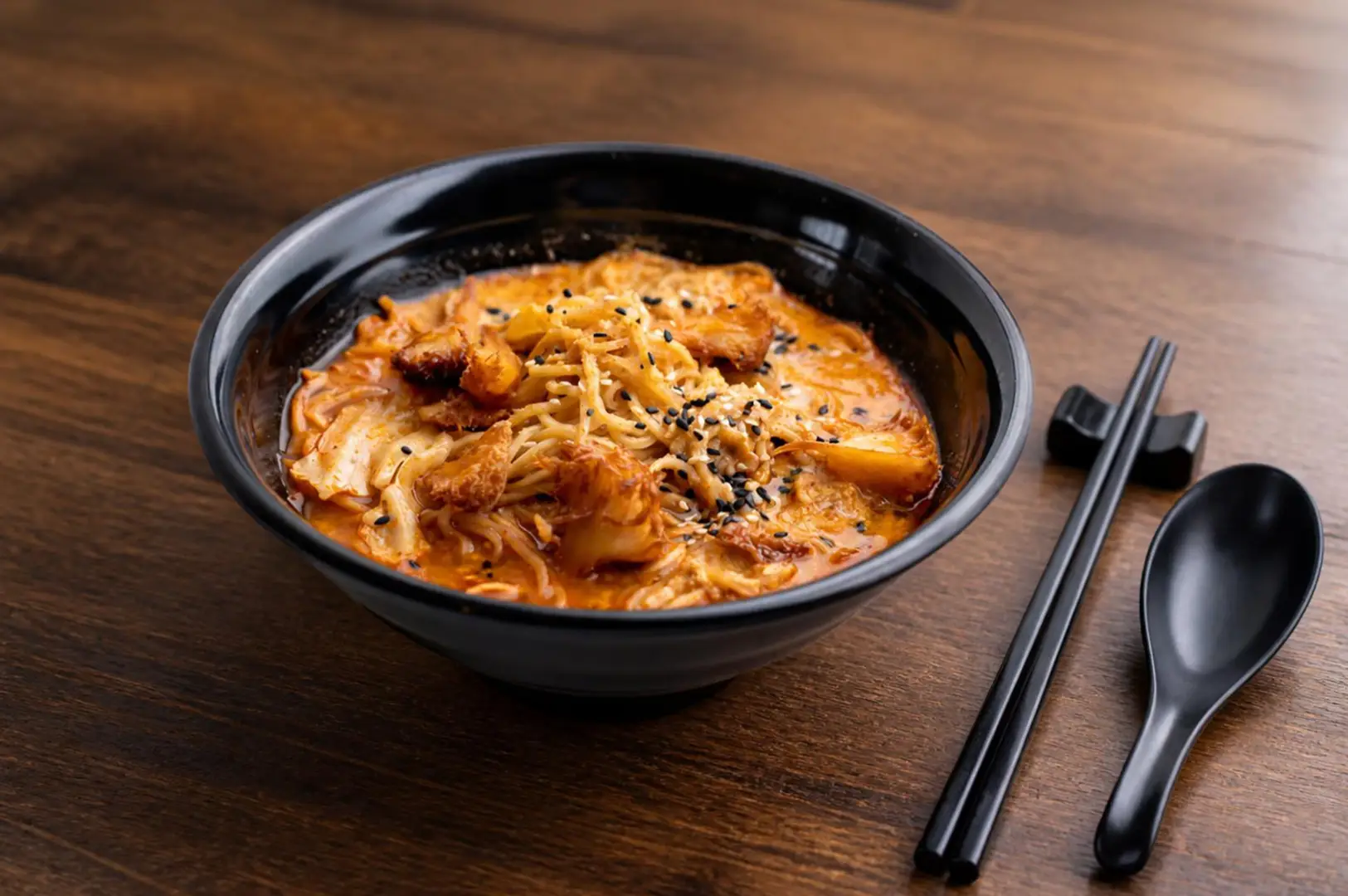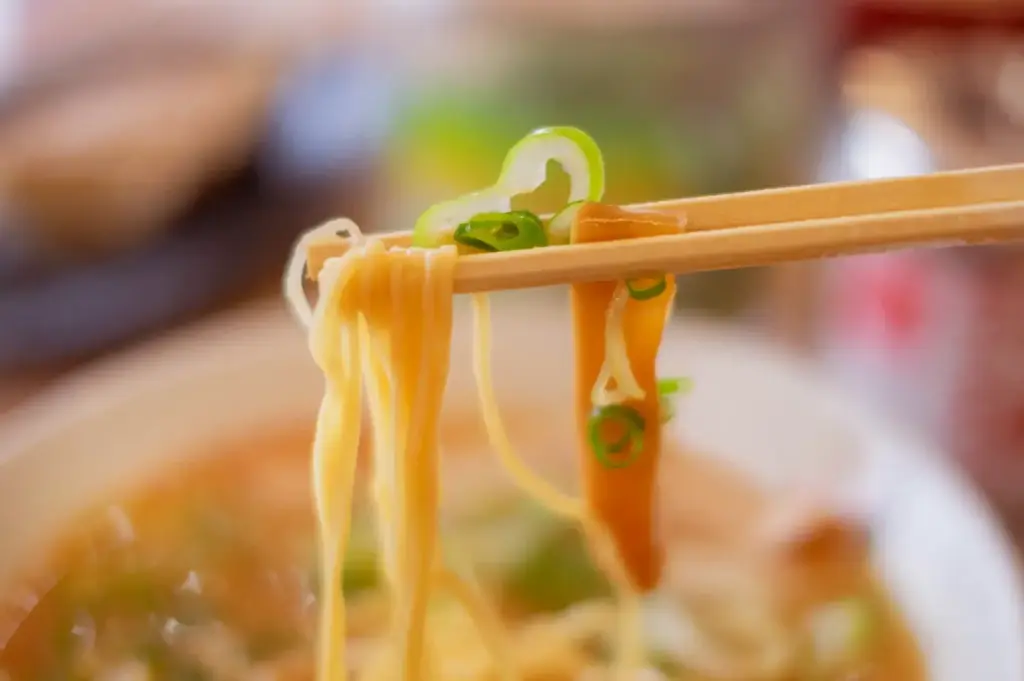
I went looking for lunch, not a lesson. It was a weekday, close to noon, the kind of morning where the CBD hums before it fully wakes. I’d heard about A Noodle Story for years, the Bib Gourmand stall at Amoy Street that made ramen without a bowl of soup, and I’d kept putting it off.
That’s the thing about places near your office. You always think you’ll get to them eventually. So I finally did.
The Moment of Arrival: Entering the Vibrant World of A Noodle Story
Amoy Street Food Centre doesn’t ease you in. You climb up into a two-storey block of stalls, fans turning overhead, the light flat and bright the way hawker-centre light always is. There’s no mood here, no soft glow. Just the clatter of trays, the shuffle of office lanyards, and the low roar of a hundred people deciding what to eat before their lunch hour runs out.
A Noodle Story sits at #01-39, and you’ll know it by the queue. I got there just before the rush thickened, maybe five people ahead of me. Communal tables filled around me as I waited, strangers sharing corners, elbows negotiating space. It’s the opposite of a quiet ramen counter. And somehow that made me more curious, not less.
Unpacking the Bowl: A Symphony of Flavors
When it arrived, I understood the fuss.
What’s in the bowl?
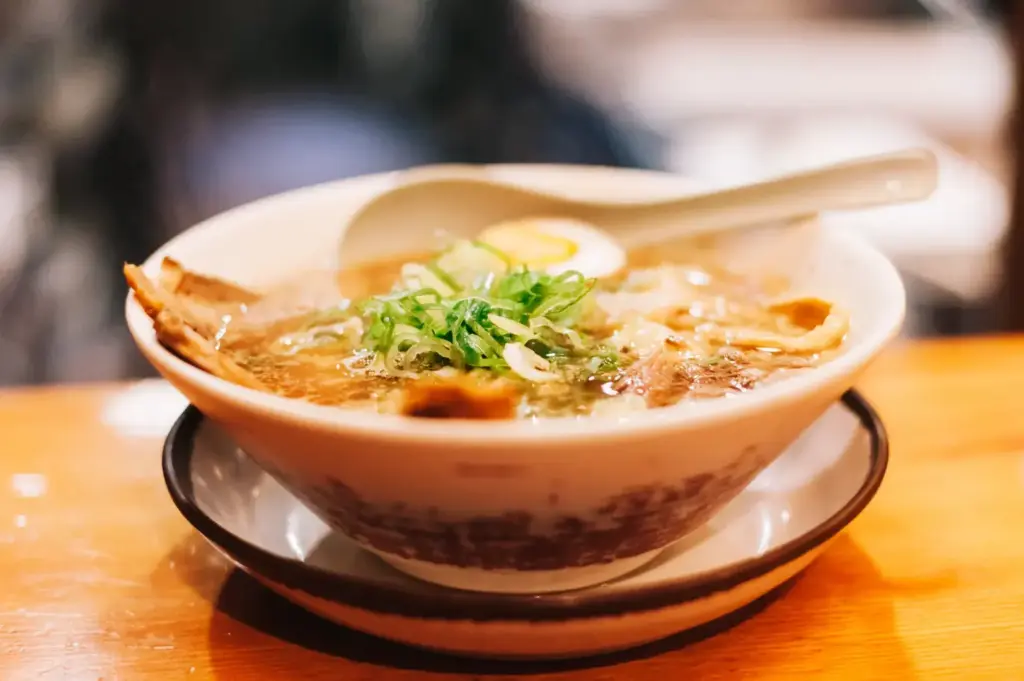
The Signature Singapore-Style Ramen isn’t a soup bowl. It’s a dry, tossed dish; springy noodles slicked in an aromatic dressing, arranged with a care you don’t expect from a hawker stall.
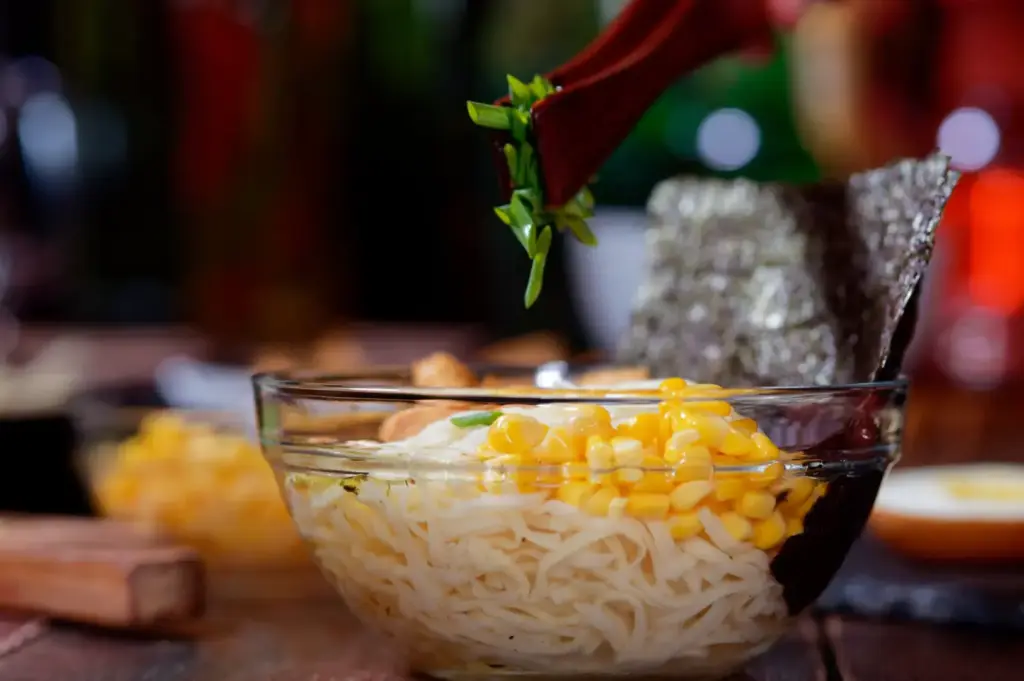
There’s a soy-flavoured hot spring egg, a slice of cha-su, a couple of Hong Kong-style wontons, scallions scattered like an afterthought that wasn’t one, and rising above it all, a crispy potato-wrapped prawn.
You’re meant to toss it first. So I did.
The experience
The noodles are the point. Genuinely springy, with a chew that pushes back against your teeth in a way that made me slow down. The dressing carries a savoury, garlicky depth, not heavy, just enough to coat each strand without drowning it. I kept twirling small mouthfuls, letting the egg break and fold its jammy yolk through the noodles until everything turned a little glossier, a little richer.
The cha-su is soft, fatty, the kind that gives way without much effort. The wontons bring that familiar wanton-mee comfort, a chew of dough and pork that felt like home tucked into something new. And the prawn, that potato-wrapped prawn, is all crunch and drama, a crackle against the softness of everything else.
It’s the kind of bowl you don’t rush. I didn’t realise how quiet I got halfway through eating, heads-down over a hawker tray, the noise around me fading into something like a hum. For those curious about customizing their experience, guides like What to Add, Skip and Pay For Your Ramen Toppings in Singapore offer great insights on enhancing your bowl.
There’s one small side of soup that comes with it. I’ll be honest: it read a touch salty to me, more accent than comfort. It’s not the reason you’re here, and it doesn’t pretend to be. The bowl is the story. The soup is a footnote.
The Art of Service Flow: From Kitchen to Table
The stall runs with a warmth that surprised me for how busy it was. There’s an attentiveness in how they plate, a sense that someone still cares about where the scallions land. I’ve read that they remember regulars, the ones who always ask for extra noodles, and I believe it.
Important to know before you go
This is a hawker stall with real prep constraints.
It can sell out earlier than its posted hours.
Weekdays run 11:30am to 2pm, then again 5:30 to 7pm.
Saturdays are shorter, 11am to 1:15pm, with a genuine chance of selling out before then.
I’d check their updates before making the trip. That’s not a complaint, it’s just the reality of food made in limited batches, by hands that can only move so fast.
What It Costs, and When to Come
Expect to spend somewhere around S$10 to S$20 per person, depending on the outlet and what you add. You’ll see an old S$5.50 figure floating around from years back, but that’s history now, not a promise. Treat it as a reminder of how far the bowl has traveled, not what you’ll pay today.
If you’re coming on a weekday, I’d aim for before noon or after 1:30pm. The stretch from 12 to 1:15 is when the whole of the CBD seems to descend at once, and you’ll spend more time queuing than eating. And please, take the MRT: Tanjong Pagar, Telok Ayer, or Maxwell all land you close. Driving here at lunch is its own small punishment.
If You’re Thinking of Visiting
Best time to go: Weekdays before noon or after 1:30pm. Skip the 12–1:15pm CBD rush. Saturdays are short (11am–1:15pm) with sell-out risk.
Average spend: Around S$10–S$20 per person.
What to order first: The Signature Singapore-Style Ramen, toss it before you eat.
Good for: Solo diners, office workers near Tanjong Pagar and Telok Ayer, anyone curious about dry noodles or a local take on ramen.
Skip if: You’re after a hot broth-based ramen, comfortable seating for a long group meal, or guaranteed hours without checking ahead.
The Noodle Story That Stayed With Me
In Ramen Tale, we always come expecting ramen. I left thinking about wanton mee, about the noodle stalls I grew up near, about the strange and lovely thing that happens when someone takes a foreign idea and reroutes it through a place they know by heart.
This isn’t a steaming tonkotsu bowl, and it never wanted to be. It’s something more particular, a Singapore-style noodle bowl that borrows ramen’s grammar and speaks it in its own accent. That tension, between hawker practicality and restaurant-level composition, is the whole point.
I’d come back on a solo weekday, early, before the crowd. A quick bowl, heads-down, nothing to prove. Some meals want your company and conversation. This one just wants your attention, and it earns it.