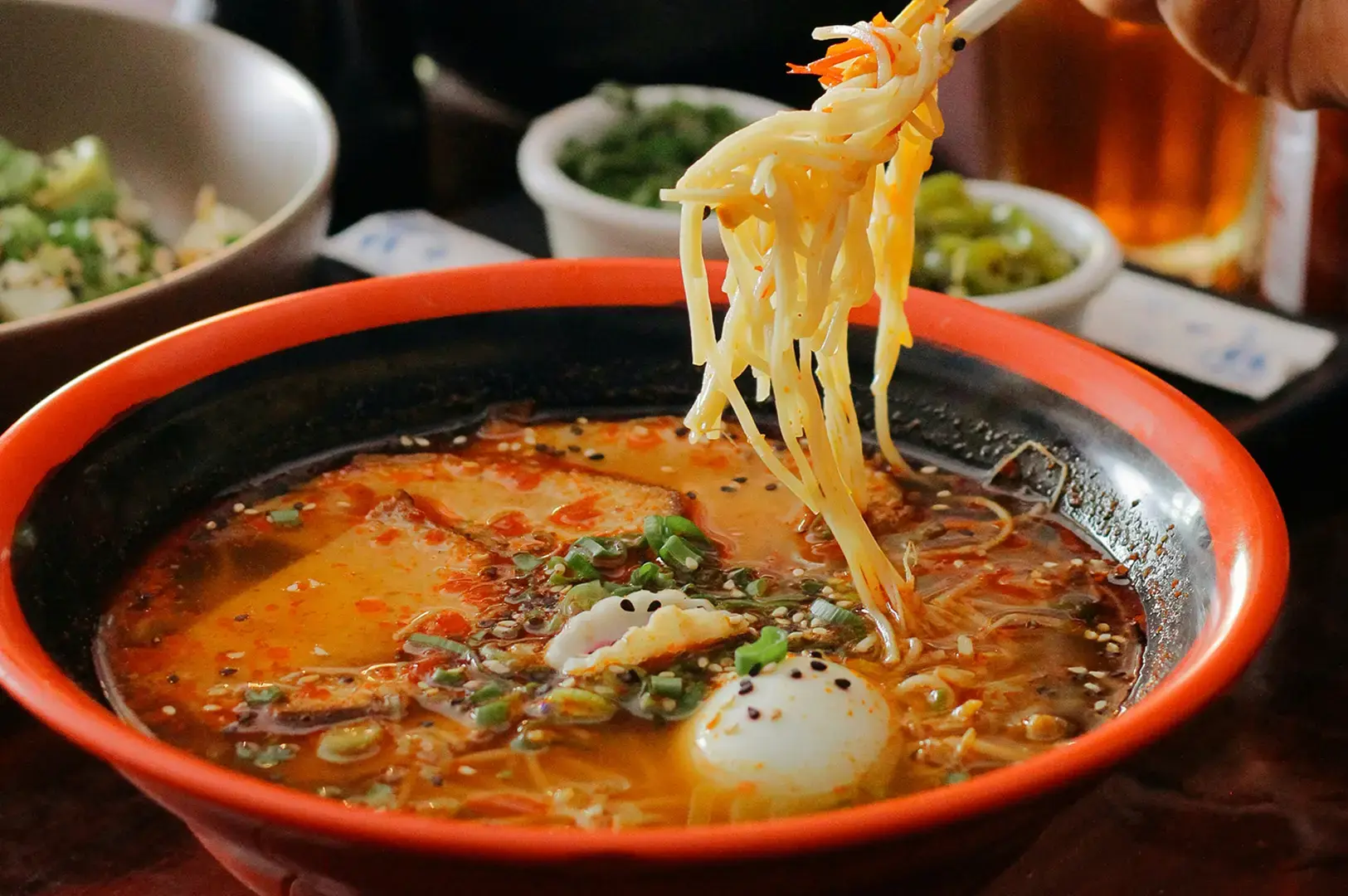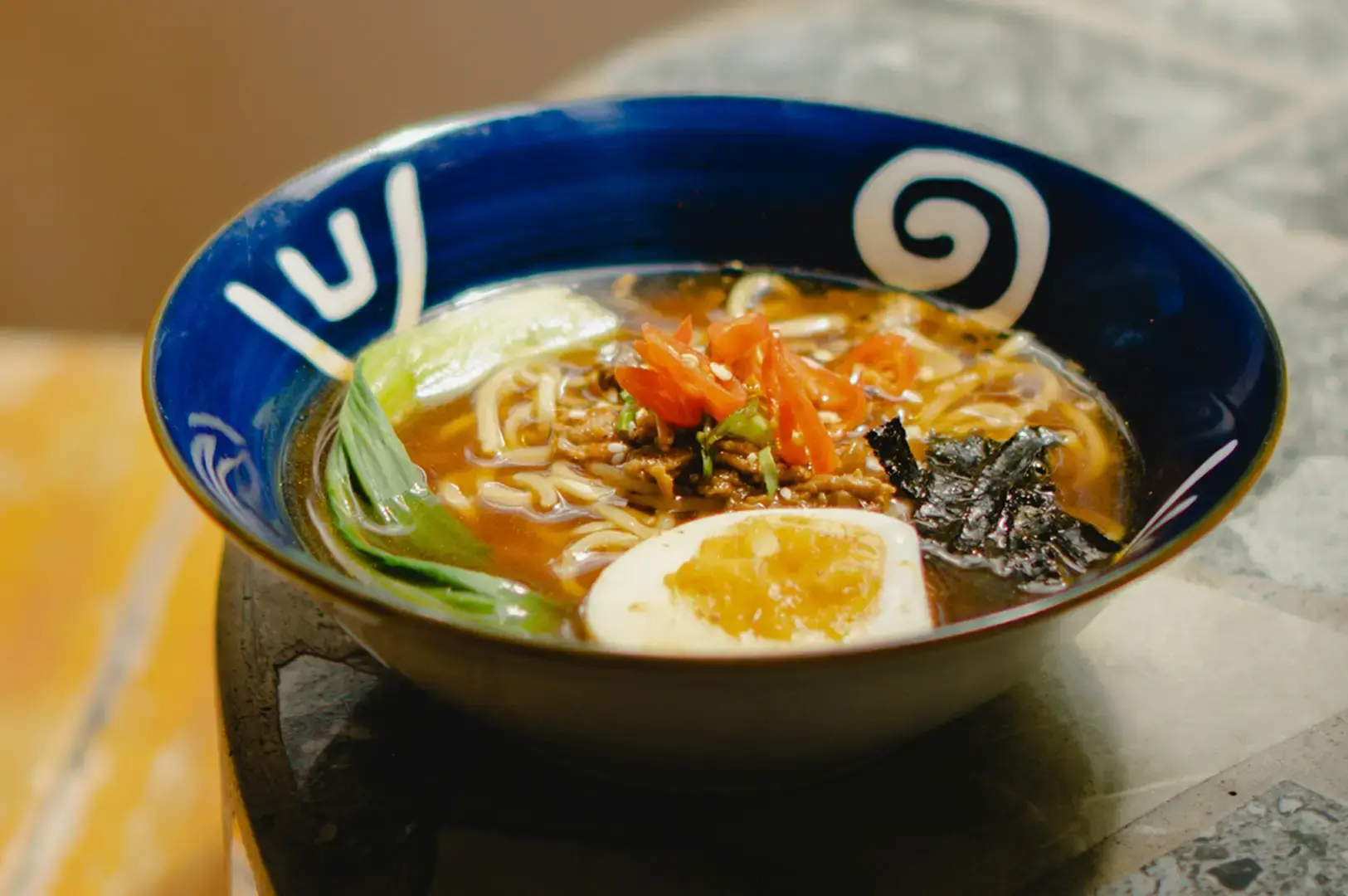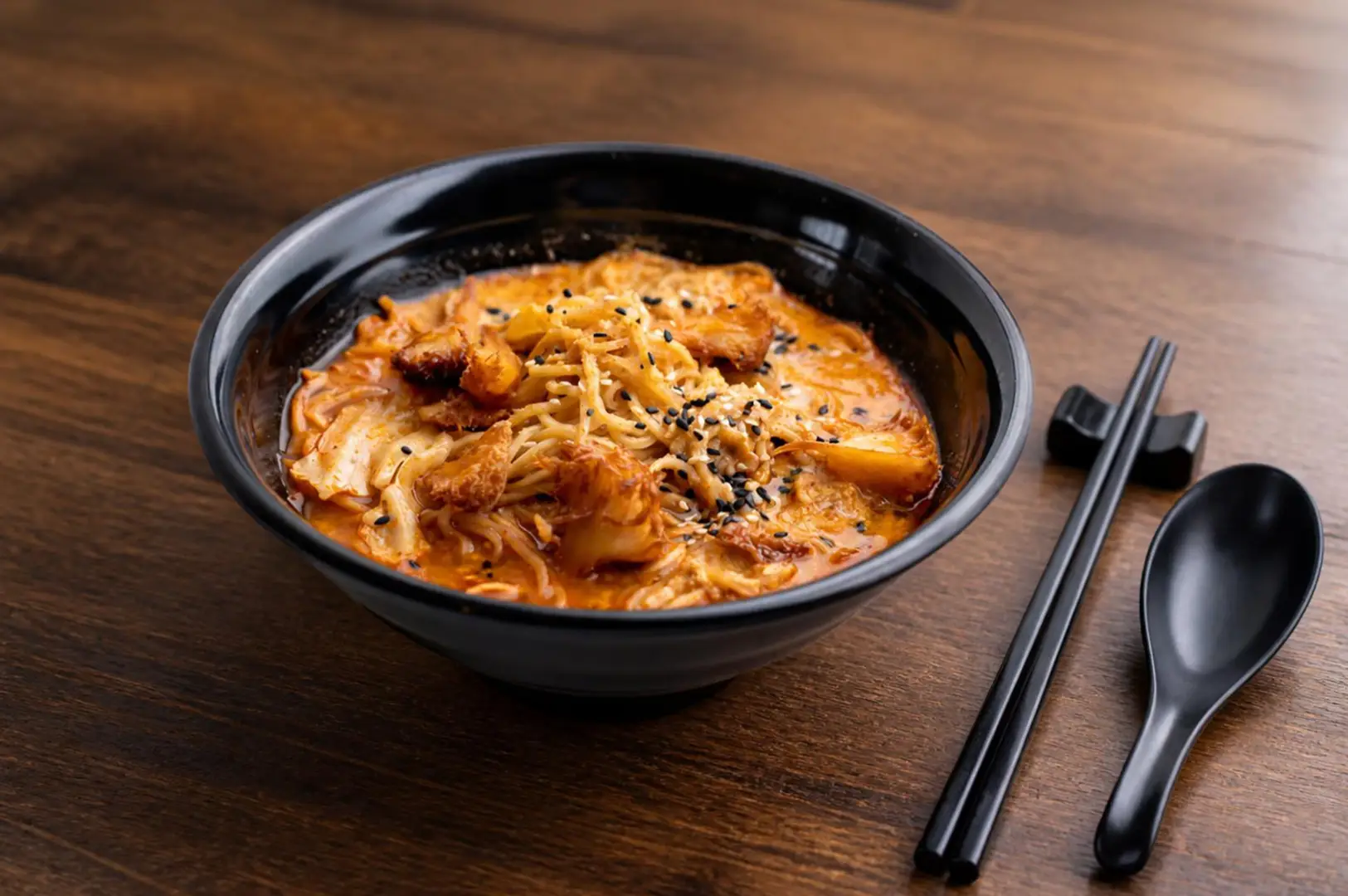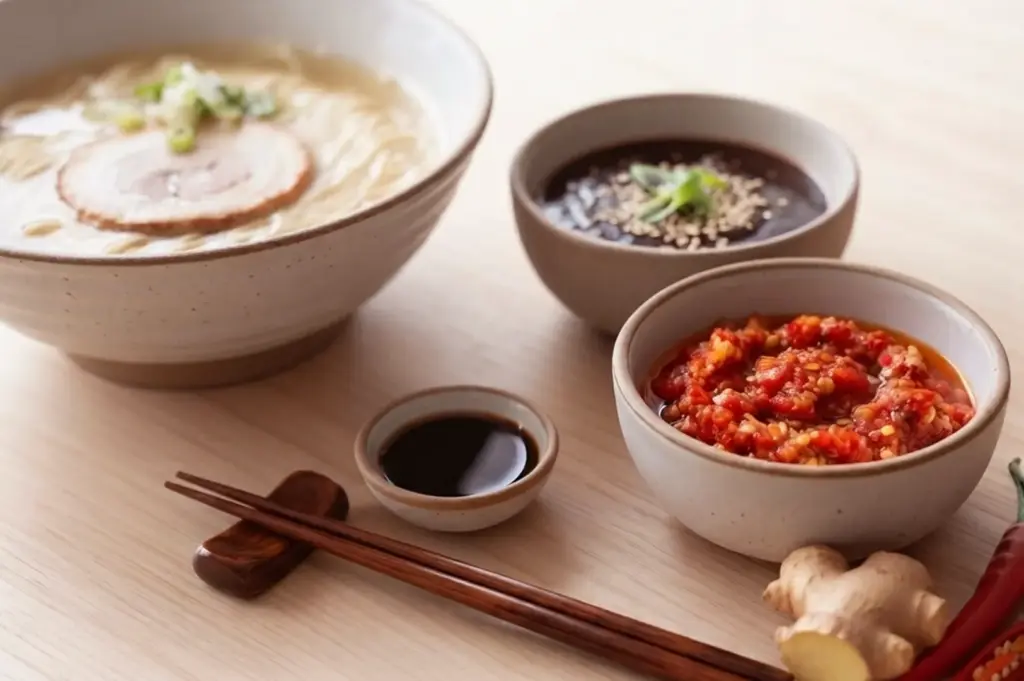
The first time we tasted sambal ramen done properly, the heat was not the thing we noticed first.
That surprised us.
We expected impact. Chili, garlic, oil, maybe a little sweetness. The kind of bowl that announces itself loudly before settling into something predictable. Instead, the first sip had structure. The spice arrived, but it did not rush the broth. It moved through the bowl with purpose.
That was when the question became interesting.
Could sambal behave like tare?
Not as a garnish. Not as a spoonful of spice added for local character. But as the seasoning base that helps define the bowl itself.
In Malaysian ramen, that question matters.
Tare Gives Ramen Its Direction
In ramen, tare is often misunderstood.
It is usually described as the seasoning base, but that sounds too simple. Tare gives the broth direction. It decides whether the bowl leans salty, sweet, sharp, smoky, marine, earthy, or rich.
A chicken broth without tare may have body, but it lacks identity. The tare tells it where to go.
In a shoyu bowl, soy sauce brings salinity and aroma. In shio ramen, salt-based tare can reveal the clarity of the stock. In miso ramen, fermented paste adds weight and depth.
So when we ask whether sambal can behave like tare, we are not asking whether it can make ramen spicy.
We are asking whether it can organize flavor.
Sambal Is More Than Heat
Good sambal is not one-dimensional.
It carries chili, garlic, shallot, oil, salt, sweetness, and often fermented depth from belacan or dried shrimp. That combination gives it more range than plain chili paste. Used carefully, it can season, perfume, and deepen a broth all at once.
This is where Malaysian ramen becomes interesting, because hot ramen has this strange comfort.
A spoonful of sambal stirred carelessly into broth can flatten the bowl. Everything tastes hot, oily, and aggressive. The noodles become a vehicle for spice rather than part of the structure.
But when sambal is treated with restraint, it behaves differently.
It can sit at the base of the bowl like tare, giving the broth a clear starting point. It can add salt without relying only on soy. It can provide aroma before the first sip. It can create a finish that lingers without exhausting the palate.
That is not decoration.
That is structure.
The Balance Has to Be Measured
The danger with sambal is confidence.
It is easy to use too much because Malaysian flavors are often expected to be bold. But ramen does not reward volume alone. It rewards proportion.
If sambal dominates the broth, the bowl becomes predictable after three bites. If it is too restrained, the Malaysian identity disappears. The right amount should sharpen the broth while leaving room for stock, oil, noodles, and toppings to speak.
We have tasted bowls where sambal worked best when paired with chicken stock, seafood depth, and a clean aromatic oil. The broth stayed readable. The heat had shape. The noodles still mattered.
That is the test.
A sambal-based ramen should still behave like ramen.
When Sambal Earns Its Place
Sambal can behave like tare, but only when the kitchen treats it seriously.
It needs to be built into the bowl, not placed on top as proof of fusion. It needs balance, timing, and a broth strong enough to carry it. It needs noodles that can hold the spice without turning the whole experience heavy.
Used lazily, sambal makes ramen louder.
Used properly, it gives Malaysian ramen its own grammar.
And that is where the idea becomes worth pursuing. Not because sambal makes ramen more local on the surface, but because it can help Malaysian ramen speak in its own structure.
A good bowl adds sambal.
A better one understands what sambal is doing.