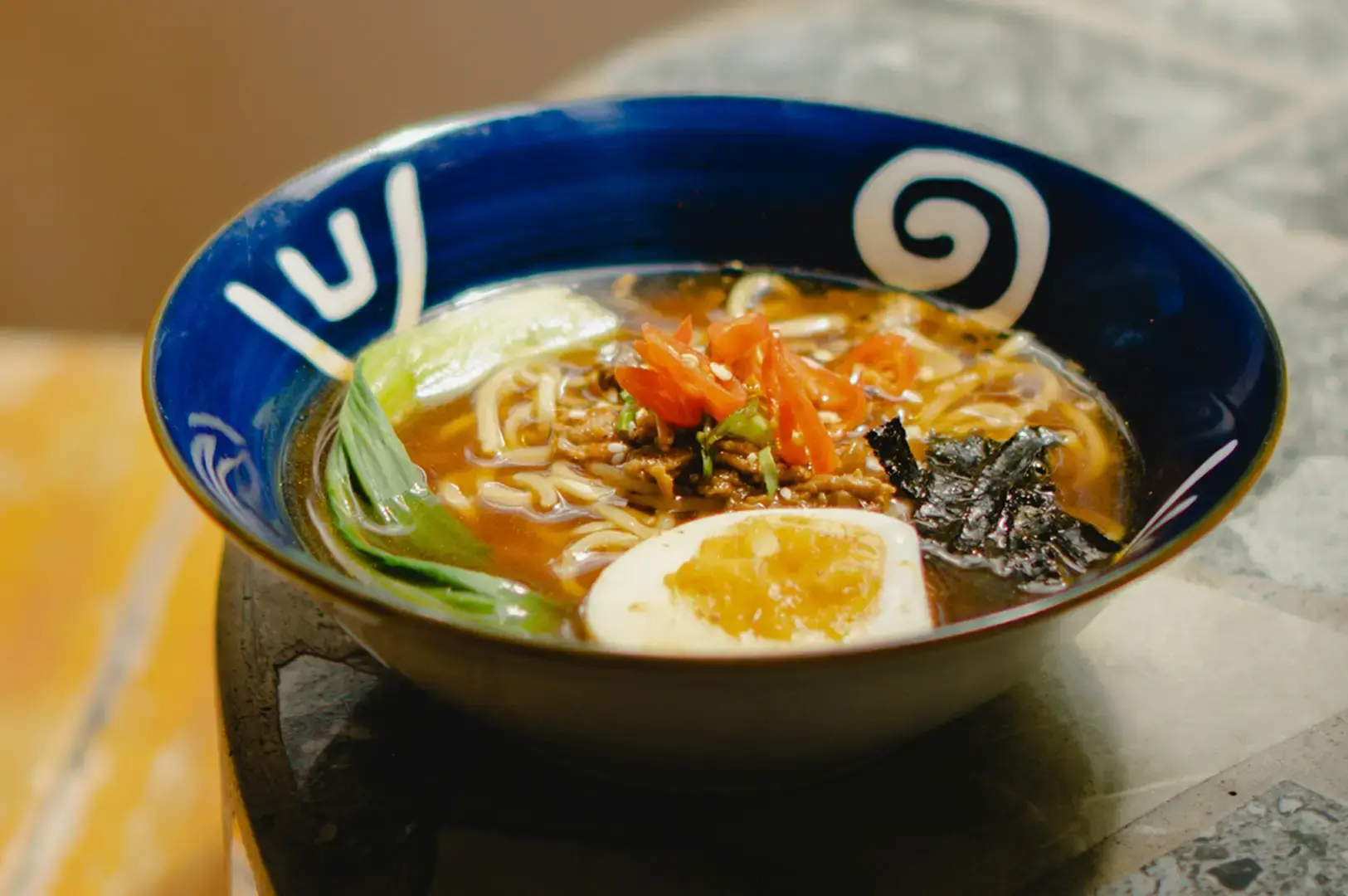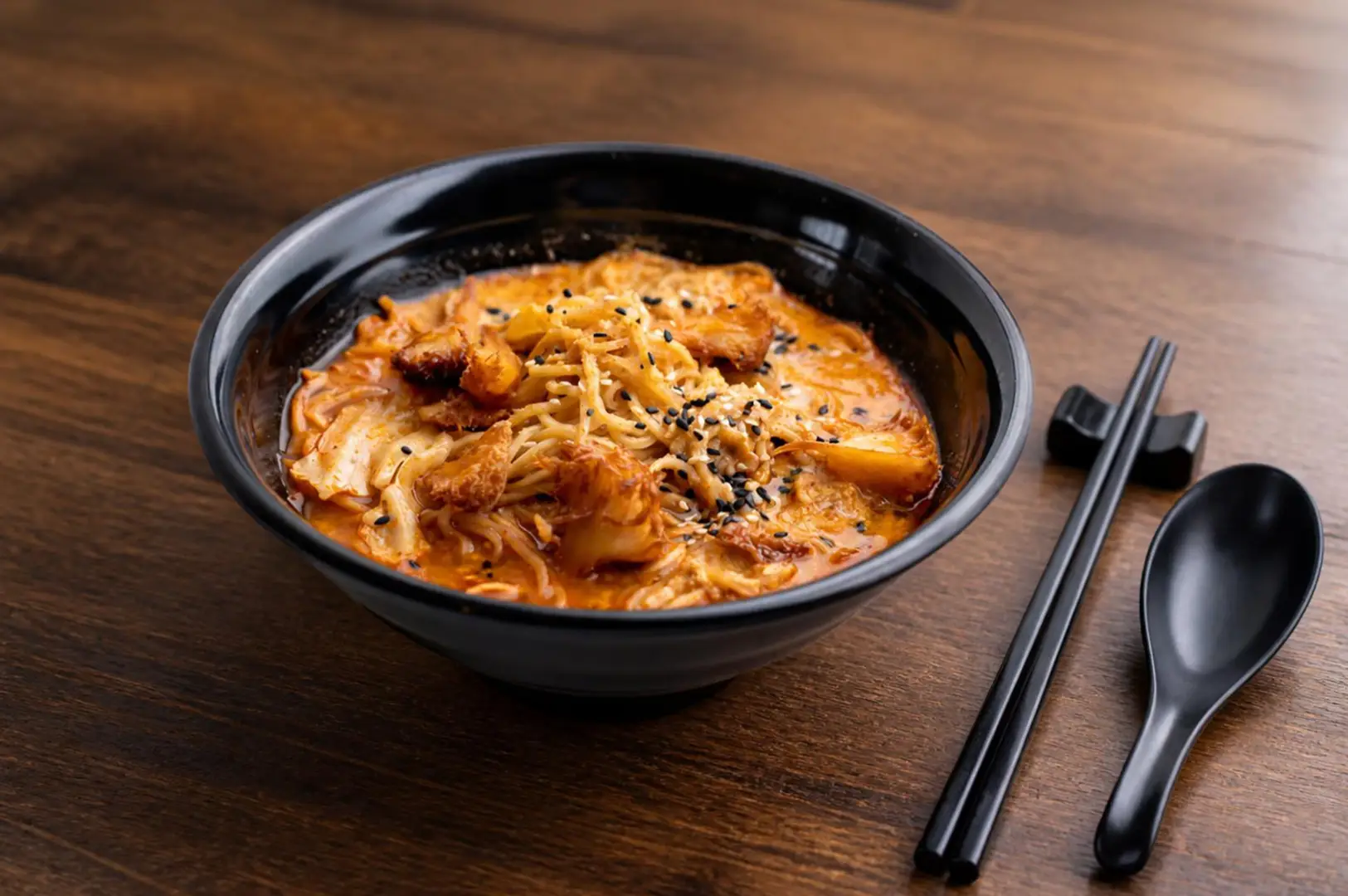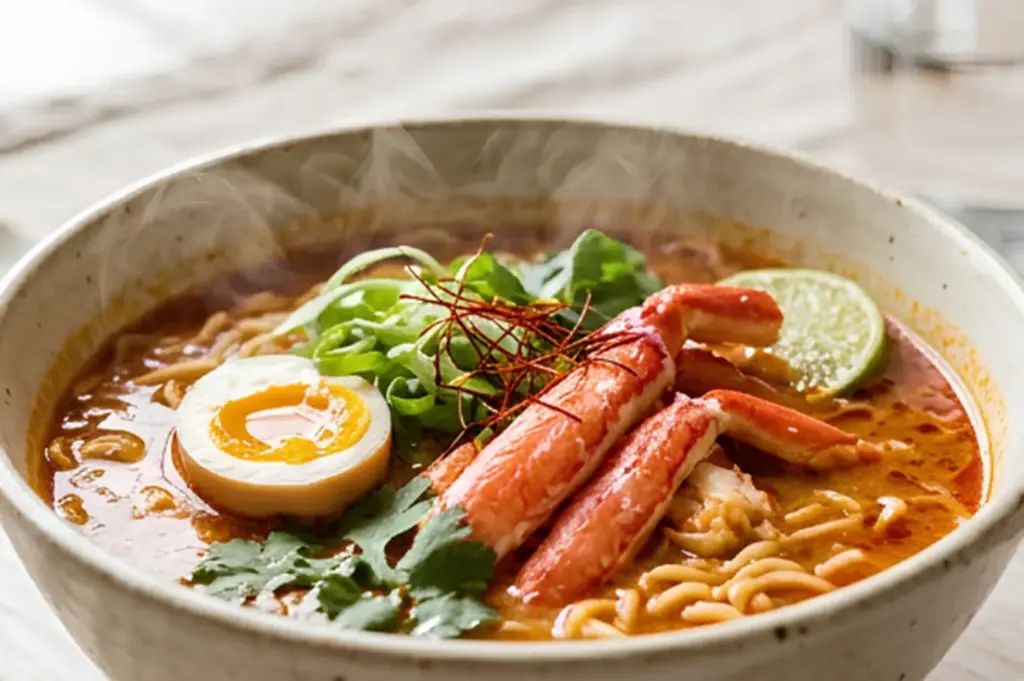
Chili crab ramen sounds like a brilliant idea until the bowl arrives.
That may be an unfair place to begin, but some fusion dishes carry their own warning label. Chili crab is not a shy flavour. It is sweet, spicy, tomato-rich, eggy, messy, and deeply Singaporean. Ramen, despite its comfort, is not casual either. It has structure. Broth, tare, noodles, oil, toppings, and timing all need to move together.
Put them in the same bowl, and the question becomes uncomfortable.
Are we creating something meaningful, or are we simply putting a local icon on top of noodles and hoping nostalgia does the work?
At Ramen Tale, we think chili crab ramen can work. But it has to earn the right to exist.
The Problem With Big Flavours
Chili crab sauce enters a bowl like someone who does not know how to whisper.
It brings sweetness, heat, acidity, garlic, ginger, and that familiar glossy richness. These are beautiful things on a plate with crab, mantou, and enough space for mess. In ramen, they can quickly become too much.
Ramen broth needs direction. If the chili crab element overwhelms the base, the bowl stops tasting like ramen and becomes noodle soup with chili crab gravy. That may still be enjoyable, but it is a different conversation.
A successful version needs restraint. The chili crab flavour should bend into the ramen structure, not flatten it.
The Broth Has to Lead
The first test is broth.
A weak broth will disappear under chili crab sauce. A heavy tonkotsu may fight it. A clean chicken or seafood base might have a better chance because it can carry sweetness and spice without becoming muddy.
This is where the bowl becomes technical, even if we experience it emotionally. The broth has to provide depth beneath the sauce. The chili crab element should act like a tare or accent, not a full takeover.
When the spoon goes in, we should taste ramen first, then Singapore.
Not the other way around.
The Noodle Match Matters
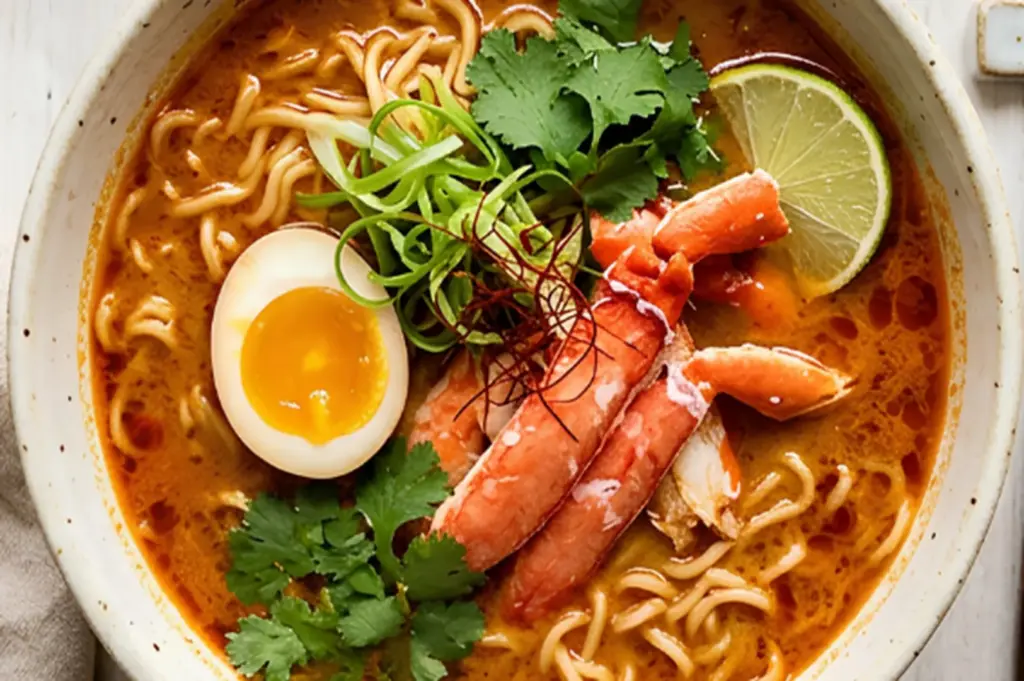
Chili crab ramen also needs the right noodle.
Too thin, and the noodles get lost under the sauce. Too thick, and the bowl becomes heavy and tiring. A medium, springy noodle may offer the best balance: enough chew to stand up to the glossy sauce, but not so much that every bite feels like work. View our guide here to learn more about the problems of noodle match in ramen.
This matters because chili crab is already rich. If the noodle adds too much weight, the bowl becomes exciting for three mouthfuls and exhausting by the halfway point. For more
The best fusion bowls know when to stop showing off.
What Should Go on Top?
This is where temptation becomes dangerous.
A chili crab ramen does not need every seafood topping available. It does not need a mountain of crab meat, an extra egg, fried shallots, chili oil, butter, and three decorative garnishes. It needs clarity.
Crab should feel present. Spring onion or coriander can lift the sweetness. A soft egg might echo the sauce’s eggy body. But too many toppings turn the bowl into a theme park.
Good ramen is not just about adding more pleasure. It is about arranging pleasure properly.
So, Can It Work?
Yes, but only if it respects both sides.
Chili crab ramen cannot be lazy fusion. It cannot depend only on familiarity. Singaporeans know chili crab too well to be fooled by a sweet red sauce with noodles, and ramen lovers know when a bowl has lost its structure.
The version that works would be disciplined: seafood depth, controlled sweetness, gentle heat, a noodle with bounce, and a finish that does not collapse into heaviness.
It should remind us of chili crab without asking ramen to disappear. That is the real challenge. Not whether chili crab belongs in ramen, but whether the bowl has enough confidence to let both traditions breathe.
When it does, the result could be more than a gimmick.
It could be a Singapore ramen tale worth slurping.