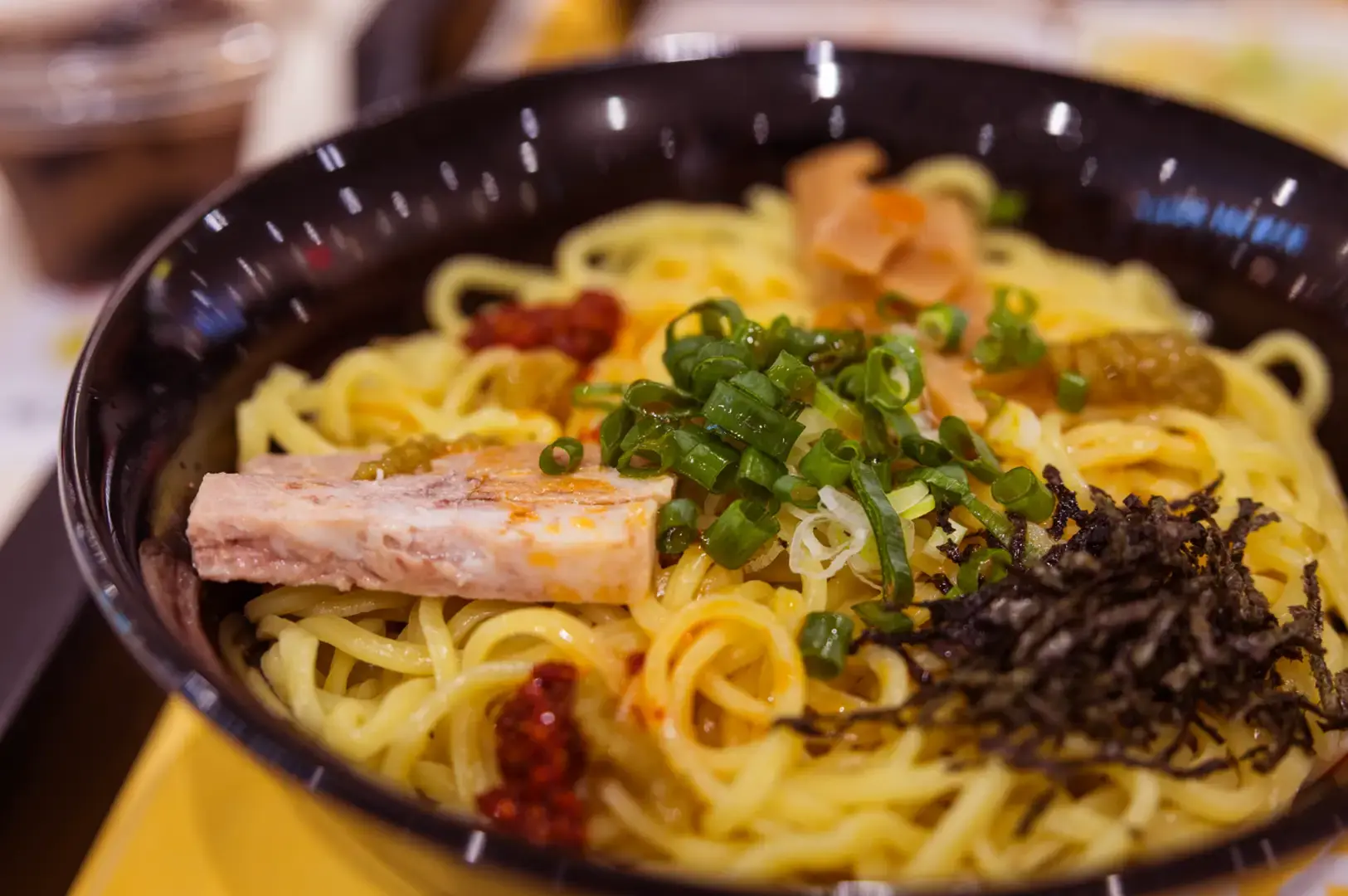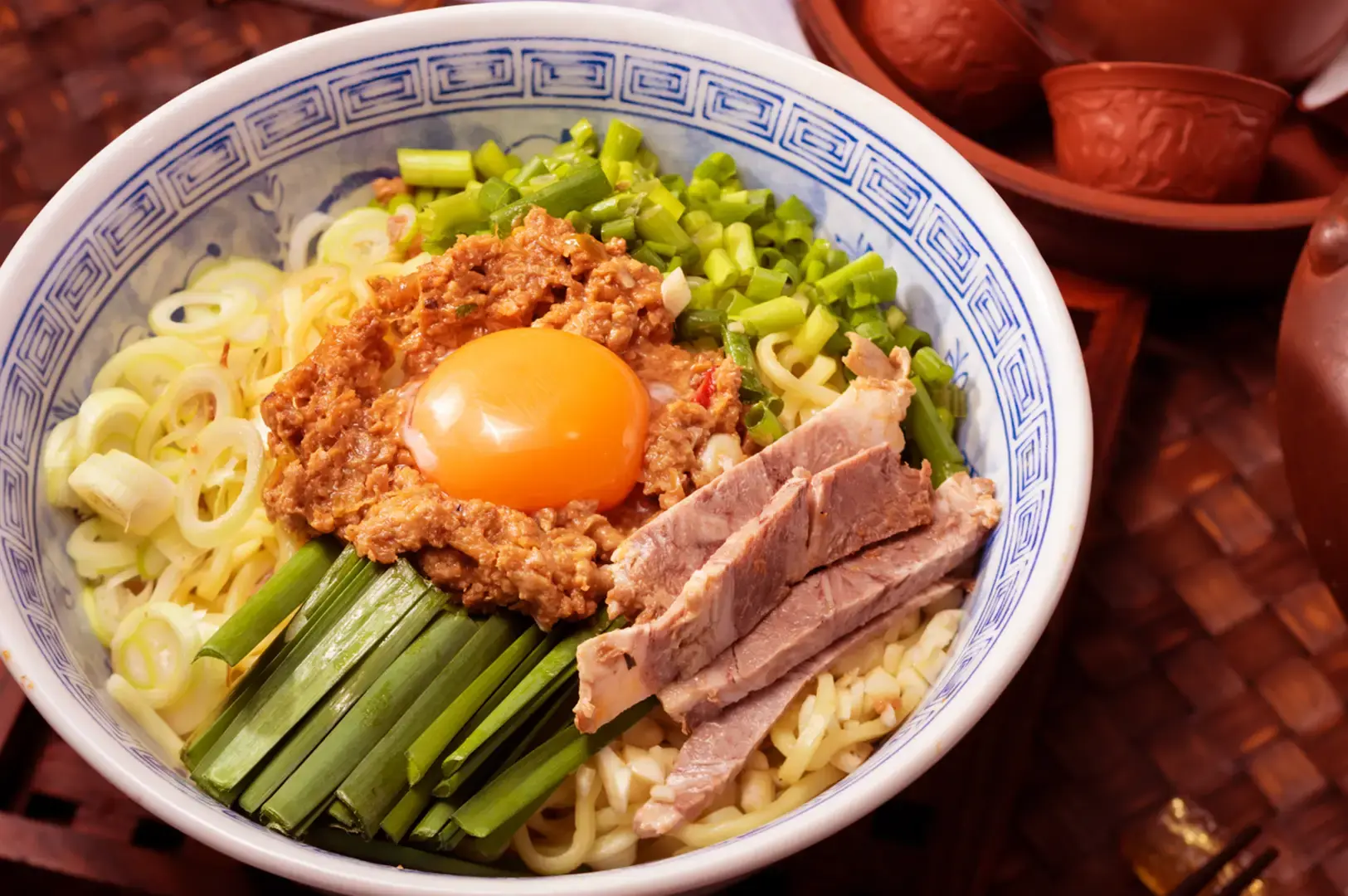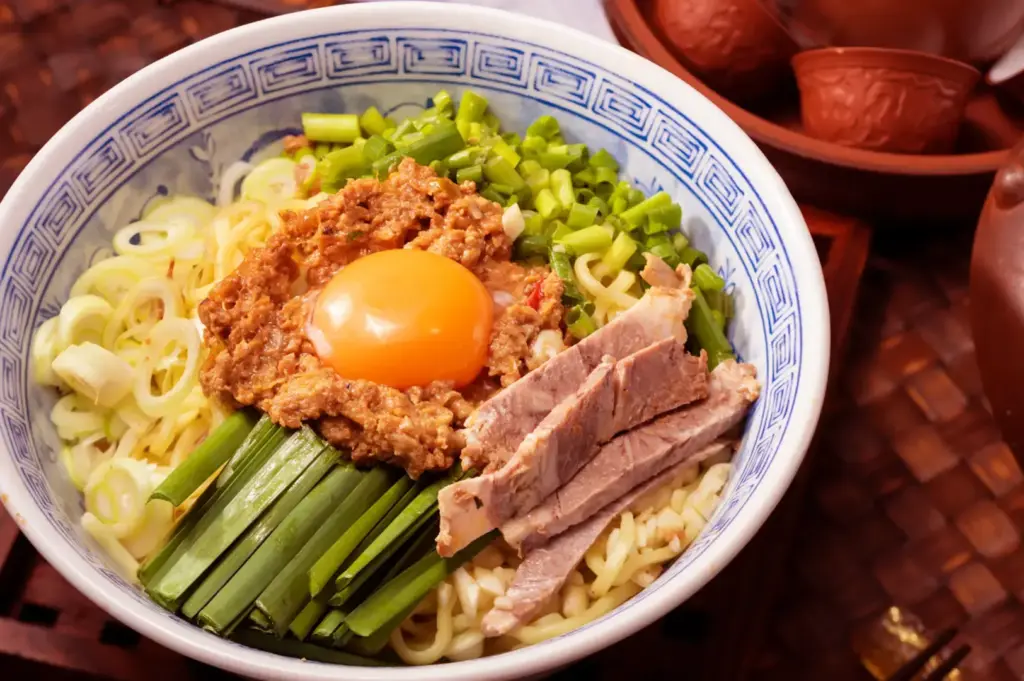
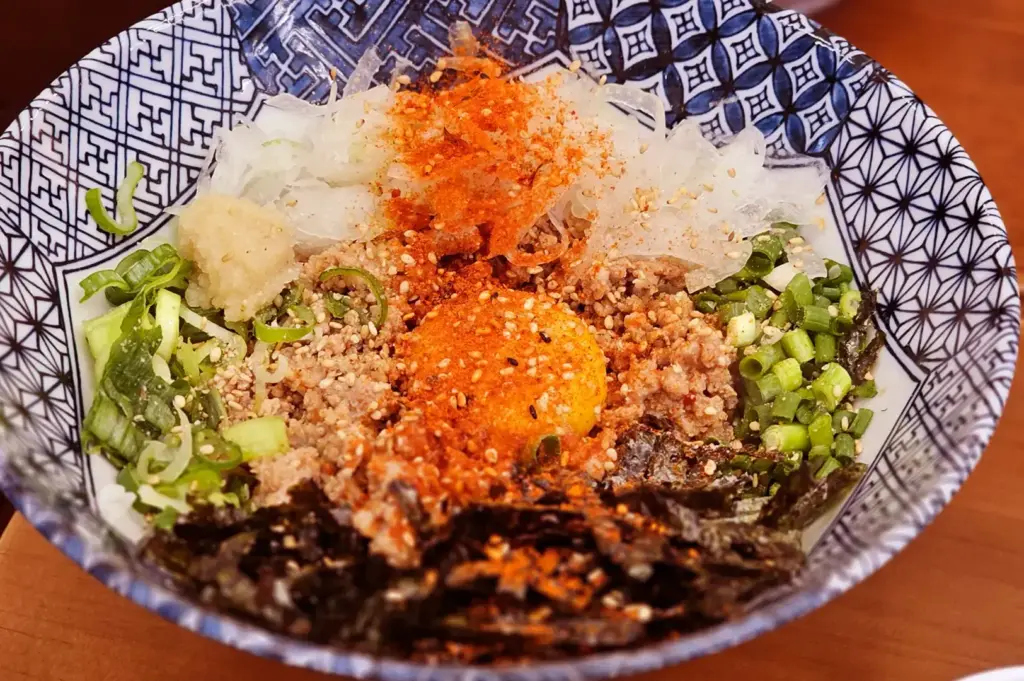
The first time I ate dry ramen, I thought the kitchen had made a mistake. There was no soup. Just a bowl of thick, medium thick noodles, a raw egg yolk sitting in the middle, minced pork belly, chives, a scatter of nori, and something dark pooling at the bottom that I couldn’t quite see. I stared at it for a moment, waiting for a broth that was never coming.
I ate it wrong that day. Picked at the toppings one by one, never mixed properly, and left a little confused about what the fuss was. It took me a few more bowls to understand. Now it’s one of the things I order when I want ramen but the weather won’t let me love a hot broth. Let me save you the confusion I went through.
What Dry Ramen Actually Is: Not Just Instant Noodles
Dry ramen is ramen without the soup but that description does it a disservice.
In Singapore, you’ll usually meet it as mazesoba (which literally means “mixed noodles”), sometimes mazemen, sometimes abura soba. The idea is the same across all three: ramen-style wheat noodles served without a full bowl of broth, tossed instead with a concentrated sauce, hot oil, minced meat like pork belly, egg, seaweed, spring onion, garlic, and whatever other ingredients the dish calls for.
It uses ramen logic, tare, oil, noodles, toppings, but takes away the soup. What’s left is meant to cling to every strand, creating a deep, savory mixture of flavors. If you’re curious about where to find the most mind-blowing bowls, check out our guide to the best ramen spots in Tanjong Pagar that will truly impress your taste buds.
The Appeal of High Fat and Flavor
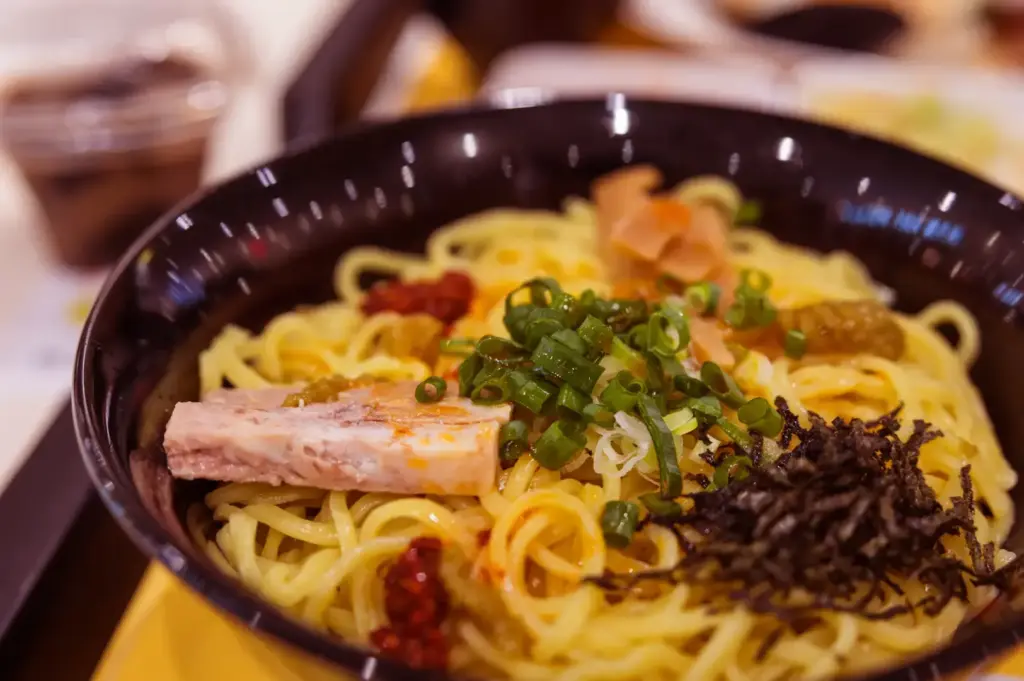
Here’s the thing that took me too long to realize: the missing broth isn’t a subtraction. It’s a shift in where the flavor lives.
In soup ramen, the seasoning spreads through the whole bowl of liquid. In dry ramen, that same intensity has nowhere to hide. The tare and oil sit at the bottom, and once you mix everything, they coat the noodles directly with a salty, umami-rich soy-based sauce. It can taste more concentrated than a bowl of soup, not less.
So don’t judge it by the first glance. A good dry ramen isn’t dry at all. It’s glossy, savory, a little clingy, never parched. The noodles typically have a wavy shape that helps hold the sauce.
Slurper's Tip: If your bowl looks plain when it arrives, that's normal. The flavor is underneath, waiting for you to bring it up. Mixing is the whole point.
Mazesoba vs Abura Soba vs Tsukemen: Understanding Different Dry Ramen Noodles Styles
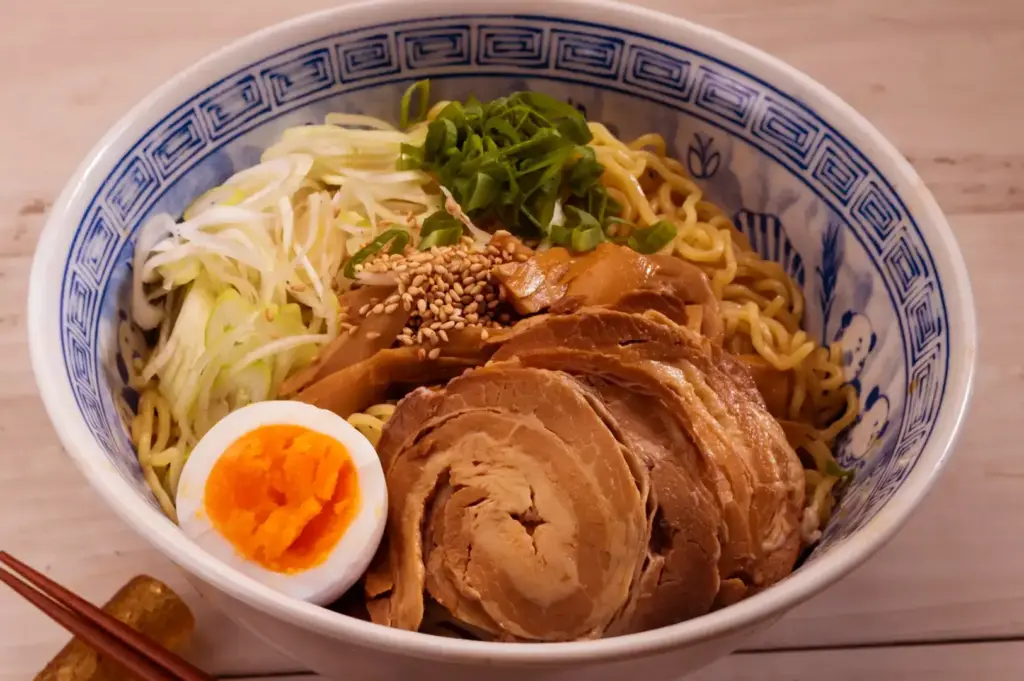
These three get muddled often, so let me untangle them the way I wish someone had for me.
Mazesoba / mazemen — “mixed noodles.” Usually thick noodles with minced meat, egg yolk, garlic, chives, spring onion, seaweed, and sauce. Topping-heavy, often garnished with sesame seeds and bamboo shoots.
Abura soba — “oil noodles.” More focused on sauce and hot oil at the bottom of the bowl. A little leaner on toppings, richer in that oil-and-tare base.
Tsukemen — this is the odd one out. It’s dipping ramen: the noodles come separate from a small bowl of concentrated broth, and you dip as you go. It’s not mixed in the bowl like the other two.
The common English catch-all for the first two is simply “dry ramen.” Don’t overthink the labels. Once you’ve eaten a few, the differences make sense on your tongue.
For the Bak Chor Mee Lovers: a Cousin to Instant Noodles
If you grew up eating dry bak chor mee, minced pork, vinegar, chili, springy noodles tossed in sauce at the bottom of the bowl, then dry ramen will feel like a cousin you’ve never met but somehow already know.
The logic is identical. Dry noodles. Savory protein like pork belly or beef. Sauce underneath. A hit of vinegar and chili spice. Mix before you eat.
The difference is weight. Mazesoba tends to run richer, thicker, more Japanese in its seasoning, egg yolk, garlic chives, a heavier tare often prepared with soy and sugar. But if you love a good plate of mee pok dry, you already understand the pleasure of noodles that carry their flavor rather than swim in it.
How to Eat Dry Ramen Noodles, Step by Step
This matters more than it should. Get the method right and the dish opens up.
Look before you mix. Notice what you’ve got, meaty and spicy, garlicky and savory, chicken, mushroom, all-toppings. It tells you how much vinegar or chili you’ll want later.
Mix thoroughly. Lift from the very bottom and fold the sauce up through the noodles. Keep going until every strand looks glossy and coated in that deep, flavorful mixture. This is where I failed my first time. If the sauce stays at the bottom, your first bites taste of nothing and your last taste of pure sodium.
Taste before adding anything. Most shops set out vinegar, chili oil, garlic, pepper, and lime at the table. Don’t dump it all in at once. Taste the base first, then adjust.
Eat while it’s hot. Once dry ramen cools, the sauce thickens and the noodles start to clump. Mix, then eat with a bit of urgency.
Finish with rice, if offered. Some mazesoba shops give you a small scoop of rice at the end to stir into the leftover sauce and minced meat. If the sauce is balanced, this last bit, they call it oimeshi, is quietly the best part.
Ramen's Knowledge: Vinegar isn't there to make things sour. It cuts the richness. Add a little halfway through, not at the start, and it keeps the bowl from feeling heavy by the final third.
What Dry Ramen Tastes Like
Savory first. Then oily in a good way, the fat carrying the seasoning. Garlic, often. Umami from the tare and the minced meat. When there’s egg yolk, it binds everything into something rounder and glossier once mixed.
Some versions run spicy, Taiwan mazesoba especially, but the original doesn’t have to be. It can be plain savory, deeply garlicky, meaty, and rich without any heat at all.
The one non-negotiable is noodle texture. Dry ramen lives or dies on chew. The noodles should be thick, springy, resilient enough to hold all that sauce. When they’re soft or clumpy, the whole dish loses its reason to exist.
What Dry Ramen Costs Here: Instant Noodles Pricing Range
Dry ramen sits in Singapore’s casual Japanese food range.
A basic mazesoba or abura soba usually runs S$12 to S$16. An all-toppings or premium bowl climbs to S$16 to S$22. Add a side and a drink and you’re looking at S$20 to S$30 for the meal. Delivery tends to cost more after platform fees, and honestly, dry ramen holds up better in transit than soup, though you’ll want to re-mix it thoroughly before eating.
Prices move, so check the menu before you go.
Where to Try Dry Ramen Noodles in Singapore
Kajiken is where I’d send a first-timer. At Orchid Hotel in Tanjong Pagar, it’s a proper mazesoba specialist, dry ramen isn’t a side option here, it’s the whole point. Start with the Original Mazesoba, around S$12 to S$18 depending on toppings. Mix well, go easy on the vinegar until you’ve tasted the base.
Menya Kokoro is the Tokyo-style option, easier to reach in a mall. You’ll find it at Suntec City and Plaza Singapura. Order a signature mazesoba rather than the biggest all-in bowl for your first visit, it’s a cleaner way to understand the style before you pile on extras.
Mix It Right: Steering Clear of Dry Ramen Blunders
The ones I made, and the ones I watch others make:
Not mixing enough. The single biggest error. Mix from the bottom, always.
Adding vinegar and chili too early. Taste first. You can’t take it back out.
Ordering all-toppings on the first try. It’s harder to understand the base sauce when there’s too much going on. Start simple.
Expecting soup. It’s not coming. Let go of that comparison and the bowl makes far more sense.
Letting it sit. Cold dry ramen clumps. Eat it hot.
So Whats Your Next Ramen Bowl Order?
Soup ramen asks how good the broth is. Dry ramen asks something different: how well the noodles, sauce, hot oil, and toppings come together in your own hands.
That’s the part I love. You finish the bowl yourself. Mix it properly, taste before you reach for the vinegar, eat it while it’s hot, and judge it by that last bite of rice stirred through what’s left.
Get that right, and you’ll understand why I stopped waiting for the soup.