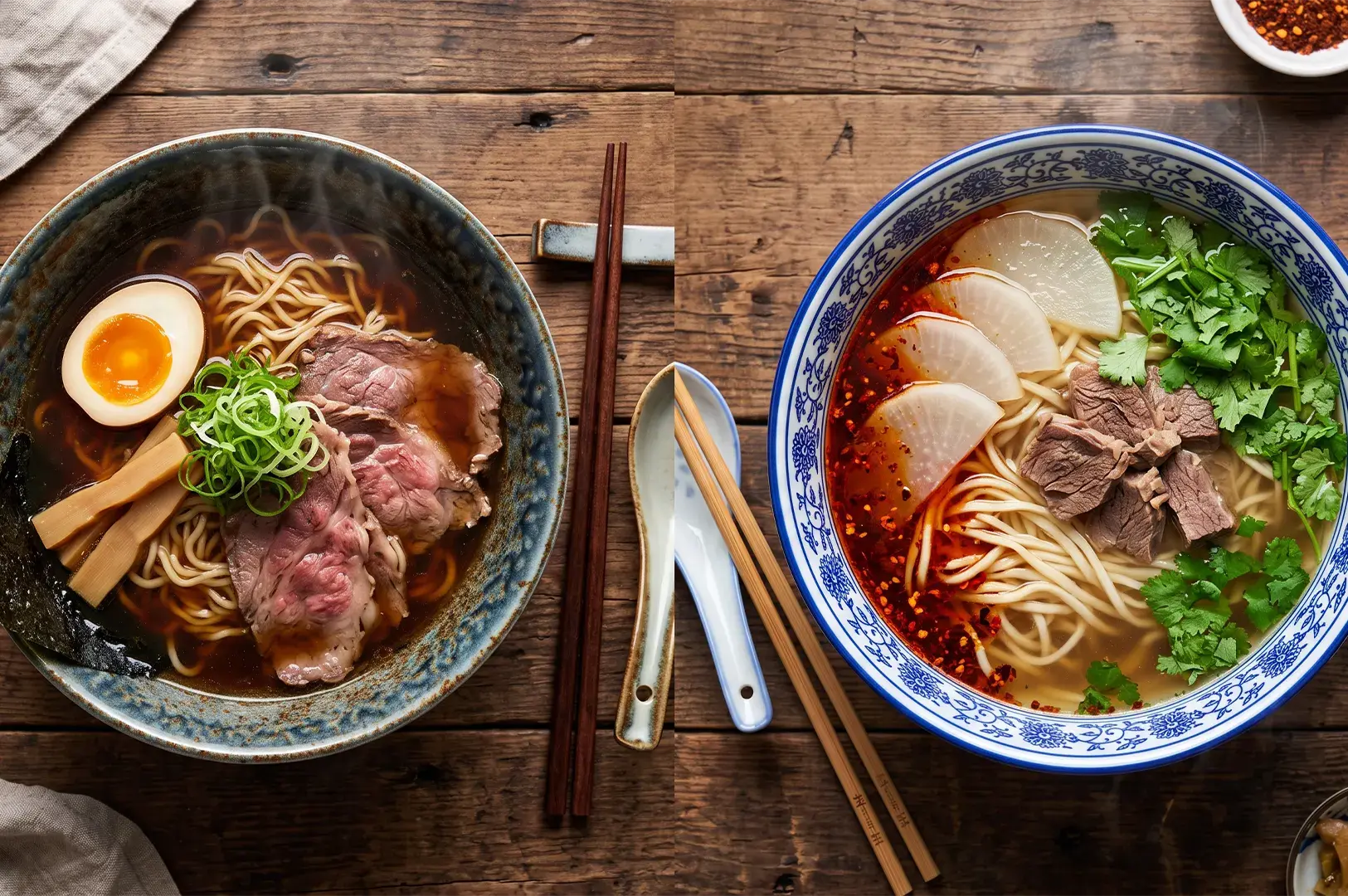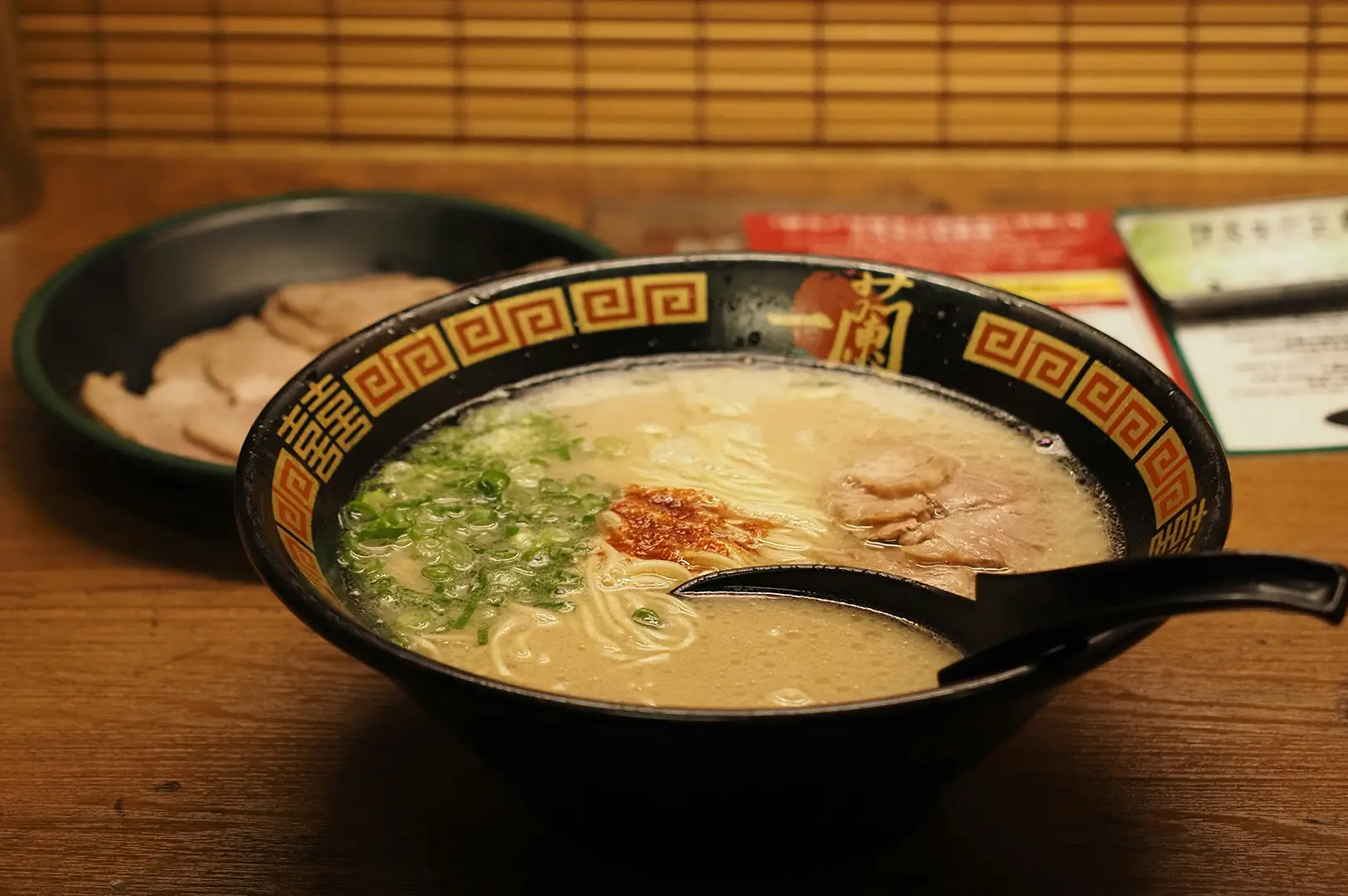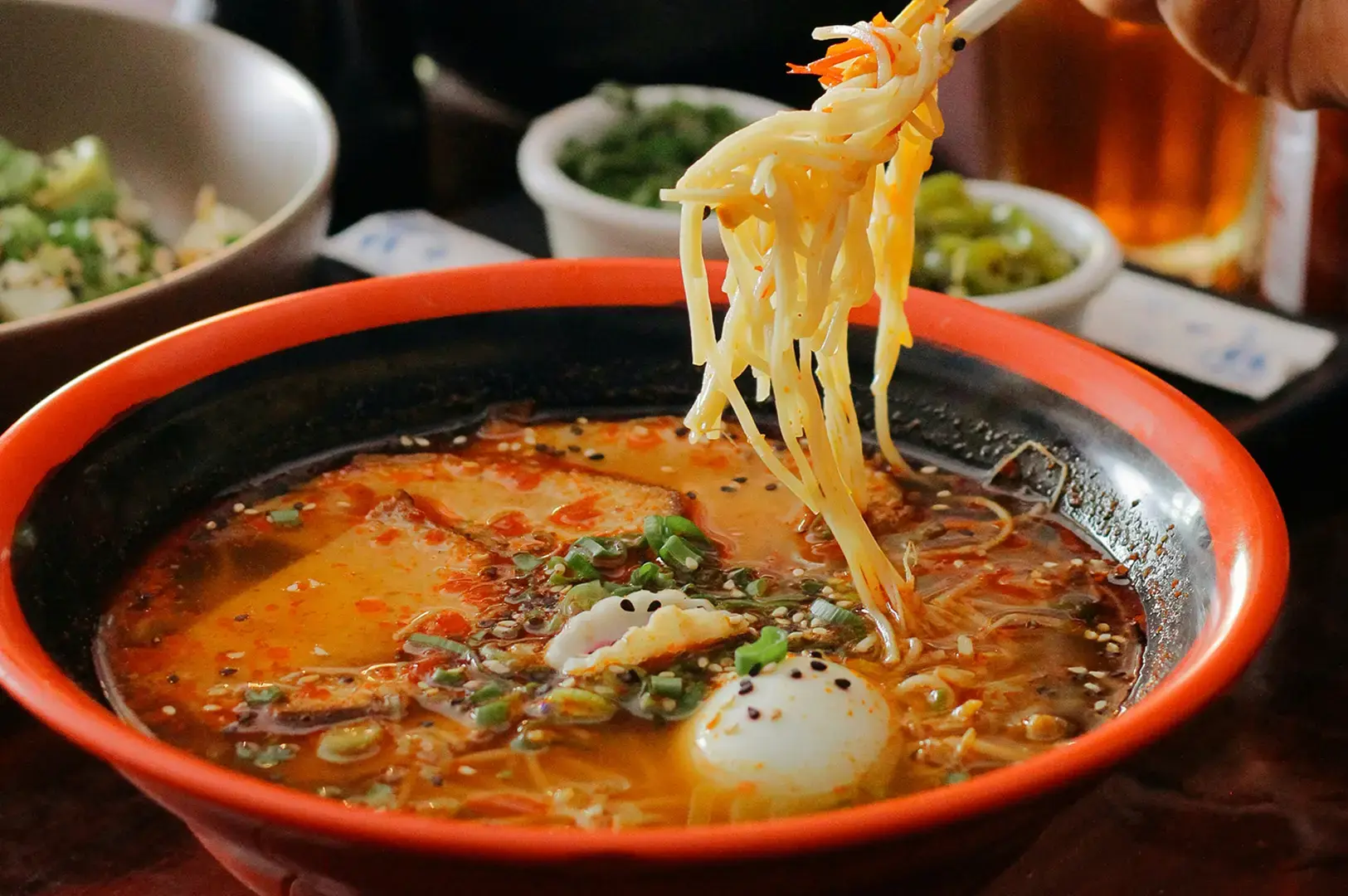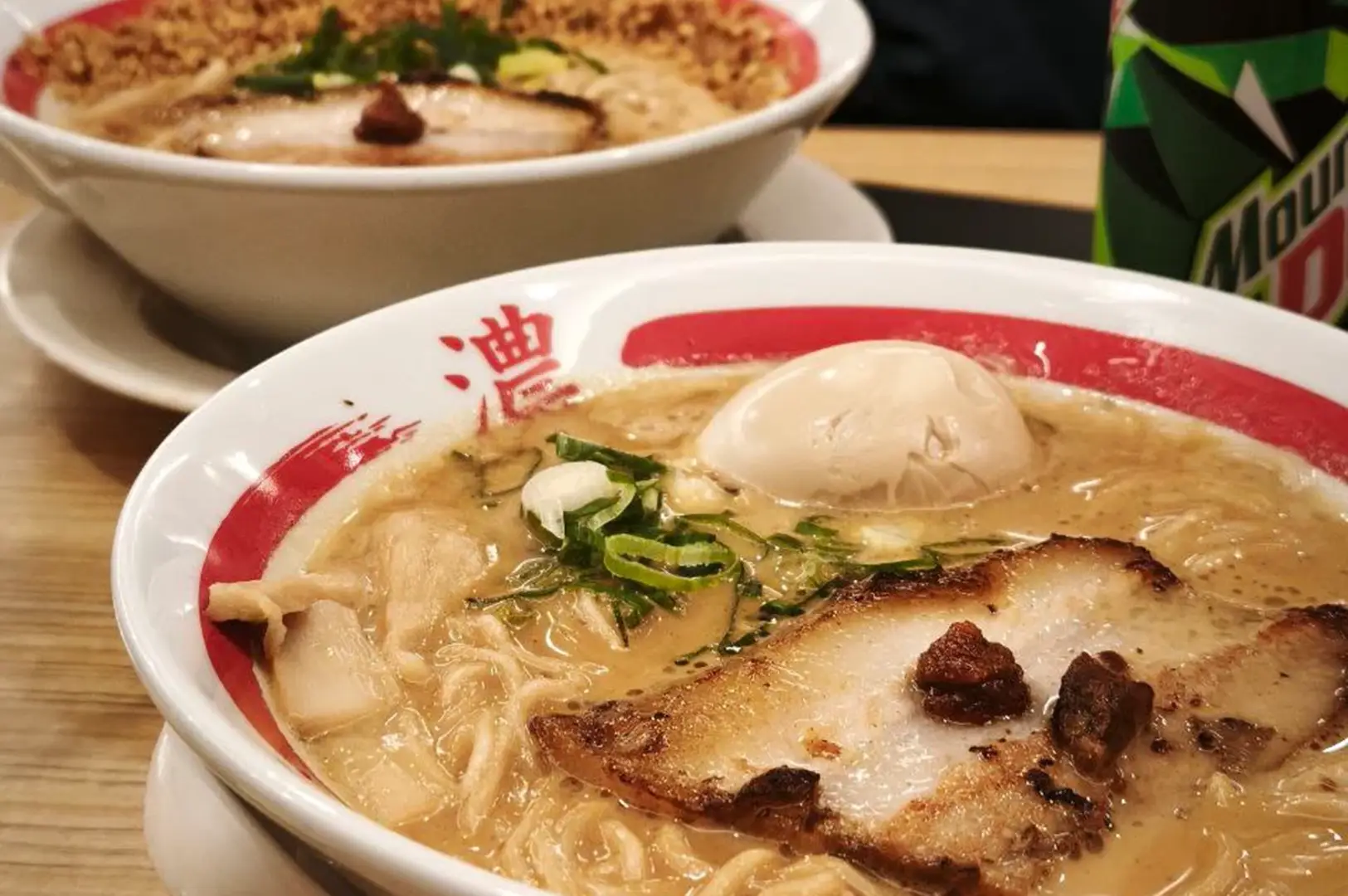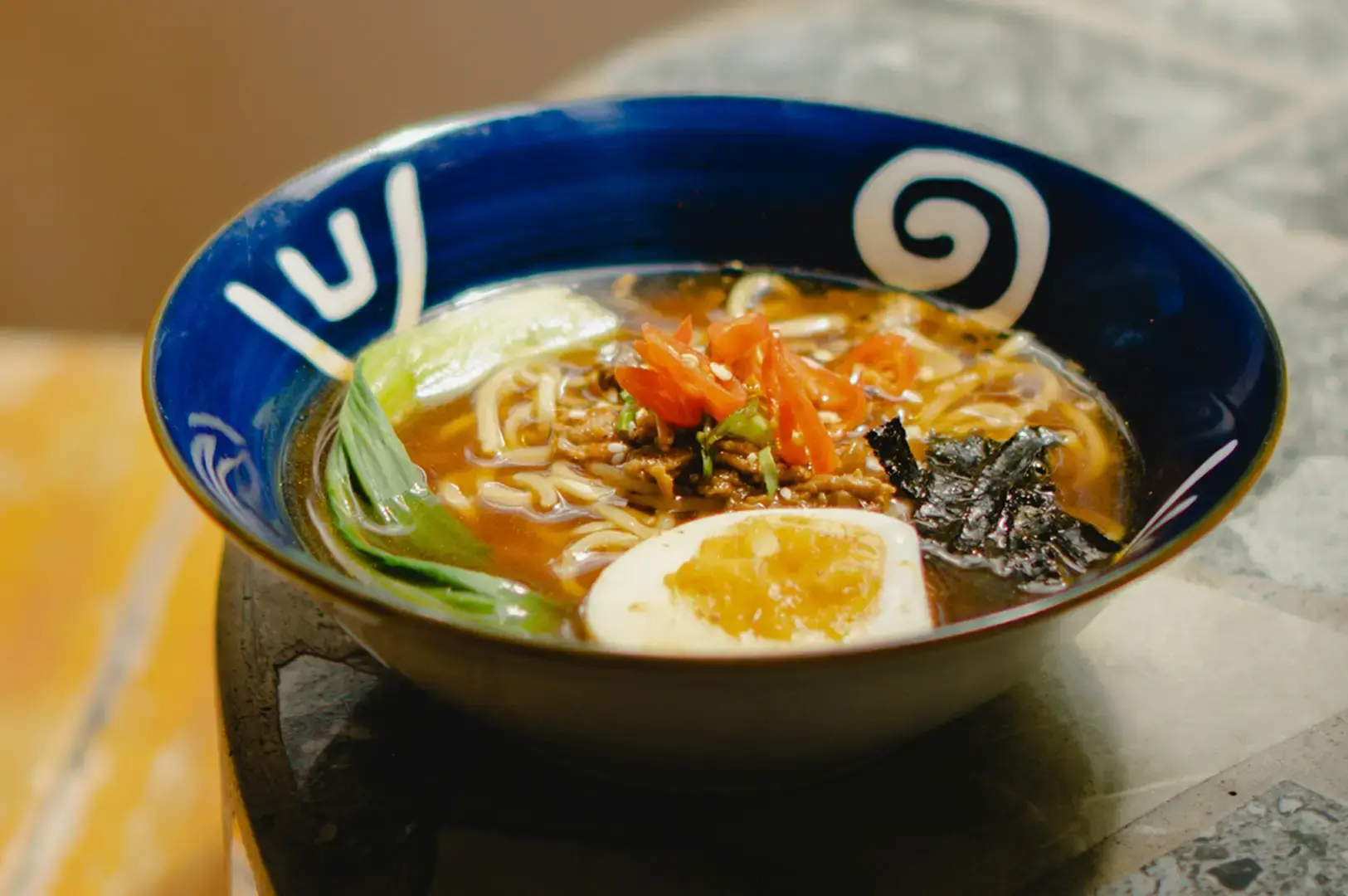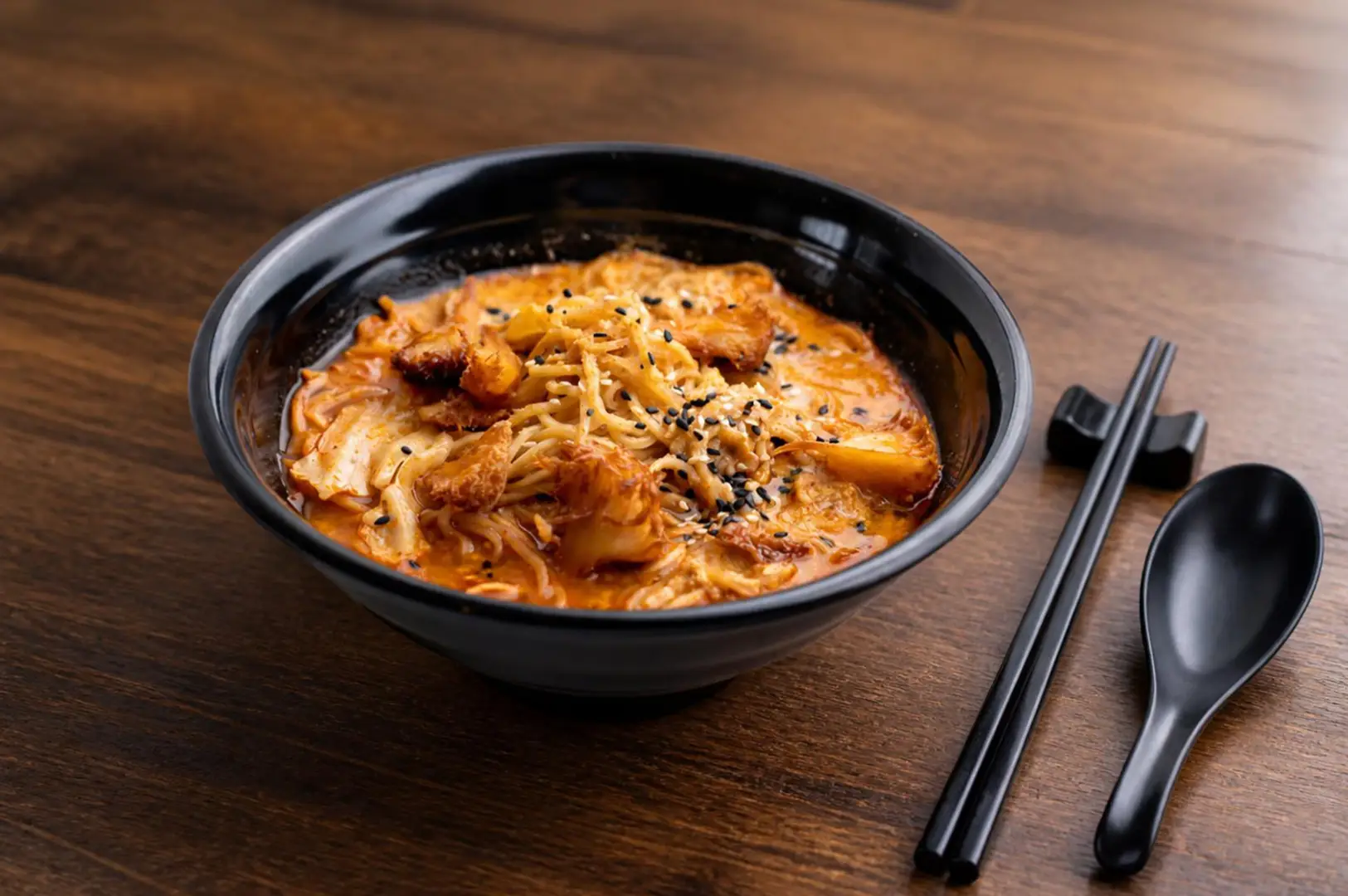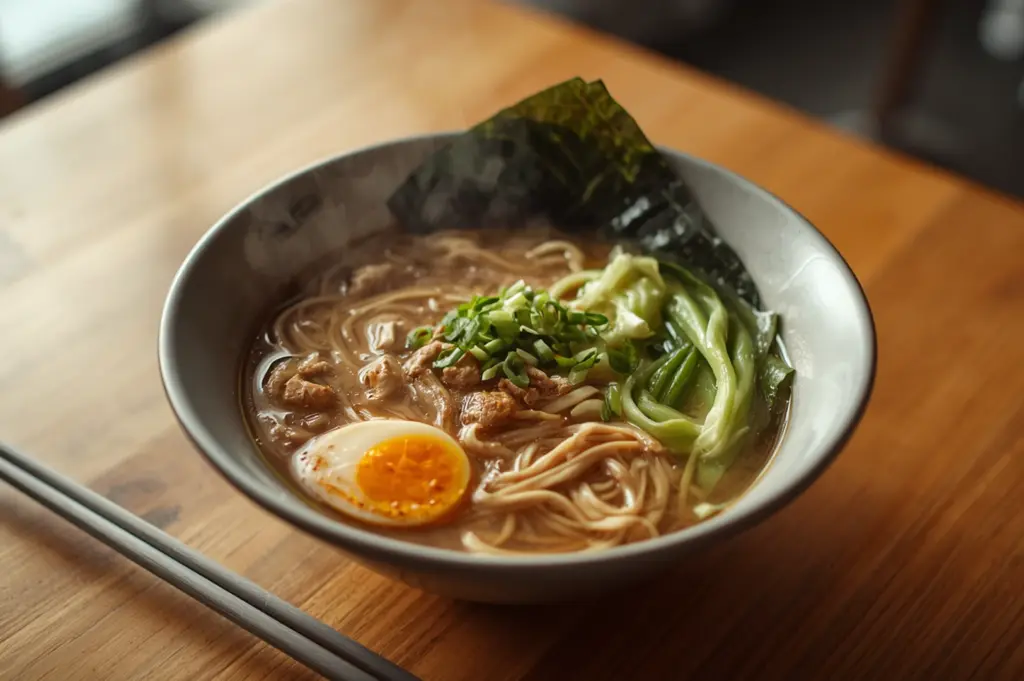
The first time I had halal ramen in Singapore, I caught myself looking for what was missing.
That was the wrong way to begin.
No pork bones. No chashu made from belly or shoulder. No lard floating across the surface. For anyone trained to think of ramen through tonkotsu, those absences can feel significant. But halfway through the bowl, I stopped thinking about absence.
The broth had body. The noodles held their bite. The seasoning carried depth without leaning on pork fat for easy richness. It was not trying to imitate something it could never fully become.
It was building its own logic, the same kind of cultural adaptation we see in Malaysian ramen’s culinary love story, where Japanese technique meets local food identity in a completely different way.
That is why halal ramen matters in Singapore. Not because it is a substitute, but because it shows how ramen changes when it enters a city with different diners, different rules, and a different sense of belonging.
Removing Pork Changes the Question
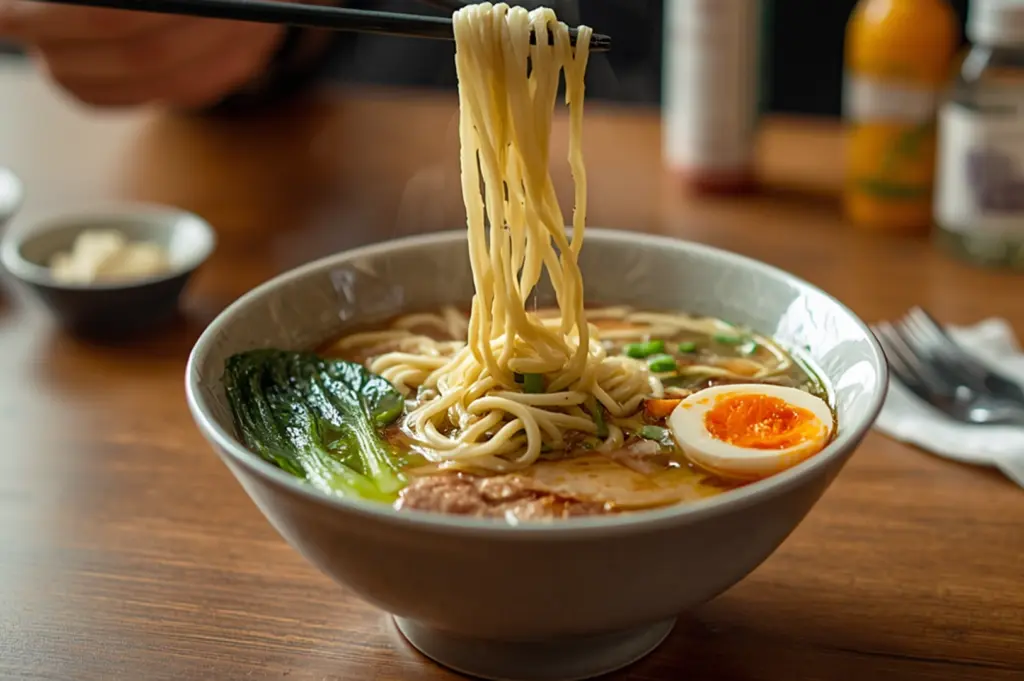
In traditional ramen, pork often does heavy work.
Tonkotsu depends on bones boiled until collagen and fat emulsify into a thick, cloudy broth. Chashu adds sweetness, fat, and softness. Pork back fat can round out a bowl quickly.
Take pork away, and the kitchen has to think harder.
Chicken bones, seafood, vegetables, kombu, dried shiitake, and aromatics need to create depth without becoming thin. The broth has to carry weight, but not taste forced. The tare, the seasoning base — becomes even more important because it must provide structure and salinity without pork’s natural richness behind it.
A weaker shop treats halal ramen like a restriction.
A serious one treats it like a new framework.
Chicken Broth Has Its Own Strength
Some of the best halal ramen bowls I’ve tasted do not try to copy tonkotsu exactly.
They use chicken differently.
Chicken paitan can produce a creamy broth with enough viscosity to coat the noodles. A clearer chicken chintan can deliver brightness and restraint. Seafood can add sharpness. Garlic oil, scallion oil, or chicken fat can bring aroma to the surface.
When these elements are handled carefully, the bowl does not feel compromised.
It feels precise.
This is where halal ramen becomes interesting from a craft perspective. The kitchen cannot hide behind heaviness. Balance becomes visible. If the broth lacks depth, you taste it immediately. If the oil is too aggressive, it dominates. If the noodles are too soft, the bowl loses structure.
Halal ramen leaves less room for laziness.
Singapore Makes This Conversation Necessary
In Singapore, halal ramen is not a niche curiosity. It matters because the city itself makes it matter.
Food here is shared across cultures, religions, malls, hawker centres, and late-night cravings. A ramen scene that excludes Muslim diners can never fully belong to Singapore’s dining story.
Halal ramen expands the table.
It allows more people to participate in a dish that has already travelled far from its origins. That does not weaken ramen. It continues its history of adaptation. Ramen itself was never static. It moved, changed, absorbed, and became local wherever it landed.
Singapore simply asks ramen another question.
Can it remain itself while making room for more people?
The best halal bowls answer yes.
Not a Compromise, a Local Form
I no longer think of halal ramen as ramen with something removed.
That framing is too narrow.
When done well, halal ramen is ramen translated through Singapore’s social reality. It respects the structure of the bowl — broth, tare, oil, noodles, toppings — while adjusting the ingredients so more diners can sit at the counter.
That matters.
Because the future of ramen in Singapore will not be defined only by how closely it follows Japan. It will also be defined by how honestly it responds to the people eating it here.
Halal ramen is part of that response.
Not a compromise.
A local form taking shape, one careful bowl at a time.